


边境公路旅游廊道游客地方感生成过程及机制——以G219国道广西段为例
| 谭华云(1981—),女,博士,教授,研究方向为旅游地理与乡村地理。E-mail:tanhuayun108@163.com |
收稿日期: 2025-08-04
修回日期: 2026-01-20
网络出版日期: 2026-04-10
基金资助
国家自然科学基金项目(42361033)
Generation Process and Mechanisms of Tourists' Sense of Place in Border Highway Tourism Corridors: A Case Study of the Guangxi Section of National Highway G219
Received date: 2025-08-04
Revised date: 2026-01-20
Online published: 2026-04-10
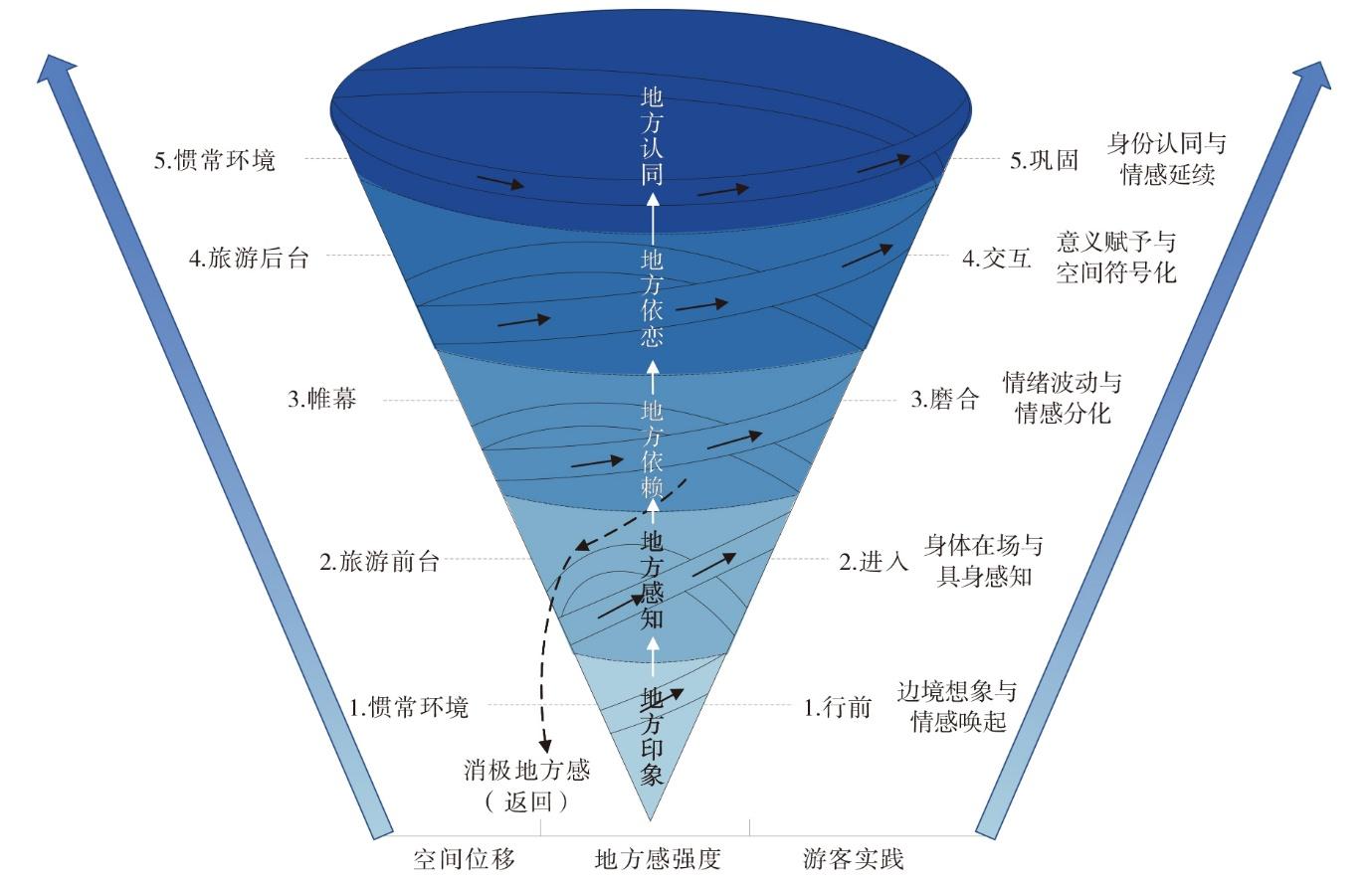
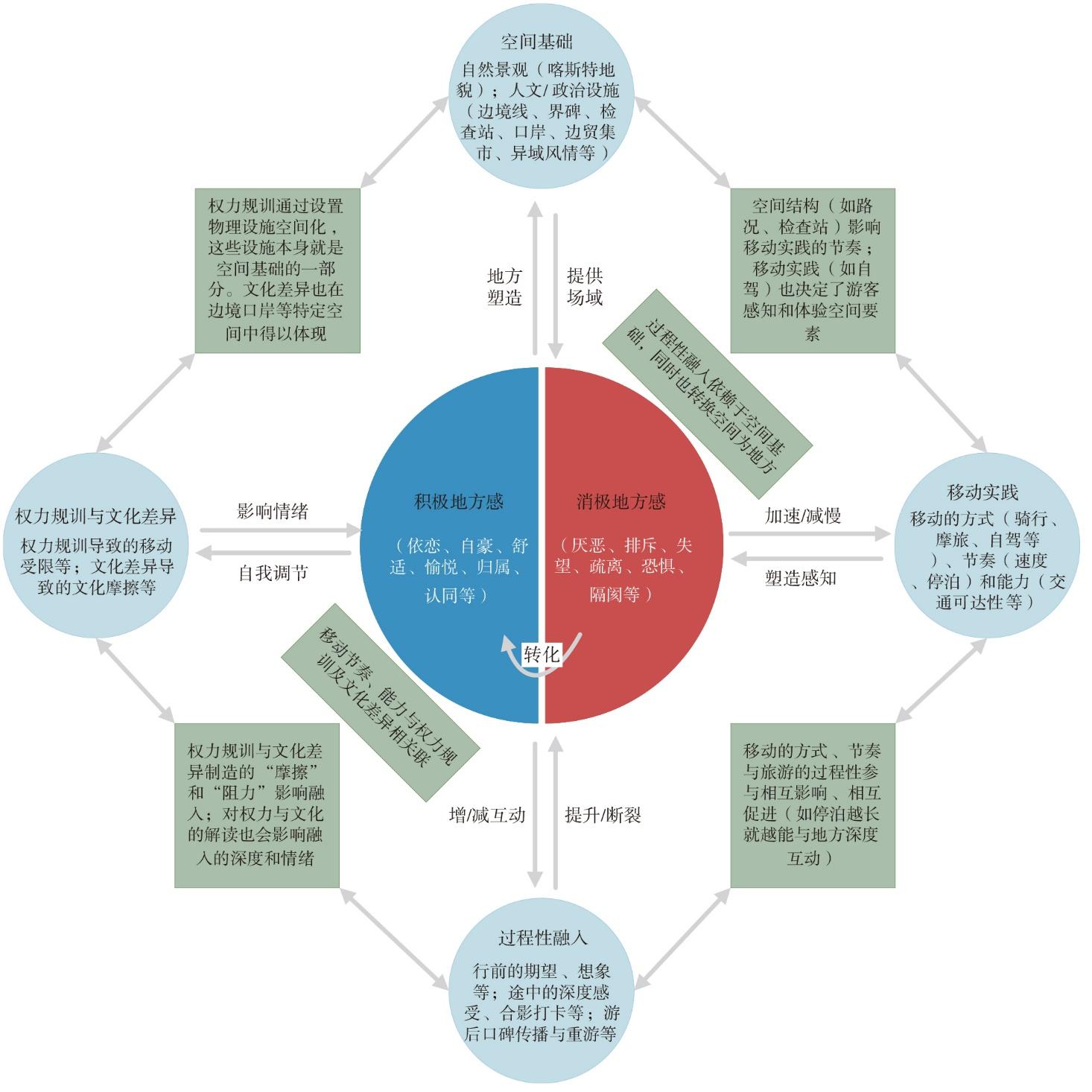
边境公路旅游廊道是交旅融合与文旅融合发展的重要载体,然而,既有研究对旅游廊道这类流动场域中游客地方感的动态生成过程关注不足。文章基于移动性理论,以G219国道广西段为例,综合运用网络民族志与移动民族志,探究了边境公路旅游廊道中游客如何通过移动性实践生成地方感。研究发现:①游客在行前、进入、磨合、交互和巩固5个阶段中,通过行前想象、具身感知、自我调节、意义赋予、行为延续等实践,沿着“地方印象—地方感知—地方依赖—地方依恋—地方认同”的动态路径,生成地方感。此过程中部分游客可能因负面地方感的出现而中断该路径。②游客在“游前—游中—游后”的移动实践中,从惯场环境出发,经由旅游“前台”跨越“帷幕”,深入“后台”空间,并最终返回的空间循环,其地方感的动态转化与旅程的时空轴线紧密交织。③游客地方感的生成,是空间基础、移动实践、主体过程性融入、权力规训和文化差异等协同作用的结果。文章旨在从移动性视角深化对流动性场域中地方感动态生成的理论认知,为边境公路旅游廊道的空间治理与场景营造提供学理依据。
谭华云 , 黄太伟 . 边境公路旅游廊道游客地方感生成过程及机制——以G219国道广西段为例[J]. 经济地理, 2026 , 46(2) : 253 -263 . DOI: 10.15957/j.cnki.jjdl.2026.02.025
As an important platform for the integration of transportation and tourism as well as cultural and tourism development, border highway tourism corridors have received insufficient attention in existing research regarding the dynamic process of tourists' sense of place generation in such mobile contexts. Based on mobility theory and taking the Guangxi section of National Highway G219 as a case study, this article employs a combination of netnography and mobile ethnography to explore how tourists generate a sense of place through mobility practices in tourism corridorsof border highway.The findings reveal that: 1) Across five stages—pre-trip, entry, adaptation, interaction, and consolidation—tourists progressively develop a sense of place through practices including pre-trip imagination, embodied perception, self-regulation, meaning attribution, and behavioral continuation.This process follows a dynamic path from "place impression" to "place perception," "place dependence," "place attachment," and finally "place identity," which may be interrupted for some tourists due to the emergence of a negative sense of place. 2) In the mobile practices of "pre-trip", "during-trip" and "post-trip", tourists in undergo a spatial cycle, starting from their habitual environment, crossing from the tourism "front stage" through the "curtain" into the "backstage" space, and eventually returning. The dynamic transformation of their sense of place is closely intertwined with the spatiotemporal axis of the journey. 3) The generation of tourists' sense of place in border tourism corridors results from the synergistic effects of spatial foundations, mobility practices, procedural subject involvement, power discipline, and cultural differences. This article aims to deepen the theoretical understanding of the dynamic generation of sense of place in mobility fields from a mobility perspective, providing a scholarly basis for spatial governance and scene construction in border highway tourism corridors.
表1 受访者基本信息Tab.1 Basic information of respondents |
| 编号 | 性别 | 年龄 | 客源地 | 职业 | 出行方式、旅游动机及简要旅游经历/特征 |
|---|---|---|---|---|---|
| FT1 | 男 | 76 | 上海 | 技术工人 | 组合交通。已退休,首次到访广西;过往偏好跟团游;受历史记忆与怀旧情结驱动 |
| FT2 | 女 | 60 | 大连 | 教师 | 组合交通。退休后首次长途旅游;受熟人推荐;早年有桂林旅游经历 |
| FT3 | 男 | 56 | 玉林 | 工人 | 自驾。短途周边游为主;主要享受驾驶乐趣与随性休闲; |
| FT4 | 男 | 63 | 南京 | 公务员 | 组合交通。与妻子共同出发;有丰富的国内外旅游经验;首次探访广西边境;受新媒体影响 |
| FT5 | 女 | 30 | 遵义 | 护士 | 组合交通。家庭亲子游;为避开拥挤,寻找小众目的地 |
| FT6 | 男 | 55 | 南阳 | 自由职业 | 长途自驾。长期旅居状态;采取“床车”方式,注重经济性;受朋友推荐 |
| FT7 | 女 | 56 | 南阳 | 自由职业 | 长途自驾(FT6配偶)。长期旅居;计划进行环游 |
| FT8 | 男 | 67 | 北京 | 公务员 | 自驾。已完成多圈深度环游;社群活跃;与配偶同行 |
| FT9 | 女 | 66 | 北京 | 公务员 | 自驾(FT8配偶)。深度环游中国边境(第三圈);社群分享意愿强 |
| FT10 | 男 | 44 | 黄冈 | 企业员工 | 跟团游(出发地成团)。同事结伴;旨在游览与体验广西边境特色;曾因商务活动到访过南宁 |
| FT11 | 女 | 27 | 广州 | 教育机构从业者 | 跟团游(落地成团)。高频出游;因距离近、假期短及过往良好体验,产生的重复旅游行为 |
| FT12 | 女 | 63 | 南宁 | 公务员 | 骑行、火车。17年深度骑行者;属体育旅游/社群组织形式;骑行前往目的地后乘坐火车返回 |
| FT13 | 女 | 25 | 桂林 | 学生 | 自驾。情侣出游;受口碑与距离影响,利用假期在偏好区域进行休闲游 |
| FT14 | 男 | 22 | 南昌 | 网络维修员 | 组合交通。首次到访;离职后放松,受互联网旅游趋势影响,计划长线旅行 |
表2 主题编码过程示例Tab.2 Examples of the theme encoding procedure |
| 原始数据资料示例 | 初始编码 | 主题归类 | 生成阶段 | 机制要素 |
|---|---|---|---|---|
| 刷到好多摩旅博主骑行G219的视频,那种在山路和瀑布间穿行的经历太戳我了(SP16) | 媒介激发的向往与期待 | 边境旅游动机 | 行前:边境想象与情感唤起 | 行前心理预期 |
| 对沿海人来说,喀斯特地貌远而少见,感觉这里无比独特、神秘;期待能感受不一样的异域文化魅力(XC2) | 景观差异性的预期 | 边境异托邦想象 | 边境空间景观特殊与文化差异性 | |
| 虽然听说边境有点乱,但那种神秘的边境氛围让我非去不可(XC10) | 对边境独特印象 | |||
| 那时候经常提到这段历史,虽然不是发生在我身上,但印象一直挺深的,有一种想感受的心态吧(FT1) | 游客对边境独特记忆 | 集体/历史记忆的预置 | 历史与情感的连接 | |
| 有我从小就向往的德天瀑布,还有我父亲曾经战斗过的地方,对我来说是一次迟到的致敬和寻根(MF13) | 与目的地的历史情感与羁绊 |
| [1] |
中华人民共和国中央人民政府. “十四五”旅游业发展规划[EB/OL]. http://www.gov.cn/zhengce/content/2022-01/20/content_5669468.htm. 2021-12-22.
|
| [2] |
USDOT. Federal Highway Administration. National Scenic Byways Program[EB/OL]. https://www.govinfo.gov/content/pkg/FR-1995-05-18/html/95-12211.htm. 1995-05-18.
|
| [3] |
|
| [4] |
杨效忠, 李冬花, 黄剑锋, 等. 线性旅游目的地的概念框架与研究展望[J]. 地理学报, 2023, 78 (12):2939-2957.
|
| [5] |
|
| [6] |
|
| [7] |
|
| [8] |
戴维·西蒙. 生活世界地理学[M]. 周尚意,高慧慧,译. 北京: 北京师范大学出版社, 2022.
|
| [9] |
[美]冈恩·克莱尔, [土]瓦尔·特格特. 旅游规划理论与案例[M].吴必虎,吴冬青,党宁,译. 大连: 东北财经大学出版社, 2005.
|
| [10] |
蔡智莉, 秦兆祥, 张薇, 等. 国内旅游地方感研究热点与展望[J]. 中国生态旅游, 2022, 12 (1):16-31.
|
| [11] |
|
| [12] |
王泓砚, 谢彦君, 王俊亮. 凝视性景观与互动性景观——旅游场景观类型对游客地方感的结构性影响[J]. 旅游学刊, 2021, 36 (11):80-94.
|
| [13] |
|
| [14] |
|
| [15] |
孙九霞, 周尚意, 王宁, 等. 跨学科聚焦的新领域:流动的时间、空间与社会[J]. 地理研究, 2016, 35(10):1801-1818.
|
| [16] |
|
| [17] |
|
| [18] |
|
| [19] |
|
| [20] |
|
| [21] |
|
| [22] |
朱竑, 刘博. 地方感, 地方依恋与地方认同等概念的辨析及研究启示[J]. 华南师范大学学报(自然科学版), 2011, 43(1):1-8.
|
| [23] |
|
| [24] |
李如铁, 朱竑, 唐蕾. 城乡迁移背景下“消极”地方感研究——以广州市棠下村为例[J]. 人文地理, 2017, 32(3):27-35.
|
| [25] |
|
| [26] |
|
| [27] |
|
| [28] |
|
| [29] |
|
| [30] |
|
| [31] |
王冠. 叙事分析:网络社会认同研究的方法[J]. 学习与探索, 2013, 34 (7):38-43.
|
| [32] |
田逢军, 吴珊珊, 胡海胜, 等. 江西省城市旅游形象的网络化呈现[J]. 经济地理, 2019, 39(6):214-222.
|
| [33] |
|
| [34] |
左晓闪, 马凌, 林歆雨. 媒介地理学视角下的人地相遇与数字地方感——以河南洛阳为例[J]. 地理科学, 2025, 45(11):2554-2562.
|
| [35] |
谢冰雪, 胡旭艳. “舞台真实”理论在民族旅游文化保护策略中的运用误区——基于对“前台、帷幕、后台”开发模式的反思[J]. 云南社会科学, 2019(4):96-103,186.
|
/
| 〈 |
|
〉 |