


兰州市生产性服务业的空间集聚及其影响因素
|
张志斌(1965—),男,甘肃会宁人,教授,博士生导师。主要研究方向为城市与区域规划。E-mail:zbzhang@nwnu.edu.cn。 |
收稿日期: 2018-12-16
修回日期: 2019-04-02
网络出版日期: 2025-04-17
基金资助
国家自然科学基金项目(41161028)
The Spatial Agglomeration Characteristics and Its Influencing Factors of Producer Services in Lanzhou
Received date: 2018-12-16
Revised date: 2019-04-02
Online published: 2025-04-17
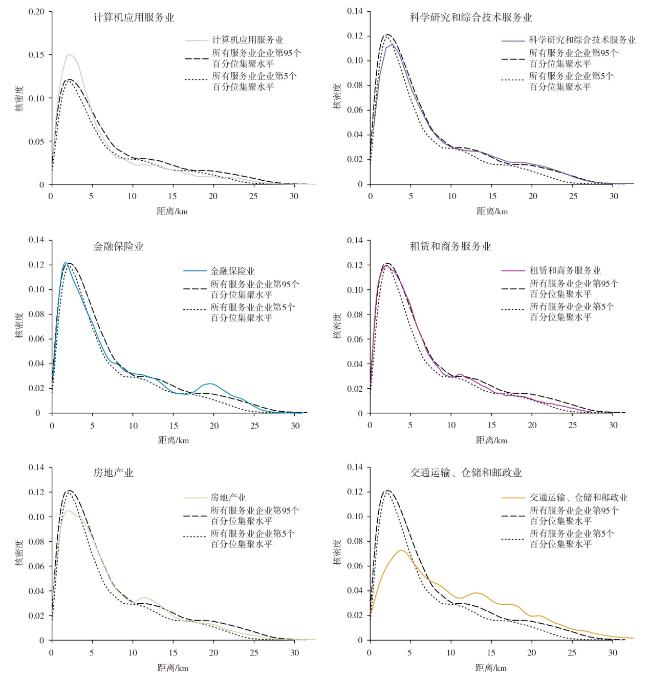
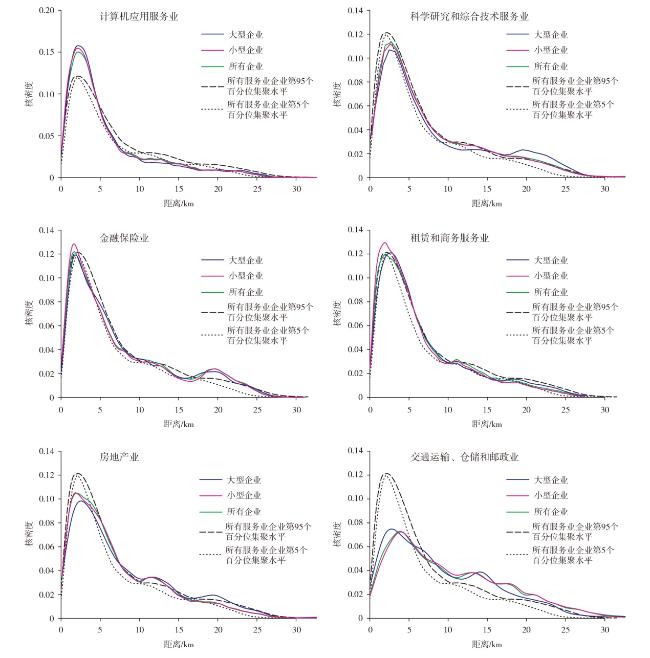
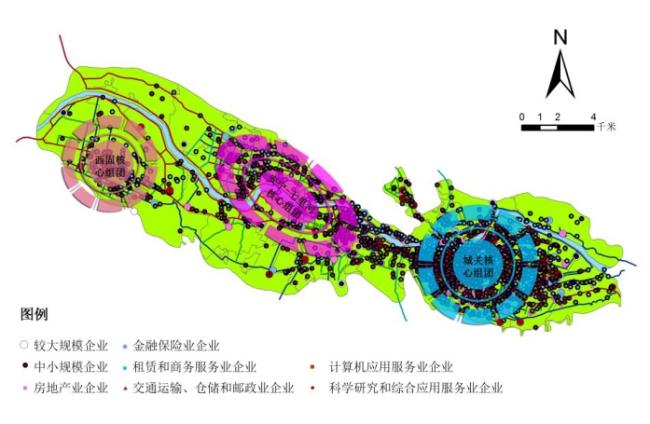
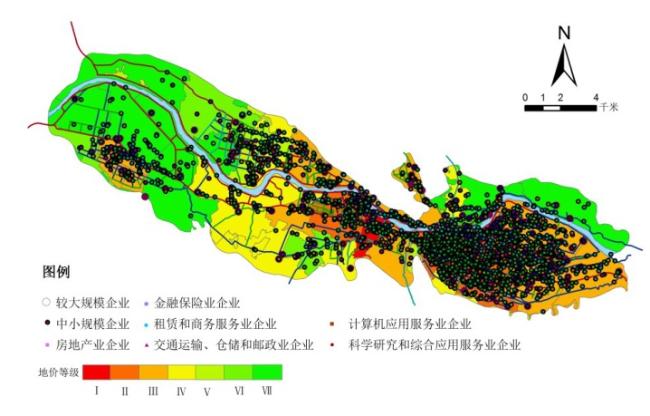
依据兰州市2016年工商企业登记数据,运用基于距离的产业集聚研究方法,分析了兰州市生产性服务业的空间布局、集聚特征及其影响因素。结果表明:兰州市生产性服务业空间分布不均衡,自东向西依次为中心高密度地带、过渡地带、扇形低密度地带,呈现出“圈层+扇形”的空间结构特征;从不同行业来看,金融保险业、计算机应用服务业及交通运输、仓储和邮政业集聚趋势更为明显,而房地产业、租赁和商务服务业、科学研究和综合技术服务业的集聚趋势较弱,并且除金融保险业呈现出多中心的集聚特征外,其余行业都是单中心集聚;就不同规模而言,较大规模企业的集聚范围较大但集聚程度较弱,而较小规模企业的集聚范围较小但集聚程度较强,成为兰州市生产性服务业空间集聚的主导力量;城市功能分区、地价租金水平、交通便捷程度、办公空间分布是影响生产性服务业空间集聚的重要因素。
张志斌 , 公维民 , 张怀林 , 王凯佳 , 赵航 . 兰州市生产性服务业的空间集聚及其影响因素[J]. 经济地理, 2019 , 39(9) : 112 -121 . DOI: 10.15957/j.cnki.jjdl.2019.09.014
Based on the business registration data of enterprises in Lanzhou City in 2016, using the distance-based industrial space agglomeration measurement method, the spatial layout, agglomeration characteristics and formation mechanism of the production service industry in Lanzhou City were analyzed. The results show: the spatial distribution of the productive service industry is uneven, showing the characteristics of "East Mississippi", forming a "circle+fan" pattern that gradually decreases from the center to the periphery; There are significant differences in the characteristics of agglomeration among industries. The computer application service industry, the financial and insurance industry, and the transportation, warehousing and postal industries have a clear trend. The real estate industry, scientific research and integrated technology services, leasing and business services are in a weaker trend. The large-scale enterprises have a low degree of agglomeration and the agglomeration trend is not obvious. The smaller-scale enterprises dominate the spatial agglomeration of the productive service industry in Lanzhou with their higher concentration; Urban functional zoning, land price and rent level, convenient transportation and office space distribution are important factors affecting the spatial agglomeration of producer services.
表1 兰州市生产性服务业集聚特征比较(km)Tab.1 Comparison of clustering characteristics of producer services in Lanzhou City(km) |
| 房地产业 | 金融保险业 | 计算机应用服务业 | 科学研究与 综合应用服务业 | 租赁和商务服务业 | 交通运输、仓储和 邮政业 | |
|---|---|---|---|---|---|---|
| 集聚范围 | 10.1~14.6 | 1.8~2.5;16.8~24.3 | 0.5~5.0 | 14.1~24.5 | 10.5~12.3 | 7.2~30.0 |
| 峰值距离 | 2.6 | 2.2 | 2.3 | 3.5 | 2.4 | 4.6 |
| 集聚范围距离 | 4.5 | 8.2 | 4.5 | 10.4 | 1.8 | 22.8 |
| 最大集聚程度 | 0.102 | 0.122 | 0.152 | 0.175 | 0.109 | 0.073 |
表2 兰州市生产性服务业企业规模划分阈值(万元)Tab.2 The threshold value of various industries of producer services in Lanzhou(Ten thousand yuan) |
| 交通运输、仓储和邮政业 | 计算机应用服务业 | 租赁和商务服务业 | 科学研究与综合应用服务业 | 金融保险业 | 房地产业 | |
|---|---|---|---|---|---|---|
| 较大规模企业 | 500 | 500 | 500 | 800 | 1 000 | 500 |
| 较小规模企业 | 50 | 50 | 50 | 100 | 100 | 50 |
| [1] |
|
| [2] |
|
| [3] |
申玉铭, 吴康, 任旺兵. 国内外生产性服务业空间集聚的研究进展[J]. 地理研究, 2009, 28(6):1 494-1 507.
|
| [4] |
|
| [5] |
|
| [6] |
|
| [7] |
|
| [8] |
|
| [9] |
|
| [10] |
|
| [11] |
阎小培, 周春山, 冷勇, 等. 广州CBD的功能特征与空间结构[J]. 地理学报, 2000, 55(4):475-486.
|
| [12] |
薛东前, 石宁, 公晓晓. 西安市生产者服务业空间布局特征与集聚模式研究[J]. 地理科学, 2011, 31(10):1 195-1 201.
|
| [13] |
赵群毅, 谢从朴, 王茂军, 等. 北京都市区生产者服务业地域结构[J]. 地理研究, 2009, 28(5):257-269.
|
| [14] |
梁珍, 王录仓, 史凯文. 兰州市生产性服务业空间集聚特征研究[J]. 资源开发与市场, 2018, 34(5):660-664.
|
| [15] |
陈前虎, 徐鑫, 帅慧敏. 杭州城市生产性服务业空间演化研究[J]. 城市规划, 2008(8):48-52.
|
| [16] |
邱灵. 北京市生产性服务业空间结构演化机理研究[J]. 中国软科学, 2013(5):74-91.
|
| [17] |
李普峰, 李同昇. 西安市生产性服务业空间格局及其机制分析[J]. 城市发展研究, 2009, 16(3):87-91.
|
| [18] |
陈红霞. 北京市生产性服务业空间分布与集聚特征的演变[J]. 经济地理, 2018, 38(5):108-116
|
| [19] |
蒋海兵, 张文忠. 杭州生产性服务业的时空格局演变[J]. 经济地理, 2015, 35(9):103-111.
|
| [20] |
蒋丽. 广州市生产性服务业空间分布及成因研究[J]. 经济地理, 2014, 34(3):106-113.
|
| [21] |
邵晖. 北京市生产者服务业聚集特征[J]. 地理学报, 2008, 63(12):1 289-1 298.
|
| [22] |
万千欢, 千庆兰, 陈颖彪. 广州市生产性服务业影响因素研究[J]. 经济地理, 2014, 34(1):89-93.
|
| [23] |
张文忠. 大城市服务业区位理论及其实证研究[J]. 地理研究, 1999, 18(3):273-281.
|
| [24] |
陈秀山, 邵晖. 大都市生产者服务业区位选择及发展趋势——以北京市为案例的研究[J]. 学习与实践, 2007(10):14-22.
|
| [25] |
|
| [26] |
曹玉红, 宋艳卿. 基于点状数据的上海都市型工业空间格局研究[J]. 地理研究, 2015, 34(9):1 708-1 720.
|
| [27] |
宣烨. 我国服务业地区协同、区域聚集及产业升级[M]. 北京: 中国经济出版社, 2012.
|
| [28] |
李佳洺, 张文忠. 基于微观企业数据的产业空间集聚特征分析——以杭州市区为例[J]. 地理研究, 2016, 35(1):95-107.
|
| [29] |
陆毅, 李冬娅, 方琦璐, 等. 产业集聚与企业规模——来自中国的证据[J]. 管理世界, 2010(8):84-89.
|
| [30] |
甄峰, 刘慧, 郑俊. 城市生产性服务业空间分布研究:以南京为例[J]. 世界地理研究, 2008, 17(1):24-31.
|
| [31] |
杨吾扬. 区位论原理:产业,城市和区域的区位经济分析[M]. 兰州: 甘肃人民出版社, 1989.
|
| [32] |
|
| [33] |
李花, 张志斌, 王伟军. 兰州市大中型超市的空间分布格局及其影响因素[J]. 经济地理, 2016, 36(9):85-93.
|
| [34] |
张景秋, 陈叶龙, 孙颖. 基于租金的北京城市办公活动经济空间结构解析[J]. 地理科学, 2010, 17(6):833-838.
|
/
| 〈 |
|
〉 |