


从社交网络到地理网络——基于南京市高校新浪微博用户的分析
|
吴晓(1972—),男,福建惠安人,教授,博士生导师。主要研究方向为城市社会学与社区发展、弱势群体空间及其保障体系。E-mail:seuwxiao9999@163.com。 |
收稿日期: 2019-05-20
修回日期: 2019-07-25
网络出版日期: 2025-04-08
基金资助
国家自然科学基金项目(51878142)
国家自然科学基金项目(51178097)
国家自然科学基金项目(50708017)
教育部“新世纪优秀人才支持计划”项目
江苏省“六大人才高峰”项目(2010-JZ-005)
From Social Network to Geographical Network:A Case Study of College Sina Weibo Users in Nanjing
Received date: 2019-05-20
Revised date: 2019-07-25
Online published: 2025-04-08
面对网络时代下人类信息传递和社交方式的革命性突破,文章以南京市高校师生的新浪微博用户作为抽样源群体,但在研究思路上又不局限于该师生样本,而是以各样本为原点来分别串联、圈定和分析其跨区域的网络社交关系;继而以“社交网络+地理网络”作为贯穿性主题词和关键指标,按“总体把握”和“师生比较”两个层面展开高校的网络社交特征与时空规律探讨,进而通过“社交关系+社交频率”组合形成的网络关联度对其地理网络进行分析,并与“南京总体微博用户”的地理网络特征和规律的相关研究成果(同样以南京市为基点)进行比较,得出高校社交网络在空间规模上聚集度高、等级差异明显,在关联强度上局限性大、不均衡性强等差异性特征,并剖析得出高校社交网络机制形成的地域植根性、社会经济发展差异性,以及高校群体特有的教育资源(学术前沿)空间分布、群体自身特殊性等动因。
吴晓 , 王凌瑾 , 宁昱西 , 何彦 . 从社交网络到地理网络——基于南京市高校新浪微博用户的分析[J]. 经济地理, 2020 , 40(4) : 83 -95 . DOI: 10.15957/j.cnki.jjdl.2020.04.010
Faced with the revolutionary breakthrough of human information transmission and social communication mode in the network era, this paper takes Sina Weibo users of teachers and students in Nanjing universities as the sampling source group. However, the research idea is not limited to the samples of teachers and students. Instead, the cross-regional network social relations are connected, defined and analyzed with each sample as the origin. Which in turn to "social network+geographical network" as penetrability keywords and key indicators, the social network characteristics and spatial and temporal laws of colleges are discussed according to "overall grasp" and "teacher-student comparison", and then through the "social relationship+social frequency" combination form called network correlation degree to analyze its geographical network. Compared with the relevant research results of the geographical network characteristics and rules of "Nanjing overall Weibo users" (also based on Nanjing), it is concluded that the social network of colleges and universities has high aggregation degree in space scale, obvious difference in grade, great limitation in connection strength and strong imbalance. And it also analyzes the regional roots and social and economic development differences formed by the mechanism of social network in colleges and universities, as well as the special educational resources (academic frontier) spatial distribution and the particularity of the groups, which may provide a glimpse into the tip of the iceberg of large social network communities.
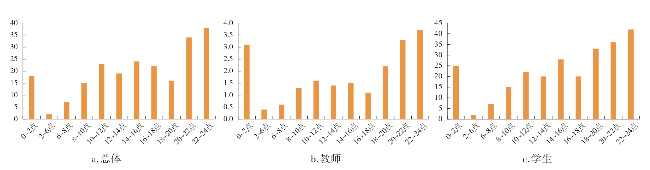
表1 南京高校师生社交频率—社交关系属性的关联分析Tab.1 Association analysis between social frequency and social object of teachers and students in universities in Nanjing |
| 总体(%) | 教师(%) | 学生(%) | ||
|---|---|---|---|---|
| 年龄构成(岁) | <20 | 9.8 | 0.1 | 12.1 |
| 20~35 | 77.1 | 46.2 | 79.6 | |
| 36~55 | 12.6 | 49.3 | 8.3 | |
| >55 | 0.5 | 4.4 | 0 | |
| 性别构成 | 男 | 60.2 | 67.7 | 59.1 |
| 女 | 39.8 | 32.3 | 40.9 | |
| 文化教育程度 | 初中及以下 | 0.1 | 0.5 | 0.1 |
| 高中/高职 | 18.1 | 0.6 | 20.0 | |
| 大学专科 | 4.9 | 3.2 | 5.2 | |
| 大学本科 | 69.0 | 43.2 | 71.7 | |
| 研究生及以上 | 8.0 | 52.5 | 3.0 | |
| 定居点 | 华北 | 16.4 | 19.8 | 19.9 |
| 东北 | 1.5 | 1.2 | 1.4 | |
| 华东 | 61.0 | 53.9 | 53.6 | |
| 中南 | 13.8 | 19.0 | 19.7 | |
| 西南 | 3.1 | 4.4 | 4.5 | |
| 西北 | 4.2 | 1.7 | 0.9 |
表2 南京高校网络社交关系占各省总社交关系比例Tab.2 The proportion of social network objects in universities in Nanjing accounted for the total social objects of the provinces |
| 总体 | 教师 | 学生 | |
|---|---|---|---|
| 年龄 (35岁及 以上) | 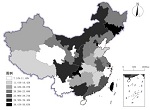 | 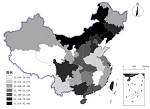 | 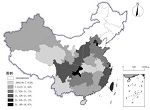 |
| 性别 (女性) | 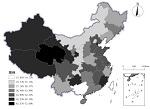 | 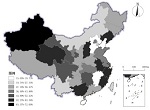 | 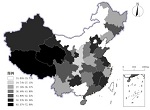 |
| 学历 (本科 以上) | 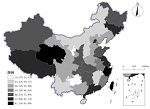 | 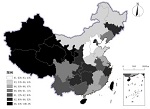 | 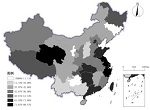 |
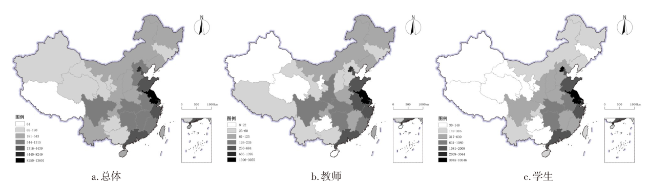
表3 全国空间尺度下南京高校网络关联度的分布情况Tab.3 Distribution of network relevance degree of Nanjing universities in national spatial scale |
| 总体 | 教师 | 学生 | |
|---|---|---|---|
| 粉丝关系 | 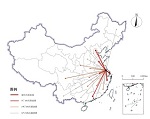 | 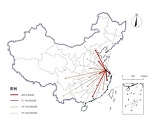 | 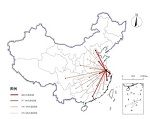 |
| 关注关系 | 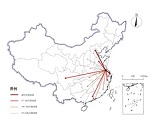 | 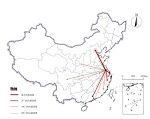 | 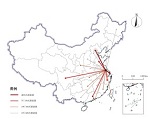 |
| 好友关系 | 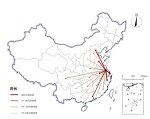 | 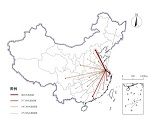 | 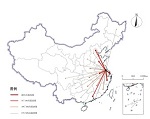 |
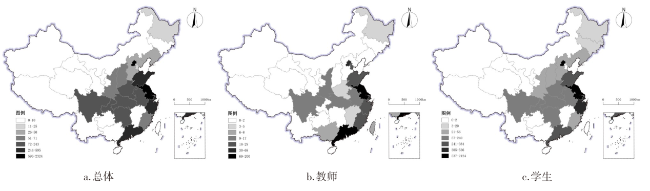
表4 江苏省空间尺度下南京高校网络关联度的分布情况Tab.4 Distribution of network relevance degree of nanjing universities on spatial scale in Jiangsu Province |
| 总体 | 教师 | 学生 | |
|---|---|---|---|
| 粉丝关系 | 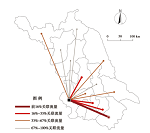 | 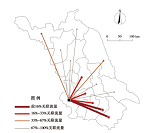 | 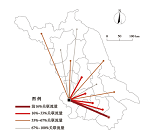 |
| 关注关系 | 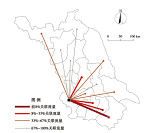 | 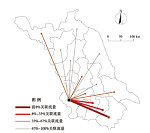 | 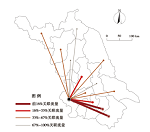 |
| 好友关系 | 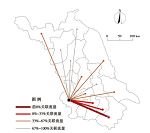 | 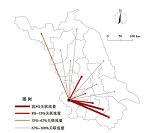 | 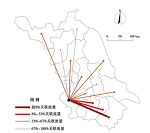 |
表5 全国空间尺度下南京总体与高校微博用户网络关联度的对比情况[10]Tab.5 Comparison of the relevance degree between Nanjing overall and university weibo user networks at national spatial scale |
| 粉丝关系 | 关注关系 | 好友关系 | |
|---|---|---|---|
| 高校微博用户 | 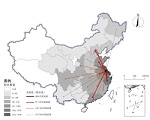 | 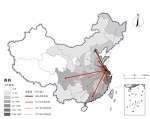 | 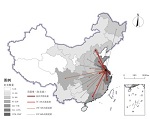 |
| 总体微博用户 | 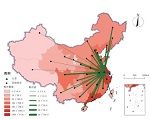 | 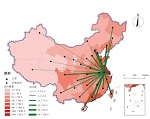 | 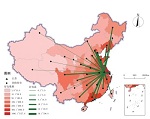 |
注:本文在网络关联度的数据统计与分析中已将关联度极低的省份排除。 |
表6 江苏省空间尺度下南京总体与高校微博用户网络关联度的对比情况[10]Tab.6 Comparison of the relevance degree between Nanjing overall and university weibo user networks at the spatial scale of Jiangsu Province |
| 粉丝关系 | 关注关系 | 好友关系 | |
|---|---|---|---|
| 高校微博用户 | 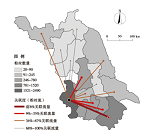 | 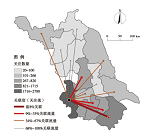 | 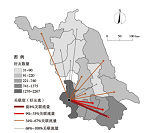 |
| 总体微博用户 | 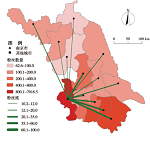 | 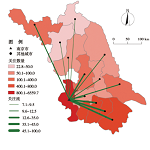 | 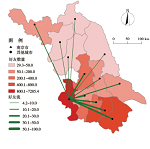 |
| [1] |
|
| [2] |
|
| [3] |
|
| [4] |
|
| [5] |
|
| [6] |
|
| [7] |
金凤君, 王成金. 轴—辐侍服理念下的中国航空网络模式构筑[J]. 地理研究, 2005, 24(5):774-784.
|
| [8] |
吴威, 曹有挥, 梁双波, 等. 中国铁路客运网络可达性空间格局[J]. 地理研究, 2009, 28(5):1389-1400.
|
| [9] |
薛俊菲. 基于航空网络的中国城市体系等级结构与分布格局[J]. 地理研究, 2008, 27(1):23-32.
|
| [10] |
王波, 甄峰, 席广亮, 等. 基于微博用户关系的网络信息地理研究[J]. 地理研究, 2013(2):380-391.
|
| [11] |
路紫, 张秋娈, 邢晨宇, 等. 基于图论的SNS社区中人际节点空间关系的中心性研究——以新浪微博为例[J]. 经济地理, 2013, 33(12):77-83.
|
| [12] |
王冠. “网络社会”概念的社会学建构[J]. 学习与实践, 2013, 11:116-122.
|
| [13] |
张咏梅. “网络社区”的社会学初探[J]. 科学·经济·社会, 2003(3):60-64.
|
| [14] |
常晓猛. 虚拟网络空间人类社会关系与交互空间特征实证研究[D]. 武汉: 武汉大学, 2014.
|
| [15] |
任薇. 基于微博的社会网络特征研究[D]. 重庆: 西南大学, 2014.
|
| [16] |
魏宗财, 甄峰, 席广亮, 等. 全球化、柔性化、复合化、差异化:信息时代城市功能演变研究[J]. 经济地理, 2013, 33(6):48-52.
|
/
| 〈 |
|
〉 |