


传统村落“蔽护型”景观空间生成机制与遗产保护路径
|
吴茜茜(1988—),女,博士研究生,研究方向为村落文化保护。E-mail:191301002@csu.edu.cn |
收稿日期: 2024-09-26
修回日期: 2025-03-21
网络出版日期: 2025-12-23
基金资助
国家社会科学基金重大项目(19ZDA191)
湖南省社会科学重点项目(21ZDB003)
中南大学高端智库项目(2022znzk09)
Generative Mechanism and Heritage Conservation Pathways of "Sheltered-Type" Landscape Spaces in Traditional Villages Under the Perspective of Spatial Schema
Received date: 2024-09-26
Revised date: 2025-03-21
Online published: 2025-12-23
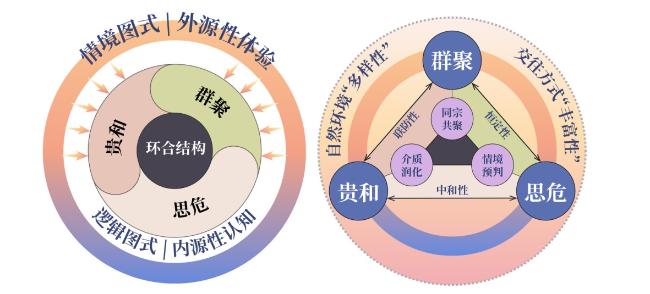
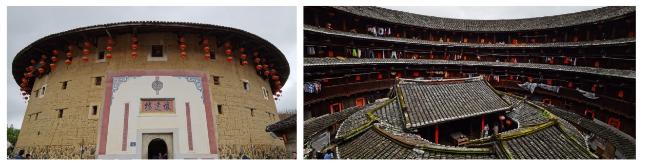
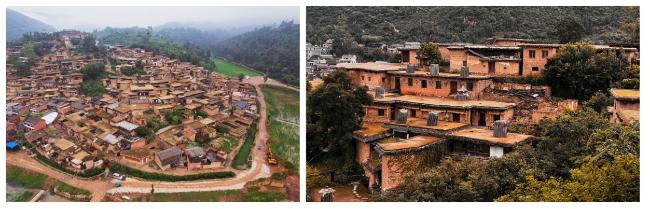
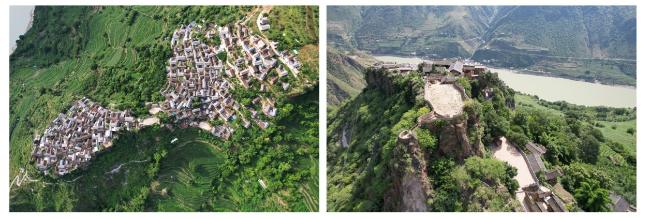
传统村落中的“蔽护型”村落景观空间遗产,是指主要功能为掩护自身、规避风险和预防威胁,且具有民族文化特质的景观空间组织,其本质不仅是集体对生命安全需求的空间化回应,更是生存焦虑的文化转译策略。文章运用空间图式方法论,从哲学、设计学、文化心理学等学科视角,挖掘了其共通性图式结构及生成机制。一方面,揭示了“蔽护型”村落景观空间生成机制,即一种由“群聚”“贵和”“思危”的逻辑图式与“地理环境多样性”和“交往方式丰富性”等情境图式,双向塑造而成的“环合结构”,挖掘了根源性文化与多元外化显现之间的动态关系。另一方面,针对传统村落景观遗产保护的不足,以汉、藏、土家、瑶、侗、傣等民族传统村落为例,构建“点—线—面—体”的框架,提出了“水平围合”和“垂直剥离”的保护路径。对中华民族多元一体格局的空间化呈现的探析,有助于把握文化主体性,强化民族身份认同,并为此类型景观遗产的原生性保护提供学理性参考。
关键词: 景观遗产保护; 空间图式; 中国传统村落; 共同体意识; 中华民族多元一体格局
张旎 , 吴茜茜 , 朱力 . 传统村落“蔽护型”景观空间生成机制与遗产保护路径[J]. 经济地理, 2025 , 45(11) : 262 -272 . DOI: 10.15957/j.cnki.jjdl.2025.11.026
The "sheltered-type" landscape spaces in traditional villages refer to the spatial organizations designed primarily for self-concealment, risk avoidance, and threat prevention. The essence of this type of landscape is not merely a spatialized response to collective security needs, but also a cultural translation strategy for addressing existential anxiety. While the external manifestations of villages across different ethnic groups display heterogeneity, the underlying spatial schema structures exhibit commonalities. This study employs a spatial schema methodology, integrating perspectives from philosophy, design, and cultural psychology, to explore the common schema structure inherent in the landscape heritage of traditional villages. On one hand, the study constructs the generative mechanism of "sheltered-type" landscape spaces, which is shaped through the interplay between the logical schema of "community clustering", "harmony prioritization", "awareness of potential threats" and the context schema of "geographic diversity" and "richness of social interactions". This interplay gives rise to a "ring-like structure", unveiling the dynamic relationship between foundational cultural roots and diverse external manifestations. On the other hahnd, addressing the deficiencies in the conservation of traditional village landscapes, the study takes examples from Han, Tibetan, Tujia, Yao, Dong, and Dai ethnic groups to establish a "point-line-plane-volume" framework. It proposes preservation pathways characterized by "horizontal enclosure" and "vertical separation". By analyzing the spatialized representation of the multiethnic unity of the Chinese nation, the study benefits to enhance cultural subjectivity, strengthen ethnic identity, and provide theoretical reference for the indigenous preservation of this type of landscape heritage.
图3 湖南省江永县兰溪瑶族乡勾蓝瑶寨入口处的古寨墙Fig.3 The ancient wall of Gou Lan Yao Village in Lanxi Yao Ethnic Township, Jiangyong County, Hunan Province |
| [1] |
[德]伊曼努尔·康德. 纯粹理性批判[M]. 邓晓芒,译. 北京: 人民出版社, 2004.
|
| [2] |
[瑞]让·皮亚杰. 发生认识论原理[M]. 王宪钿,张梅玲,刘静和,等,译. 北京: 商务印书馆, 1981.
|
| [3] |
翁晓燕. 鄂东北地区传统村落安全防御性探析[J]. 美术大观, 2019(6):142-143.
|
| [4] |
胡根根, 张卫, 卓怡君. 汉水流域古城镇防御空间营建研究——以宋元明清川陕鄂地区城镇为例[J]. 城市规划, 2024, 48(9):88-98.
|
| [5] |
解丹, 邱赫楠, 谭立峰. 河北省太行山区关隘型村落特征探析——以明清时期保定市龙泉关村为例[J]. 建筑学报, 2018(S1):81-86.
|
| [6] |
贺海芳, 郑侃, 况红英. 赣西地区古村落的防御性特征及其缘由解析——以丰城市厚板塘村为例[J]. 装饰, 2019(8):130-131.
|
| [7] |
王静文, 王仲宇. 屯堡聚落空间形态的句法图解及其适应性研究——以云山屯堡为例[J]. 现代城市研究, 2019(2):108-116.
|
| [8] |
白梅, 朱晓. 基于空间句法理论的冀南传统聚落空间形态特征分析——以伯延村为例[J]. 装饰, 2018(11):126-127.
|
| [9] |
|
| [10] |
[日]原广司. 空间——从功能到形态(第一版)[M]. 张伦,译. 南京: 江苏凤凰科学技术出版社, 2017.
|
| [11] |
杜鹏. 熟人社会的空间秩序[J]. 华南农业大学学报(社会科学版), 2020, 19(5):115-129.
|
| [12] |
朱力, 唐粤. 基于空间图式的传统村落整体保护设计研究——以高椅村为例[J]. 装饰, 2023(9):132-135.
|
| [13] |
|
| [14] |
|
| [15] |
王云才. 论景观空间图式语言的逻辑思路及体系框架[J]. 风景园林, 2017(4):89-98.
|
| [16] |
张兵华, 孔宇航, 刘淑虎. 图式语言视角下的传统村落里居图解析——以福建省明溪县御帘村为例[J]. 新建筑, 2022(6):145-151.
|
| [17] |
窦银娣, 李萍萍, 李伯华. 图式语言视角下传统村落公共空间特征解构与景观修复研究——以坪坦村为例[J]. 华中师范大学学报(自然科学版), 2024, 58(3):382-394.
|
| [18] |
毕秋月, 杨智皓, 刘保国. 图式语言视角下的巩义市河洛镇乡村景观空间解析[J]. 园林, 2024, 41(6):98-105.
|
| [19] |
朱力, 张旎. 传统村落“蔽护型”景观遗产空间结构研究[J]. 中外建筑, 2023(1):16-19.
|
| [20] |
朱力, 张旎. 丽江纳西族宝山石头城村“庇护型”空间图式研究[C]// 马锋辉,苏丹. 为中国而设计第十届全国环境艺术设计展览作品论文集. 北京: 中国建筑工业出版社, 2023:307-309.
|
| [21] |
|
| [22] |
|
| [23] |
柴智, 史中超, 万君璧, 等. 黔中屯堡传统村落物质文化景观活态性评价[J]. 经济地理, 2025, 45(6):226-235,247.
|
| [24] |
胡慧, 胡最, 王帆, 等. 传统聚落景观基因信息链的特征及其识别[J]. 经济地理, 2019, 39(8):216-223.
|
| [25] |
刘新德, 杨紫嘉, 伍国正. 湖南古村落的物质安全防御研究[J]. 中国安全科学学报, 2009, 19(2):5-9.
|
| [26] |
胡彬彬, 邓昶. 中国村落的起源与早期发展[J]. 求索, 2019(1):151-160.
|
| [27] |
[魏]王弼,注. 老子道德经注[M]. 楼宇烈,校释. 北京: 中华书局, 2011:120.
|
| [28] |
张燕婴, 王国轩, 蓝旭, 等 译注., 中华经典藏书:全套典藏装[M]. 北京: 中华书局,2012:8.
|
| [29] |
方叶林, 陆海云, 黄震方, 等. 中国传统村落时空分布特征与影响因素[J]. 经济地理, 2023, 43(9):187-196.
|
| [30] |
[法]让·博丹. 论国家(第五册)[M]. 北京: 商务印书馆, 1982.
|
| [31] |
吴如嵩, 吴显林, 校释. 孙子兵法孙膑兵法[M]. 林戊荪,译. 北京: 外文出版社/长沙:湖南人民出版社, 1999:24.
|
| [32] |
李渔. 闲情偶寄(清):居室部·墙壁第三[M]. 北京: 中华书局, 2011.
|
| [33] |
王绚, 沈安杨. 欧洲中世纪后期城堡与中国明清传统堡寨之防御性格比较[J]. 城市建筑, 2019, 16(33):4.
|
| [34] |
文震亨. 长物志(明)[M]. 李瑞豪,编著. 北京: 中华书局, 2012.
|
| [35] |
[美]阿摩斯·拉普卜特. 宅形与文化[M]. 常青,徐菁,李颖春,等,译. 北京: 中国建筑工业出版社, 2007.
|
/
| 〈 |
|
〉 |