


文化旅游资源驱动下的绅士化特征与机制——以南京老城南为例
|
汪徽(1986—),女,博士,讲师,硕士生导师,研究方向为弱势群体活动空间与城市更新。E-mail:huiw@njfu.edu.cn |
收稿日期: 2025-04-02
修回日期: 2025-07-25
网络出版日期: 2025-12-23
基金资助
国家自然科学基金项目(52308065)
国家自然科学基金项目(42271245)
国家自然科学基金项目(42571288)
中国博士后基金面上项目(2023M731704)
Gentrification Empowered by Cultural Tourism Resources in "Southern Old City" in Nanjing, China
Received date: 2025-04-02
Revised date: 2025-07-25
Online published: 2025-12-23
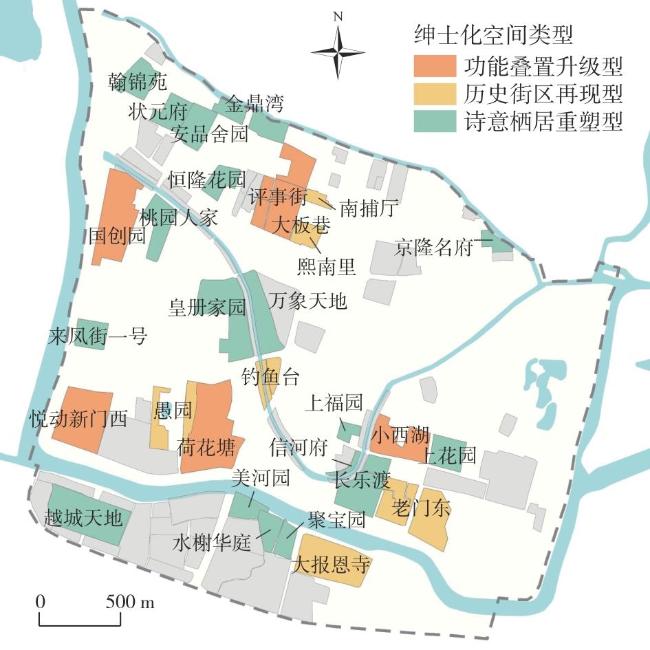
文章基于对文化旅游资源驱动型绅士化的基本阐释,重点分析南京“老城南”更新改造中,文旅型绅士化现象的类型、机制与效应。研究发现:①南京“老城南”文旅型绅士化可分为历史街区再现型、诗意栖居重塑型和功能叠置升级型3种。②优质稀缺文化旅游资源带来的“潜在地租”上涨和“垄断租差”是推动文旅型绅士化发生的核心动力;地方政府、市场力量和社会群体之间的权力协商与利益关系的差异组合与动态变化,形塑文旅型绅士化的多元路径与类型模式。③文旅型绅士化有利于历史文化遗产复兴再现与多元利用,但要警惕过度资本化和过度商品化等问题。最后,建议加强对历史文化资源的文脉挖掘与保护利用,规避绅士化过程中的“置换/失所”和社会不公平等负面效应,引导文旅型绅士化成为推动城市更新与高质量发展的有效工具。
汪徽 , 刘春卉 . 文化旅游资源驱动下的绅士化特征与机制——以南京老城南为例[J]. 经济地理, 2025 , 45(11) : 234 -244 . DOI: 10.15957/j.cnki.jjdl.2025.11.023
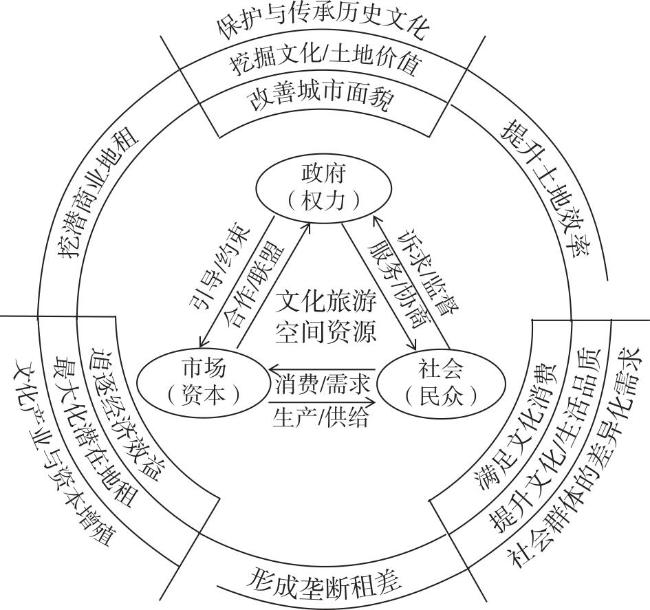
Research on gentrification in China lacks an understanding of the inherent laws of gentrification phenomena and an objective value judgment of gentrification effects. Focusing on cultural tourism resource-enabled gentrification, this study analyzes the types, mechanisms, and effects observed in the renewal and transformation of Nanjing's "Southern Old City". Specifically, first, cultural tourism gentrification within the "Southern Old City" can be categorized into three types: historical block reproduction, poetic habitat reinvention, and functional superimposition upgrading. Second, the increase in "potential land rent" and the "monopoly rent gap" generated by high-quality, scarce cultural tourism resources constitute the core driving force of cultural tourism resource-enabled gentrification. The diverse paths and types of this gentrification are shaped by the different combinations and dynamic changes in power dynamics and interest relations among local governments, market forces, and social groups. Third, while gentrification facilitates the revival, reproduction, and diversified use of historical and cultural heritage, vigilance is required against issues such as excessive capitalization and commercialization. It is suggested that greater efforts should be devoted to enhancing the exploration, protection, and utilization of historical and cultural resources, avoid negative consequences such as "residential displacement" and social inequity during the process of gentrification, and guide cultural and tourism-driven gentrification to serve as an effective tool for promoting urban renewal and high-quality development.
表1 老城南商业娱乐场所数量与增长Tab.1 Number and growth of commercial and entertainment venues in the southern old city |
| 类型 | 2007 | 2023 | 2007—2023 数量增长(%) | |||
|---|---|---|---|---|---|---|
| 数量(个) | 比例(%) | 数量(个) | 比例(%) | |||
| 异域料理 | 10 | 9.4 | 58 | 16.4 | 480.0 | |
| 咖啡茶馆 | 30 | 28.3 | 129 | 36.4 | 330.0 | |
| 美容健身 | 36 | 34.0 | 94 | 26.6 | 161.1 | |
| 商务娱乐 | 30 | 28.3 | 73 | 20.6 | 143.3 | |
| 合计 | 106 | 100.0 | 354 | 100.0 | 234.0 | |
表2 2023年老城南更新与未更新社区住宅价格比较(排名前10)Tab.2 Comparation of housing prices between updated and unrenovated residential communities in 2023 |
| 更新后住宅区 | 未更新住宅区 | ||||
|---|---|---|---|---|---|
| 排序 | 小区名称 | 房价(元/m2) | 排序 | 小区名称 | 房价(元/m2) |
| 1 | 星叶翰锦院 | 74100 | 1 | 华静家园 | 48376 |
| 2 | 越城天地 | 66874 | 2 | 东王府园 | 44200 |
| 3 | 万科安品园舍 | 66507 | 3 | 西一新村 | 44177 |
| 4 | 泰禾南京院子 | 64222 | 4 | 一品嘉园 | 42879 |
| 5 | 金鼎湾国际 | 56459 | 5 | 长乐花园 | 42400 |
| 6 | 皇册家园 | 55810 | 6 | 小西湖小区 | 41957 |
| 7 | 来凤街一号 | 51000 | 7 | 龙翔隐园 | 41600 |
| 8 | 宏图上花园 | 48913 | 8 | 北巷小区 | 41268 |
| 9 | 雅居乐长乐渡 | 48987 | 9 | 大四福巷小区 | 39789 |
| 10 | 宏图上福园 | 45809 | 10 | 金陵闸小区 | 39182 |
表3 2023年老城南更新与未更新社区社会属性比较Tab.3 Comparation of social attributes between updated and unrenovated residential communities in 2023 |
| 社会属性 | 更新住宅区 (%) | 未更新地区 (%) | 老城南总体 (%) | |
|---|---|---|---|---|
| 收入水平 | 3999元/月以下 | 44.3 | 52.3 | 51.2 |
| 4000~7999元/月 | 28.9 | 30.2 | 30.0 | |
| 8000元/月以上 | 26.8 | 17.5 | 18.8 | |
| 消费能力 | 高消费水平 | 34.4 | 25.1 | 26.4 |
| 中消费水平 | 57.7 | 64.6 | 63.6 | |
| 低消费水平 | 7.8 | 10.3 | 10.0 | |
| 教育层次 | 高中及以下 | 64.3 | 72.2 | 71.1 |
| 专科 | 20.9 | 18.6 | 19.0 | |
| 本科及以上 | 14.8 | 9.2 | 9.9 | |
| [1] |
|
| [2] |
|
| [3] |
|
| [4] |
|
| [5] |
|
| [6] |
|
| [7] |
|
| [8] |
陶伟, 李晶晶, 卢俊, 等. 西方绅士化与租差理论研究的交织[J]. 经济地理, 2024, 44(6):52-60,145.
|
| [9] |
|
| [10] |
|
| [11] |
何深静, 钱俊希, 徐雨璇, 等. 快速城市化背景下乡村绅士化的时空演变特征[J]. 地理学报, 2012, 67(8):1044-1056.
|
| [12] |
杨雪珂, 徐红罡. 艺术家影响下乡村绅士化与旅游发展的相互作用——以成都明月村为例[J]. 旅游学刊, 2023, 38(4):15-25.
|
| [13] |
谭华云, 周国华. 地理学视角的乡村绅士化研究框架[J]. 经济地理, 2022, 42(11):173-184.
|
| [14] |
常江, 谢涤湘, 陈宏胜, 等. 历史街区更新驱动下的旅游绅士化研究——以佛山岭南天地为例[J]. 热带地理, 2018, 38(4):586-597.
|
| [15] |
宋伟轩, 孙洁, 陈艳如, 等. 南京内城商业绅士化发育特征研究[J]. 地理学报, 2020, 75(2):426-442.
|
| [16] |
卢松, 陈路桥, 龙澄, 等. 中国大城市郊区传统村镇旅游绅士化研究——以上海市朱家角古镇为例[J]. 地理学报, 2023, 78(10):2535-2553.
|
| [17] |
郭斯琪, 史春云, 钱月祥, 等. 旅游绅士化影响下的乡村空间重构及其驱动机制:以徐州市汉王村为例[J]. 地理科学进展, 2024, 43(5):966-980.
|
| [18] |
|
| [19] |
|
| [20] |
吴淑凤. 迁入者与创意街区的社会建构——基于一种绅士化的视角[J]. 城市规划, 2019, 43(6):90-96.
|
| [21] |
|
| [22] |
|
| [23] |
|
| [24] |
|
| [25] |
|
| [26] |
|
| [27] |
|
| [28] |
宋伟轩, 王富平, 汪毅, 等. 城郊大型保障房住区的社会空间特征与问题研究——以南京岱山为例[J]. 地理科学进展, 2024, 43(12),2470-2481.
|
| [29] |
储德平, 黄成昆. 旅游发展背景下乡村自我绅士化的过程与机制——以陕西袁家村为例[J]. 地理研究, 2023, 42(7):1856-1873.
|
| [30] |
|
| [31] |
|
| [32] |
蔡晓梅, 刘美新, 林家惠, 等. 旅游发展背景下乡村绅士化的动态表征与形成机制——以广东惠州上良村为例[J]. 旅游学刊, 2021, 36(5):55-68.
|
| [33] |
何江夏, 王雨村. 苏州老城更新的绅士化发展进程及其对策研究[J]. 城市规划, 2018, 42(9):70-78.
|
| [34] |
胡小武, 何平. 从“绅士化”到“超级绅士化”——大城市中心城区空间更新“奢侈化”趋势研究[J]. 河北学刊, 2021, 41(2):190-197.
|
| [35] |
|
| [36] |
卢俊, 陶伟, 林清清. 旅游绅士化研究进展:理论脉络、研究议题与范式创新[J]. 中国生态旅游, 2023, 13(5):740-761.
|
| [37] |
|
| [38] |
于立, 王艺然. 乡村振兴背景下我国乡村中产化的实施路径探讨[J]. 经济地理, 2021, 41(2):167-173,193.
|
/
| 〈 |
|
〉 |