


能源资源型区域碳排放高分辨率时空演变规律和驱动因素——以吐哈国家能源基地为例
|
陈琳(1982—),女,硕士,副研究员,研究方向为气候变化与能源经济。E-mail:chenlin@iet.cn |
收稿日期: 2025-07-18
修回日期: 2025-10-21
网络出版日期: 2025-12-23
基金资助
科技部重大科研项目(SQ2021xjkk01800)
High-resolution Spatiotemporal Evolution and Driving Factors of Carbon Emission in Energy Resource-intensive Areas: Taking the Turpan-Hami National Energy Base as a Case
Received date: 2025-07-18
Revised date: 2025-10-21
Online published: 2025-12-23
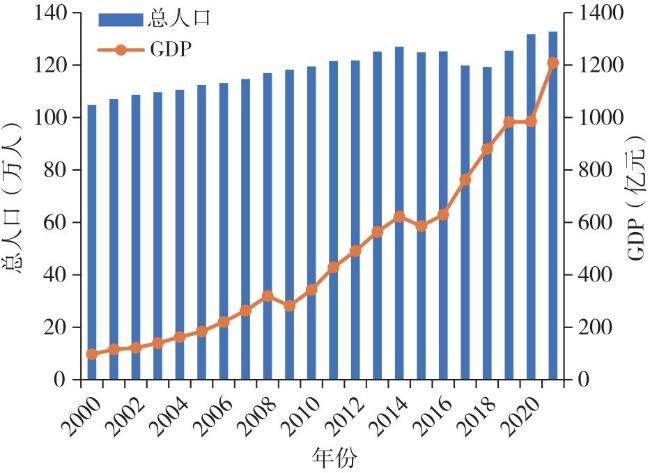
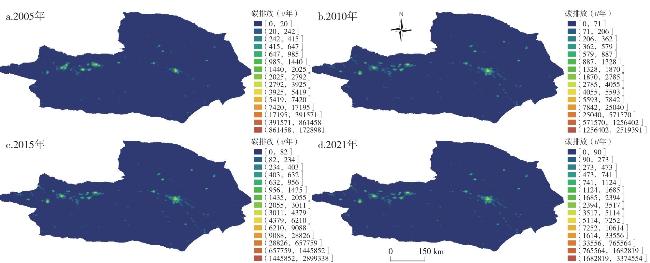
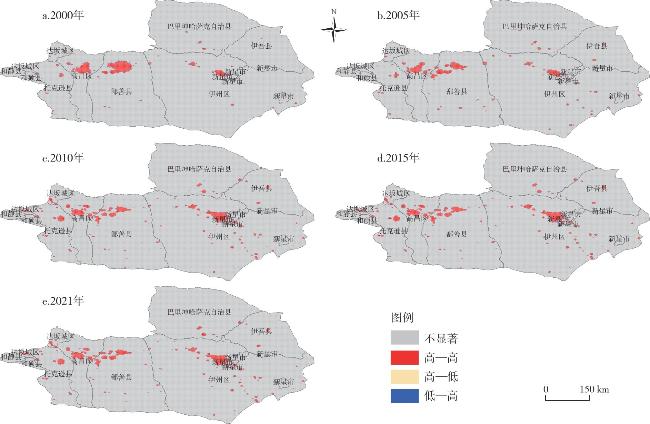
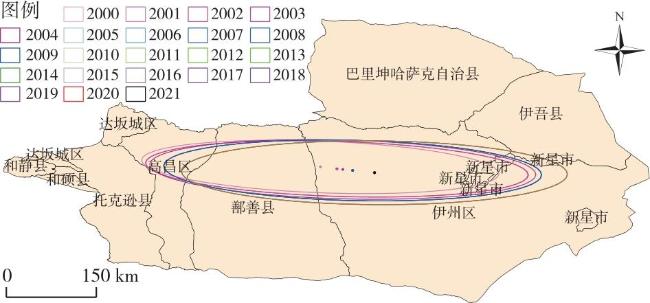
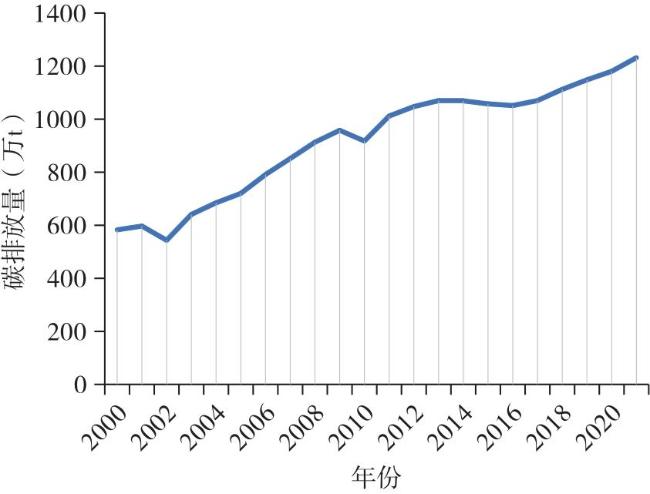
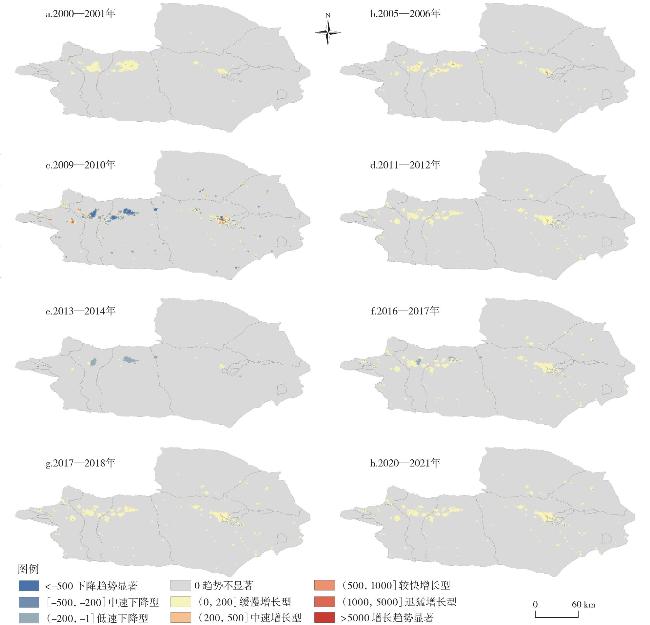
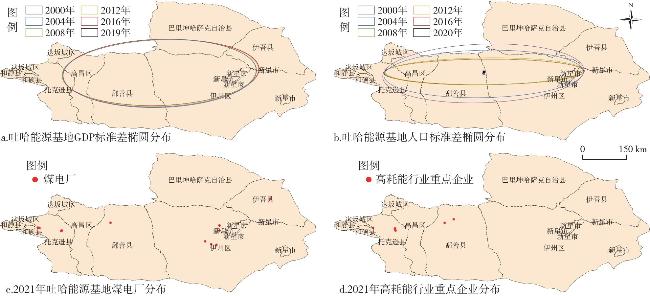
能源资源型地区对化石能源存在较强的依赖性,易形成“刚性”的产业路径依赖和“功能锁定”,从而导致化石能源的大量消耗与碳排放规模的扩大。文章以吐哈国家能源基地为研究对象,通过系统的边界界定和数据收集,建立了高分辨率碳排放核算体系,定量分析了吐哈基地的碳排放主体、种类、规模及分布情况,并构建了高精度的1 km×1 km网格碳排放数据集。研究发现:①吐哈基地在空间上形成了明显的高碳排放聚类区,主要集中在高昌区、鄯善县北部及伊州区中部,这与其区域发展差异密切相关。②吐哈基地碳排放重心的空间形态及其迁移与其GDP、人口和工业分布具有一致性。③从影响因素看,2010年前碳排放量经历显著变化,与政策调控、工业化城镇化进程及能源消费等因素密切相关;2010年后,碳排放变化趋势趋于稳定,但仍存在波动性,电力行业、重工业等能源密集型行业仍需加强监管和技术创新。文章不仅为资源型地区碳排放现状及其演化规律研究提供了新的分析视角和方法,还为进一步开展碳排放监测和研究奠定了重要的数据和技术基础。
陈琳 , 李华姣 . 能源资源型区域碳排放高分辨率时空演变规律和驱动因素——以吐哈国家能源基地为例[J]. 经济地理, 2025 , 45(11) : 192 -201 . DOI: 10.15957/j.cnki.jjdl.2025.11.019
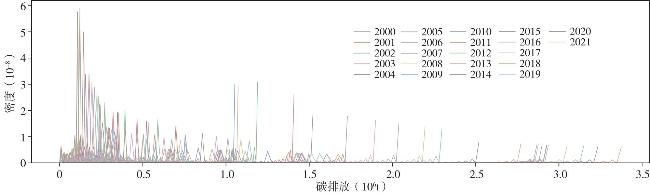
Energy resource-intensive areas have a strong dependence on fossil fuels, often forming "rigid" industrial path dependencies and "functional lock-ins," which inevitably lead to the consumption of large amounts of fossil fuels and the generation of large-scale carbon emissions. This study takes the Turpan-Hami National Energy Base as the object. Through systematic boundary demarcation and data collection, a high-resolution carbon emission accounting system was established. We analyzed the main carbon emitters, types, scales, and distribution of carbon emissions in the Turpan-Hami Base quantitatively, and constructed a high-precision 1 km×1 km grid carbon emission basic dataset. It was found that the Turpan-Hami Energy Base has formed distinct high-carbon emission clustering areas in space, mainly concentrated in the Gaochang District, the northern part of Shanshan County, and the central part of Yizhou District, which is closely related to the regional development differences. The spatial pattern and migration trend of the carbon emission centroid were further revealed by the standard deviation ellipse method, and it was found to be consistent with the distribution of GDP, population, and industry. Based on the kernel density estimation method, the spatiotemporal evolution features of carbon emissions in the Turpan-Hami Base were further studied. The results show that before 2010, carbon emissions underwent significant changes, which were closely related to policy regulation, the process of industrialization and urbanization, and energy consumption. After 2010, the trend of carbon emission changes tended to stabilize, but there were still fluctuations. High-emission industries such as the power industry, heavy industry, and energy sector still need to strengthen supervision and technological innovation. This study provides a new analytical perspective and method for the current situation and evolution fratures of carbon emissions in resource-based areas and lays an important foundation of data and methodology for further carbon emission monitoring and research. Next, we will get high-resolution socioeconomic data to achieve alignment with existing high-resolution datasets, so as to enable in-depth analyses.
表1 数据类型及来源Tab.1 Data description for analyzing carbon emission evolution characteristics and socioeconomic driving factors |
| 数据名称 | 时间序列 | 空间分辨率 | 数据来源 |
|---|---|---|---|
| 人口数据 | 2000—2021年 | 1000 m | https://landscan.ornl.gov |
| 土地利用数据 | 2000—2021年 | 30 m | https://zenodo.org/record/8176941 |
| GDP数据 | 2000—2021年 | 1000 m | https://doi.org/10.1038/s41597-022-01322-5 |
| 高分辨率碳排放数据 | 2000—2021年 | - | ODIAC Fossil fuel emission dataset |
| 耕地破碎化指数、建设用地面积 | 2000—2021年 | 1000 m | 基于土地利用数据构建得到 |
| 各类经济统计数据(能源消费总量、地区总人口、地区城镇人口数、机动车车辆拥有量、城镇建设用地面积等) | 2000—2021年 | - | 由吐鲁番、哈密两市统计年鉴得到,机动车辆拥有量、城镇建设用地面积以及能源总量3个指标的公开2000—2021年的年份数据并未完整,对其进行拟合作为补充数据 |
| 煤力发电厂点源数据、其他高耗能行业重点企业 | 截至2021年 | - | 煤力发电厂点源数据: https://datasets.wri.org/dataset/globalpowerplantdatabase |
表2 碳排放增长类型划分及标准Tab.2 Classification criteria for carbon emission growth types |
| 增长类型 | SLOPE值 |
|---|---|
| 下降趋势显著 | <-500 |
| 中速下降型 | [-500,-200] |
| 缓慢下降型 | -200~-1 |
| 趋势不显著 | 0 |
| 缓慢增长型 | 1~200 |
| 中速增长型 | 200~500 |
| 较快增长型 | 500~1000 |
| 迅猛增长型 | 1000~5000 |
| 增长趋势显著 | >500 |
| [1] |
蒋庆哲, 刘杨, 蒲欣宇, 等. 零碳园区建设的系统路径、发展模式及治理生态[J]. 中国人口·资源与环境, 2025, 35(5):13-23.
|
| [2] |
库力孜那. 新疆吐哈盆地二氧化碳地质封存潜力分析[D]. 乌鲁木齐: 新疆大学, 2016.
|
| [3] |
包佳玉, 李祥龙, 胡启文, 等. 新疆能源消费碳排放时空特征及能源结构调整路径探讨[J]. 干旱区研究, 2024, 41(2):345-356.
|
| [4] |
|
| [5] |
韩梦瑶, 刘卫东, 谢漪甜, 等. 中国省域碳排放的区域差异及脱钩趋势演变[J]. 资源科学, 2021, 43(4):710-721.
|
| [6] |
徐维祥, 郑金辉, 周建平, 等. 资源型城市转型绩效特征及其碳减排效应[J]. 自然资源学报, 2023, 38(1):39-57.
|
| [7] |
陆杉, 李雯. 技术创新对能源利用效率影响的空间效应与机制——基于中国278个地级以上城市的面板数据[J]. 中南大学学报(社会科学版), 2024, 30(2):101-113.
|
| [8] |
余文梦, 张婷婷, 沈大军. 基于随机森林模型的我国县域碳排放强度格局与影响因素演进分析[J]. 中国环境科学, 2022, 42(6):2788-2798.
|
| [9] |
刘华军, 邵明吉, 吉元梦. 中国碳排放的空间格局及分布动态演进——基于县域碳排放数据的实证研究[J]. 地理科学, 2021, 41(11):1917-1924.
|
| [10] |
王宇杰, 段霄东, 薛颖, 等. 中国资源型城市碳排放特征、达峰态势及驱动因素分析[J]. 生态经济, 2025, 41(3):43-49.
|
| [11] |
潘家华, 吉治璇. 可再生能源产—储—用多功能融合的零碳单元体形态特征与方案构建[J]. 中国人口·资源与环境, 2025, 35(5):1-12.
|
| [12] |
|
| [13] |
吴大放, 吴钊骏, 李升发, 等. 粤北山区耕地非粮化演变特征及其影响因素[J]. 经济地理, 2023, 43(8):144-153.
|
| [14] |
安国强, 韩颖新, 高宁, 等. 山东省生态系统服务价值量及均衡度的空间分异规律[J]. 中国人口·资源与环境, 2021, 31(10):9-18.
|
| [15] |
|
| [16] |
曾志伟, 杨华, 宁启蒙, 等. 洞庭湖区土地利用强度演变及其对生态系统服务的影响[J]. 经济地理, 2022, 42(9):176-185.
|
| [17] |
|
| [18] |
|
| [19] |
马立, 王璟煦, 张迪迪, 等. 高时空分辨率FFCO2排放清单的构建方法及研究展望[J]. 地理学报, 2022, 77(3):650-664.
|
| [20] |
蔡博峰, 王金南, 杨姝影, 等. 中国城市CO2排放数据集研究——基于中国高空间分辨率网格数据[J]. 中国人口·资源与环境, 2017, 27(2):1-4.
|
| [21] |
|
| [22] |
高阳, 张磊, 黄安, 等. 高时空分辨率FFCO2排放清单的构建方法及研究展望[J]. 环境科学研究, 2022, 35(5):123-135.
|
/
| 〈 |
|
〉 |