


中国粮食生产空间变迁及其动力机制
|
关付新(1965—),男,博士,教授,研究方向为农业绿色发展、粮食安全。E-mail:gfx0371@sina.com |
收稿日期: 2024-11-10
修回日期: 2025-04-22
网络出版日期: 2025-12-23
基金资助
教育部人文社会科学研究项目(23YJA790021)
河南省哲学社会科学规划项目(2022BJJ019)
Spatiotemporal Evolution and Dynamic Mechanism of China's Grain Production
Received date: 2024-11-10
Revised date: 2025-04-22
Online published: 2025-12-23
关付新 , 吴云天 . 中国粮食生产空间变迁及其动力机制[J]. 经济地理, 2025 , 45(11) : 181 -191 . DOI: 10.15957/j.cnki.jjdl.2025.11.018
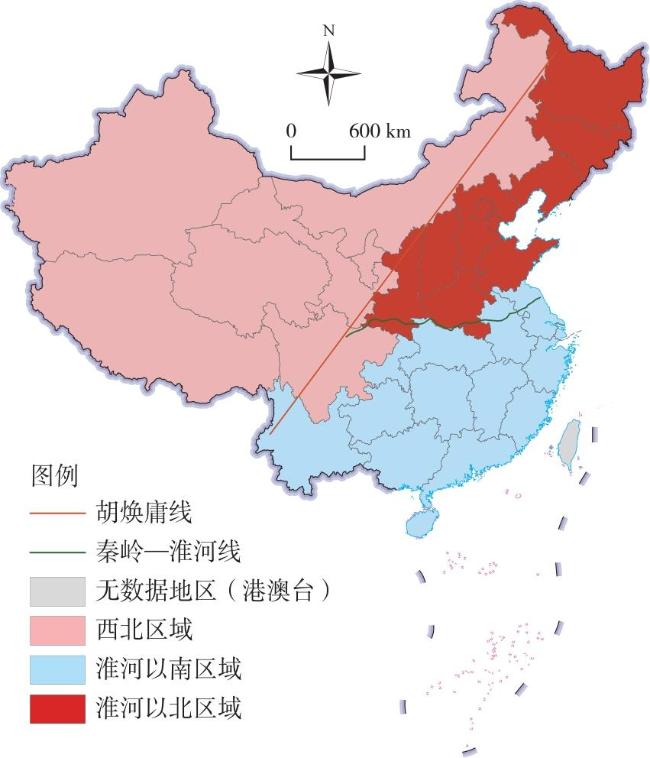
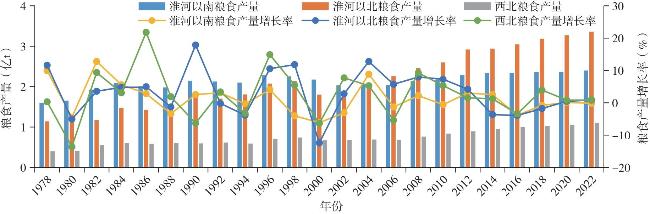
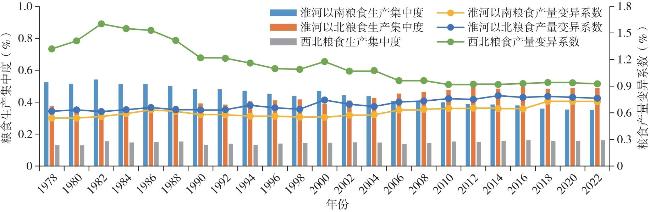
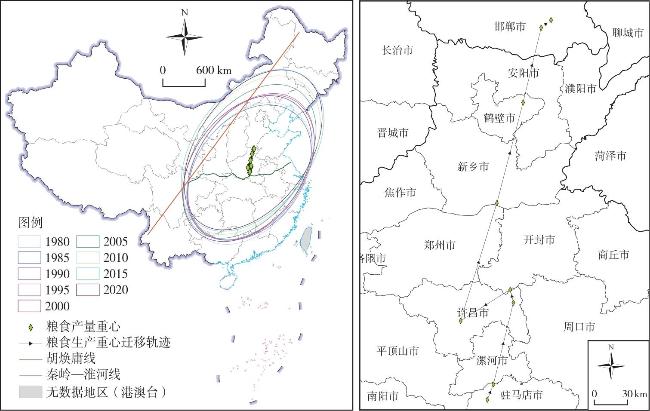
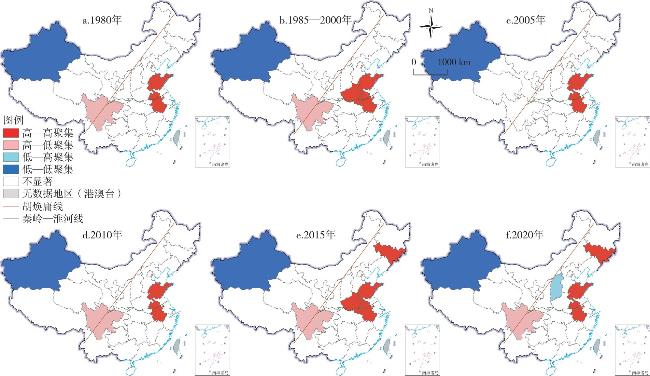
To reveal the "geographical code" behind the spatial evolution of China's grain production, this study divides China into three regions—south of the Huai River, north of the Huai River, and the northwest—based on two critical geographical boundaries: the Qinling-Huai River Line and the Hu Huanyong Line. Within this "two-line three-region" spatial framework, provincial grain production data from 1978 to 2022 are analyzed using dynamic analysis, spatial analysis, and econometric modeling to investigate the spatiotemporal evolution and driving mechanisms of China's grain production. The results show: 1) The spatial transition of grain production exhibits two features: "crossing lines" and "challenging lines." The "crossing lines" phenomenon refers to the northward shift of the grain production center of gravity, crossing the Qinling-Huai River Line, while the "challenging lines" phenomenon reflects a westward shift, with provinces in the northwest entering the coverage of the standard deviational ellipse of grain production, challenging the Hu Huanyong Line. 2) The high-high clustering areas of grain production in China are concentrated in the region north of the Qinling-Huai River Line; the low-low clustering areas are distributed west of the Hu Huanyong Line; the high-low and low-high clustering areas are located along the southern and northern segments of the Hu Huanyong Line, respectively, spanning the line. 3) Geographical disparities between the "three regions" divided by the "two lines" drive changes in grain production patterns. The "first nature" (natural conditions) shaped the early pattern of "south-to-north grain transfer" in China's grain production system, while the "second nature" (socio-economic conditions) has driven the restructuring of the "north-to-south grain transfer" pattern. These findings underscore the need to implement differentiated national food security strategies tailored to the characteristics of each "line-divided region."
表1 1978—2022年不同年份的全局莫兰指数Tab.1 Global Moran Index every five years between 1978 and 2022 |
| 年份 | 1980 | 1985 | 1990 | 1995 | 2000 | 2005 | 2010 | 2015 | 2020 |
|---|---|---|---|---|---|---|---|---|---|
| 莫兰指数 | 0.143 | 0.225 | 0.207 | 0.214 | 0.176 | 0.220 | 0.233 | 0.277 | 0.289 |
| P值 | 0.071 | 0.023 | 0.028 | 0.023 | 0.043 | 0.024 | 0.026 | 0.009 | 0.007 |
| Z值 | 1.5324 | 2.2344 | 2.0718 | 2.143 | 1.819 | 2.214 | 2.352 | 2.752 | 2.857 |
表2 中国粮食生产空间变迁的驱动因素及说明Tab.2 Influencing factors of the spatio-temporal evolution of grain production in China |
| 一级指标 | 二级指标 | 三级指标 | 指标说明 |
|---|---|---|---|
| 第一自然 | 自然条件 | 光照 | 年均日照时数(h) |
| 降水 | 年均降水量(mm) | ||
| 耕地投入 | 粮食播种面积(103hm2) | ||
| 自然灾害 | 成灾面积(103hm2) | ||
| 第二自然 | 社会经济条件 | 城镇化水平 | 城镇化率(%) |
| 劳动力投入 | 农业从业人口(万人) | ||
| 经济发展水平 | 人均GDP(元) | ||
| 交通通达度 | 公路及铁路里程(km) | ||
| 农业技术条件 | 机械投入 | 农业机械总动力(万kW·h) | |
| 灌溉水平 | 农田灌溉面积(103hm2) | ||
| 化肥投入 | 化肥施用量(万t) | ||
| 区域经济政策 | 开发战略 | 虚拟变量 |
表3 空间计量模型的检验结果Tab.3 Results of tests of spatial measurement models |
| 检验方法 | 检验结果 | 统计量 | 检验方法 | 检验结果 | 统计量 |
|---|---|---|---|---|---|
| LM检验 | 空间滞后 | 365.744 | LR检验 | 空间滞后 | 118.010 |
| 空间误差 | 1297.003 | 空间误差 | 202.070 | ||
| Hausman检验 | 129.810 | Wald检验 | 空间滞后 | 122.940 | |
| 空间误差 | 197.690 |
表4 空间杜宾模型估计结果Tab.4 Results of tests of spatial measurement models |
| 解释变量 | 系数 | 解释变量 | 系数 | |
|---|---|---|---|---|
| Sun | -0.108* | W·Sun | 0.359*** | |
| Rain | -0.035** | W·Rain | 0.075*** | |
| Disa | -0.000 | W·Disa | 0.001 | |
| Land | 0.391*** | W·Land | 0.075** | |
| Urban | 0.497 | W·Urban | 4.734*** | |
| Labour | 0.082** | W·Labour | -0.060 | |
| Gdp | -0.001* | W·Gdp | 0.007*** | |
| Access | 0.001*** | W·Access | -0.000 | |
| Mechan | 0.145*** | W·Mechan | -0.067*** | |
| Irri | 0.191*** | W·Irri | -0.014 | |
| Fert | 0.429*** | W·Fert | -0.230 | |
| Policy | 28.518 | W·Policy | 49.333 | |
| rho | 0.230*** |
注:***、*分别表示在1%、5%的水平上显著。表5同。 |
表5 空间效应分解结果Tab.5 Spatial effects decomposition results |
| 变量 | 直接效应 | 空间溢出效应 | 总效应 |
|---|---|---|---|
| 系数 | 系数 | 系数 | |
| Sun | -0.087 | 0.407*** | 0.320*** |
| Rain | -0.032* | 0.084*** | 0.052* |
| Disa | -0.000 | 0.001 | 0.001 |
| Land | 0.400*** | 0.205*** | 0.605*** |
| Urban | -0.787 | 6.226*** | 7.013*** |
| Labour | 0.081** | -0.056 | 0.025 |
| Gdp | -0.001 | 0.008*** | 0.007*** |
| Access | 0.001*** | 0.000 | 0.002*** |
| Mechan | 0.144*** | -0.044** | 0.100*** |
| Irri | 0.192*** | 0.039 | 0.231*** |
| Fert | 0.416*** | -0.169 | 0.247 |
| Policy | 32.831 | 67.883** | 100.714*** |
| [1] |
戈大专, 龙花楼, 乔伟峰. 改革开放以来我国粮食生产转型分析及展望[J]. 自然资源学报, 2019, 34(3):658-670.
|
| [2] |
|
| [3] |
黄爱军. 我国粮食生产区域格局的变化趋势探讨[J]. 农业经济问题, 1995(2):20-23.
|
| [4] |
杨宗辉, 李金锴, 韩晨雪, 等. 我国粮食生产重心变迁及其影响因素研究[J]. 农业现代化研究, 2019, 40(1):36-43.
|
| [5] |
刘彦随, 王介勇, 郭丽英. 中国粮食生产与耕地变化的时空动态[J]. 中国农业科学, 2009, 42(12):4269-4274.
|
| [6] |
|
| [7] |
王凤, 刘艳芳, 孔雪松, 等. 中国县域粮食产量时空演变及影响因素变化[J]. 经济地理, 2018, 38(5):142-151.
|
| [8] |
谢坤, 丁明军, 李资华, 等. 2000—2020年中国县域粮食单产的时空格局及其影响因素[J]. 中国农业资源与区划, 2025, 46(9):30-42.
|
| [9] |
|
| [10] |
胡慧芝, 王建力, 王勇, 等. 1990—2015年长江流域县域粮食生产与粮食安全时空格局演变及影响因素分析[J]. 长江流域资源与环境, 2019, 28(2):359-367.
|
| [11] |
|
| [12] |
|
| [13] |
栾健, 周玉玺. 自然灾害对山东省粮食生产影响的实证分析[J]. 干旱区资源与环境, 2016, 30(4):127-131.
|
| [14] |
夏四友, 赵媛, 许昕, 等. 江苏省粮食生产时空格局及其驱动因素[J]. 经济地理, 2018, 38(12):166-175.
|
| [15] |
|
| [16] |
杜蓉, 柳思维, 蔡荣. 中国粮食空间生产格局演变特征及其驱动机制[J]. 经济问题, 2023(8):92-102.
|
| [17] |
|
| [18] |
陈雨生, 江一帆, 张瑛. 中国大豆生产格局变化及其影响因素[J]. 经济地理, 2022, 42(3):87-94.
|
| [19] |
余瑞林, 马宗良. 2000年-2015年江汉平原粮食生产的时空格局及影响因素[J]. 世界地理研究, 2018, 27(3):99-108.
|
| [20] |
李二玲, 覃成林. 中国南北区域经济差异研究[J]. 地理学与国土研究, 2002(4):76-78.
|
| [21] |
陈明星, 李扬, 龚颖华, 等. 胡焕庸线两侧的人口分布与城镇化格局趋势——尝试回答李克强总理之问[J]. 地理学报, 2016, 71(2):179-193.
|
| [22] |
陆大道, 王铮, 封志明, 等. 关于“胡焕庸线能否突破”的学术争鸣[J]. 地理研究, 2016, 35(5):805-824.
|
| [23] |
陈全功, 柳小妮. 胡焕庸线与农牧交错线的哲学思考[J]. 草原与草坪, 2022, 42(2):132-136.
|
| [24] |
周岚, 施嘉泓, 崔曙平, 等. 新时代大国空间治理的构想——刍议中国新型城镇化区域协调发展路径[J]. 城市规划, 2018, 42(1):20-25,34.
|
| [25] |
于江波, 白凯, 王晓芳. 数字金融能否引领全要素生产率和经济产出跨越胡焕庸线[J]. 山西财经大学学报, 2022, 44(2):31-46.
|
| [26] |
肖前. 马克思主义哲学原理(上册)[M]. 北京: 中国人民大学出版社, 1994.
|
| [27] |
|
| [28] |
王铮. 理论经济地理学[M]. 北京: 科学出版社, 2002.
|
| [29] |
郑有贵, 邝婵娟, 焦红坡. 南粮北调向北粮南运演变成因的探讨——兼南北方两个区域粮食生产发展优势和消费比较[J]. 中国经济史研究, 1999(1):99-106,162.
|
| [30] |
|
/
| 〈 |
|
〉 |