


兰西城市群影子教育的时空演变及其影响因素
|
雒占福(1975—),男,博士,副教授,研究方向为人文地理与城乡规划。E-mail:luozhanfu@nwnu.edu.cn |
收稿日期: 2024-11-20
修回日期: 2025-03-13
网络出版日期: 2025-10-17
基金资助
国家自然科学基金项目(42061034)
The Spatiotemporal Evolution and Influencing Factors of Shadow Education in Lanxi Urban Agglomeration
Received date: 2024-11-20
Revised date: 2025-03-13
Online published: 2025-10-17
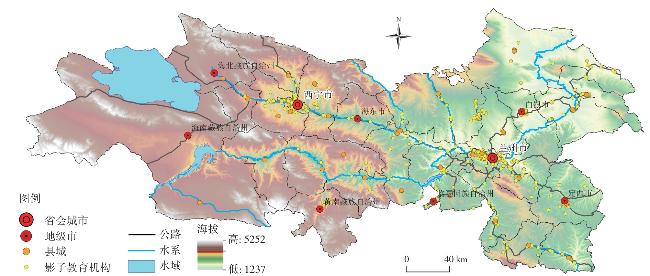
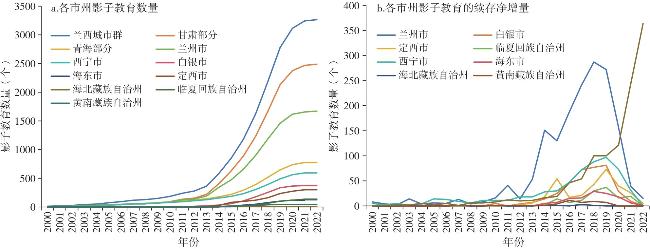
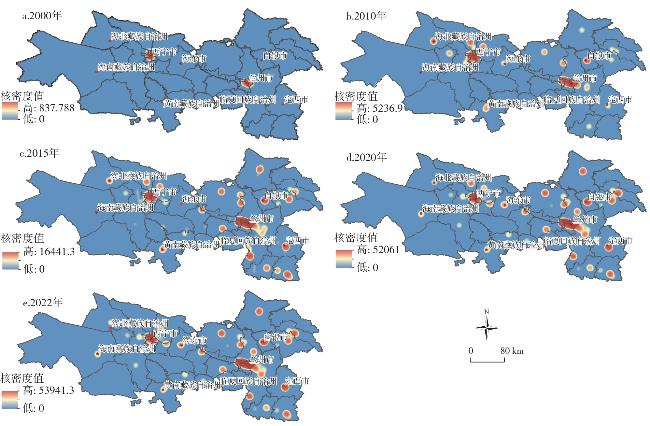
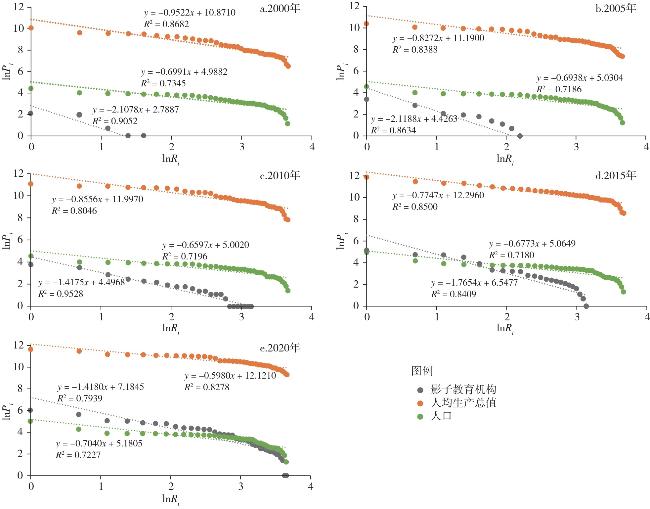
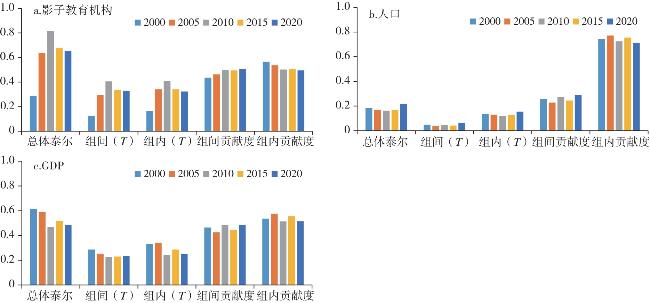
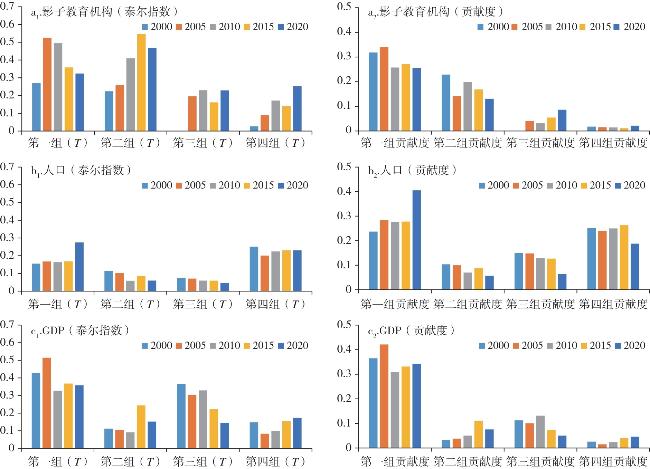
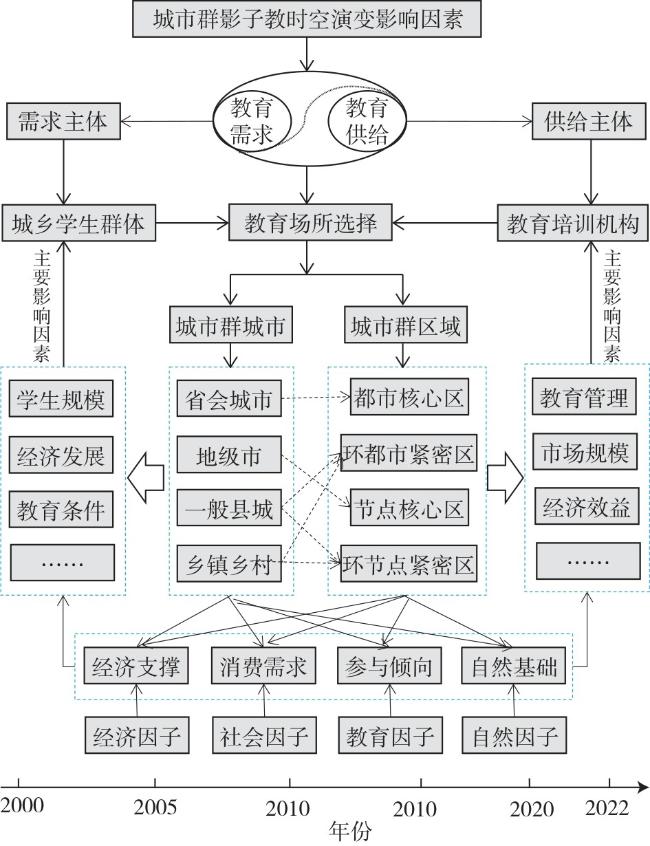
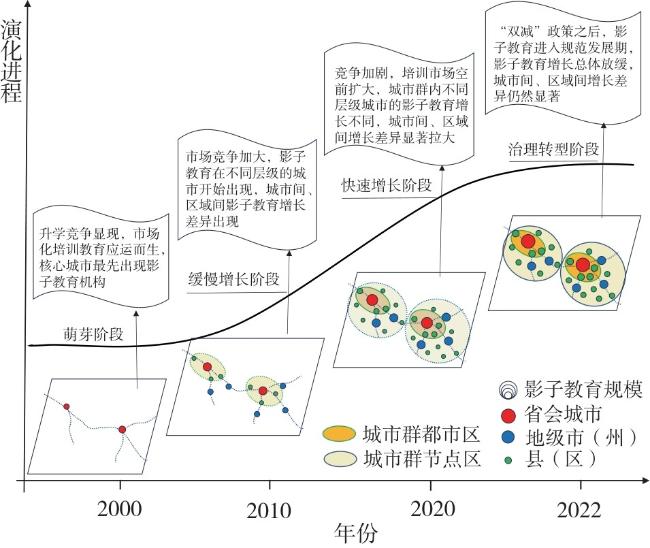
文章以兰西城市群为研究区域,以2000—2022年影子教育机构为研究对象,运用核密度估计、泰尔指数、位序—规模法则与地理探测器等研究方法,定量认识兰西城市群影子教育的时空演变特征及其影响因素。结果表明:①2000—2022年兰西城市群影子教育机构总量不断增长,大致经历了萌芽阶段、缓慢增长阶段、快速增长阶段到治理转型阶段,增长过程呈现“S型”形态特征,其数量增长具有显著的城乡间、城市间与区域间的异质性特征;②兰西城市群影子教育的时空集聚经历了先由高等级中心集聚再到低等级中心集聚的时序性、层级式发展过程,集聚规模呈现由城市群核心区向外围区不断递减的“核心—外围”特征;③兰西城市群内城市间影子教育增长符合位序规模法则,城市群双核心的兰州与西宁主城区是影子教育形成集聚的首位城市,小城市与边远县城是集聚能力差的低位序城市,其城市体系首位度呈现影子教育>经济>人口的要素集聚差异特征;④兰西城市群影子教育增长的区域异质性呈现“双核”结构的圈层式梯度差异特征,圈层间与圈层内的增长差异经历了由增大到减小的“n”型变化过程,增长差异指数呈现影子教育>经济>人口的要素异质性特征;⑤兰西城市群影子教育空间演变过程是经济支撑因子、社会需求因子、教育倾向因子与自然基础因子等共同作用的结果,且各因子在不同发展阶段、不同等级城市、不同圈层结构中的影响程度不同。
雒占福 , 刘娟琴 , 郑伟 , 林小茵 , 程学枭 , 张晗箎 , 邵小莉 . 兰西城市群影子教育的时空演变及其影响因素[J]. 经济地理, 2025 , 45(9) : 85 -97 . DOI: 10.15957/j.cnki.jjdl.2025.09.009
This paper takes the Lanxi urban agglomeration as the research area and shadow education institutions from 2000 to 2022 as the research object, and uses research methods such as kernel density estimation, Theil index, ordinal-scale rule and geographic detector to quantitatively understand the spatio-temporal evolution characteristics and influencing factors of shadow education in the Lanxi urban agglomeration. The results show that:1) From 2000 to 2022, the number of shadow education institutions in the Lanxi urban agglomeration has been growing continuously, which has roughly experienced the embryonic stage, slow growth stage, rapid growth stage and governance transition stage, and the growth process presents an "S-shaped" shape, with significant heterogeneity between urban and rural areas, cities and regions; 2) The growth of shadow educational institutions in Lanxi urban agglomeration has a sequential and hierarchical development process from high-level center agglomeration to low-level center agglomeration, and its spatial agglomeration scale presents a "core-periphery" feature of decreasing from the corearea of the urban agglomeration to the peripheral area; 3) The urban heterogeneity of shadow education growth in Lanxi urban agglomeration is consistent with the ordinal size rule. The main urban areas of Lanzhou and Xining, the dual core of the urban agglomeration, are the first cities with shadow education agglomeration, while small cities and remote counties are the low-order cities with weak shadow education agglomeration ability. The primordiality of the multi-tier urban system shows the difference of factor agglomeration of shadow education>economy>population. 4) The regional heterogeneity of shadow education growth in Lanxi Urban Agglomerate showed a "dual-core" structure, and the growth difference between and within the circle experienced an N-shaped change process from low increase to high increase, and then the difference decreased. The growth difference index showed an element heterogeneity characteristic of shadow education>economy>population;5) The spatial evolution of shadow education in Lanxi urban agglomeration is the result of the joint action of multiple factors, such as economic factors supporting the development of shadow education, social factors related to education demand, educational factors affecting consumption tendency and natural factors based on development, and each factor has different degrees of influence in different development stages, cities of different levels and circle structures.
表1 2000—2022年兰西城市群影子教育机构的分类统计Tab.1 Classification of shadow educational institutions in 2000-2022 |
| 培训类型 | POI子类范围 | 总存续 | 总注销 | 总量 (个) | |||
|---|---|---|---|---|---|---|---|
| 数量 (个) | 续存比例(%) | 数量 (个) | 注销比例(%) | ||||
| 课程辅导 | 中小学语文、数学、外语等文化课辅导机构;与升学相结合的音体美文化课辅导机构 | 1028 | 73.48 | 371 | 26.52 | 1399 | |
| 其他类 | 舞蹈、音乐、武术、书法、美术、钢琴和围棋等爱好艺术特长类辅导机构;婴幼儿托育、午托班、早教、小饭桌、亲子园等托管辅导机构;会计、编程、计算机网络、公务员、研究生、成人教育、医考以及各类职业技能辅导机构 | 2237 | 72.16 | 863 | 27.84 | 3100 | |
| 总计 | 3265 | 75.95 | 1234 | 28.70 | 4499 | ||
表2 2000—2022年兰西城市群影子教育机构相关的基础数据及来源Tab.2 Basic data and sources related to shadow education institutions in Lanxi urban agglomeration from 2000 to 2022 |
| 数据名称 | 数据详情 | 数据来源 | 研究用途 |
|---|---|---|---|
| 海拔数据 逐月平均气温数据 土地利用数据 | 1000 m×1000 m 1000 m×1000 m 30 m×30 m | 中国科学院资源环境科学数据中心 (http://www.resdc.cn) | 通过海拔、年平均气温与城市建设场地的空间紧凑度认识自然基础条件对影子教育落户的基础性影响 |
| GDP 第一、二、三产业增加值 城乡居民储蓄存款 | 2000—2022年 | 中国县域统计年鉴 | 通过县(区)单位的经济数据认识经济发展对影子教育落户集聚的支撑影响 |
| 普通中小学在校生数量 大学专科人数 | 2000、2010、2020年 | 第五、六、七次全国人口普查数据 | 通过受教育的规模与学历水平认识参与影子教育的倾向偏好 |
| 年末总人口数 城镇人口数 | 2000—2022年 | 《甘肃发展年鉴》《青海发展年鉴》 | 认识影子教育的需求规模与消费水平 |
| 消费行政边界等矢量数据 | 1∶100万 | 由高清天地图数字化获得 | 研究概况分析、数据裁剪 |
| DEM数据 | 30 m×30 m | 地理空间数据云(https://www.gscloud.cn) | 高程提取 |
表3 兰西城市群影子教育机构的全局Moran's I指数Tab.3 Global Moran's I Index for shadow educational institutions in the Lanxi urban agglomeration |
| 年份 | 2000 | 2010 | 2015 | 2020 | 2022 |
|---|---|---|---|---|---|
| 全局Moran's I指数 | 0.078 | 0.107 | 0.124 | 0.163 | 0.163 |
| Z得分 | 1.585 | 1.976 | 2.034 | 2.694 | 2.357 |
| P值 | 0.113 | 0.048 | 0.032 | 0.007 | 0.018 |
表4 影子教育机构影响因子指标及说明Tab.4 Shadow education institution impact factor index system |
| 衡量维度 | 测度指标 | 指标正负向 | 指标解释 |
|---|---|---|---|
| 自然因子 | X1海拔(m) | - | 海拔影响人类活动行为与人口分布,影响影子教育落户行为 |
| X2年平均气温(℃) | - | 气温影响人类活动行为与人口分布,影响影子教育落户行为 | |
| X3城市空间紧凑度 | + | 城市空间紧凑与否影响城市规模大小等级,影响影子教育落户行为 | |
| 经济因子 | X4人均GDP(元/人) | + | 人均经济规模是投资消费的基本支撑,也是影子教育消费的基本支撑 |
| X5二三产业增加值占比(%) | + | 非农经济结构影响潜在的影子教育发展的城乡差异与集聚规模差异 | |
| X6城乡居民储蓄存款(万元) | + | 影响城乡家庭对影子教育投资消费的基本经济支撑 | |
| 社会因子 | X7年末总人口(万人) | + | 人口规模影响影子教育消费的需求规模 |
| X8人口城镇化率(%) | + | 城镇化水平影响影子教育消费的需求水平 | |
| 教育因子 | X9普通中小学在校学生占比(%) | + | 学生参与氛围影响影子教育参与倾向与偏好 |
| X10大学专科人数占比(%) | + | 家长学历水平影响影子教育参与倾向与偏好 |
表5 兰西城市群影子教育分布的影响因子解释力Tab.5 Explanatory power of influencing factors on the distribution of shadow educational institutions in the Lanxi urban agglomeration |
| 年份 | X1 | X2 | X3 | X4 | X5 | X6 | X7 | X8 | X9 | X10 |
|---|---|---|---|---|---|---|---|---|---|---|
| 2000 | 0.261 | 0.277 | 0.254 | 0.391 | 0.520 | 0.564 | 0.601 | 0.519 | 0.124 | 0.516 |
| 2010 | 0.239 | 0.281 | 0.145 | 0.305 | 0.436 | 0.440 | 0.605 | 0.501 | 0.339 | 0.663 |
| 2020 | 0.474 | 0.387 | 0.347 | 0.284 | 0.481 | 0.802 | 0.763 | 0.492 | 0.552 | 0.616 |
| [1] |
马克·贝磊, 廖青. “影子教育”之全球扩张:教育公平、质量、发展中的利弊谈[J]. 比较教育研究, 2012, 34(2):13-17.
|
| [2] |
|
| [3] |
周常稳, 周霖. “影子教育”:一个不可忽视的教育问题[J]. 广西社会科学, 2018, 34(1):212-216.
|
| [4] |
魏易, 薛海平. 我国基础教育阶段家庭校外培训的消费行为研究——基于2017中国教育财政家庭调查的分析[J]. 教育学报, 2019, 15(6):68-81.
|
| [5] |
|
| [6] |
薛海平, 徐丹诚. 影子教育的剧场效应研究——基于中国教育追踪调查数据分析[J]. 教育经济评论, 2022, 7(1):75-98.
|
| [7] |
雒占福, 高旭, 张永锋, 等. 基于POI的城市影子教育机构空间格局及其影响因素——以兰州市主城区为例[J]. 人文地理, 2020, 35(6):95-105.
|
| [8] |
|
| [9] |
李双成, 蔡运龙. 地理尺度转换若干问题的初步探讨[J]. 地理研究, 2005, 24(1):11-18.
|
| [10] |
|
| [11] |
|
| [12] |
|
| [13] |
|
| [14] |
|
| [15] |
|
| [16] |
|
| [17] |
马克·贝磊. 欧洲地区影子教育研究:发展态势、动因及政策启示[J]. 全球教育展望, 2020, 49(2):35-61.
|
| [18] |
|
| [19] |
|
| [20] |
|
| [21] |
|
| [22] |
杨天天, 沈蕾娜. 初探美国校外教育对中国的启示——基于中美比较的视角[J]. 首都师范大学学报(社会科学版), 2012,(1):72-75.
|
| [23] |
潘冬冬, 王默. 改革开放以来我国影子教育的发展演变与反思[J]. 教育学术月刊, 2020(9):12-18.
|
| [24] |
薛海平, 高翔. 我国基础教育课外补习研究:历程、困境与展望[J]. 教育科学, 2022, 38(5):59-66.
|
| [25] |
张茂聪, 霍晓菲, 李琰. 校外教育培训机构治理:逻辑起点、现实困境与路径选择[J]. 教育科学, 2022, 38(3):39-45.
|
| [26] |
曾满超, 丁小浩, 沈华. 初中生课外补习城乡差异分析——基于甘肃、湖南和江苏3省的初中学生课外补习调查[J]. 教育与经济, 2010(2):7-11.
|
| [27] |
杨天平, 周兰芳. 义务教育阶段学生课外培训消费研究——基于浙江省金华市婺城区城乡4所学校的调研[J]. 教育与经济, 2011(2):37-42.
|
| [28] |
刘春卉, 谷跃, 刘予, 等. 城市影子教育机构的空间分异与教育资源领域化——以南京为例[J]. 经济地理, 2021, 41(5):155-164.
|
| [29] |
雒占福, 柏雪. 场域视角下城市影子教育的空间分异研究——以西安市主城区为例[J]. 地理研究, 2024, 43(6):1462-1481.
|
| [30] |
叶珊珊, 骆培聪, 吴嘉丽, 等. 基于POI数据的福州市教育培训机构空间格局及其影响因素[J]. 地域研究与开发, 2022, 41(4):44-51.
|
| [31] |
雷德宏. 城乡影子教育的空间差异及其影响机制[D]. 兰州: 西北师范大学, 2022.
|
| [32] |
姚士谋, 陈爽, 陈振光. 关于城市群基本概念的新认识[J]. 现代城市研究, 1998(6):15-17,61.
|
| [33] |
马燕坤, 肖金成. 都市区、都市圈与城市群的概念界定及其比较分析[J]. 经济与管理, 2020, 34(1):18-26.
|
| [34] |
宁越敏. 中国都市区和大城市群的界定——兼论大城市群在区域经济发展中的作用[J]. 地理科学, 2011, 31(3):257-263.
|
| [35] |
方创琳. 城市群空间范围识别标准的研究进展与基本判断[J]. 城市规划学刊, 2009(4):1-6.
|
| [36] |
彼得·霍尔, 凯西·佩恩. 多中心大都市:来自欧洲巨型城市区域的经验[J]. 罗震东,译. 北京: 中国建筑工业出版社, 2010.
|
| [37] |
谈明洪, 吕昌河. 以建成区面积表征的中国城市规模分布[J]. 地理学报, 2003(2):285-293.
|
| [38] |
于婷婷, 左冰, 阿荣, 等. 中国边境地区旅游发展的空间格局及驱动机制[J]. 经济地理, 2021, 41(2):203-213.
|
| [39] |
王劲峰, 徐成东. 地理探测器:原理与展望[J]. 地理学报, 2017, 72(1):116-134.
|
/
| 〈 |
|
〉 |