


Spatial Correlation Characteristics and Heterogeneity of Carbon Emissions in the Yangtze River Delta region Based on the Multidimensional Factor Flows
Received date: 2024-05-07
Revised date: 2024-10-19
Online published: 2026-04-29
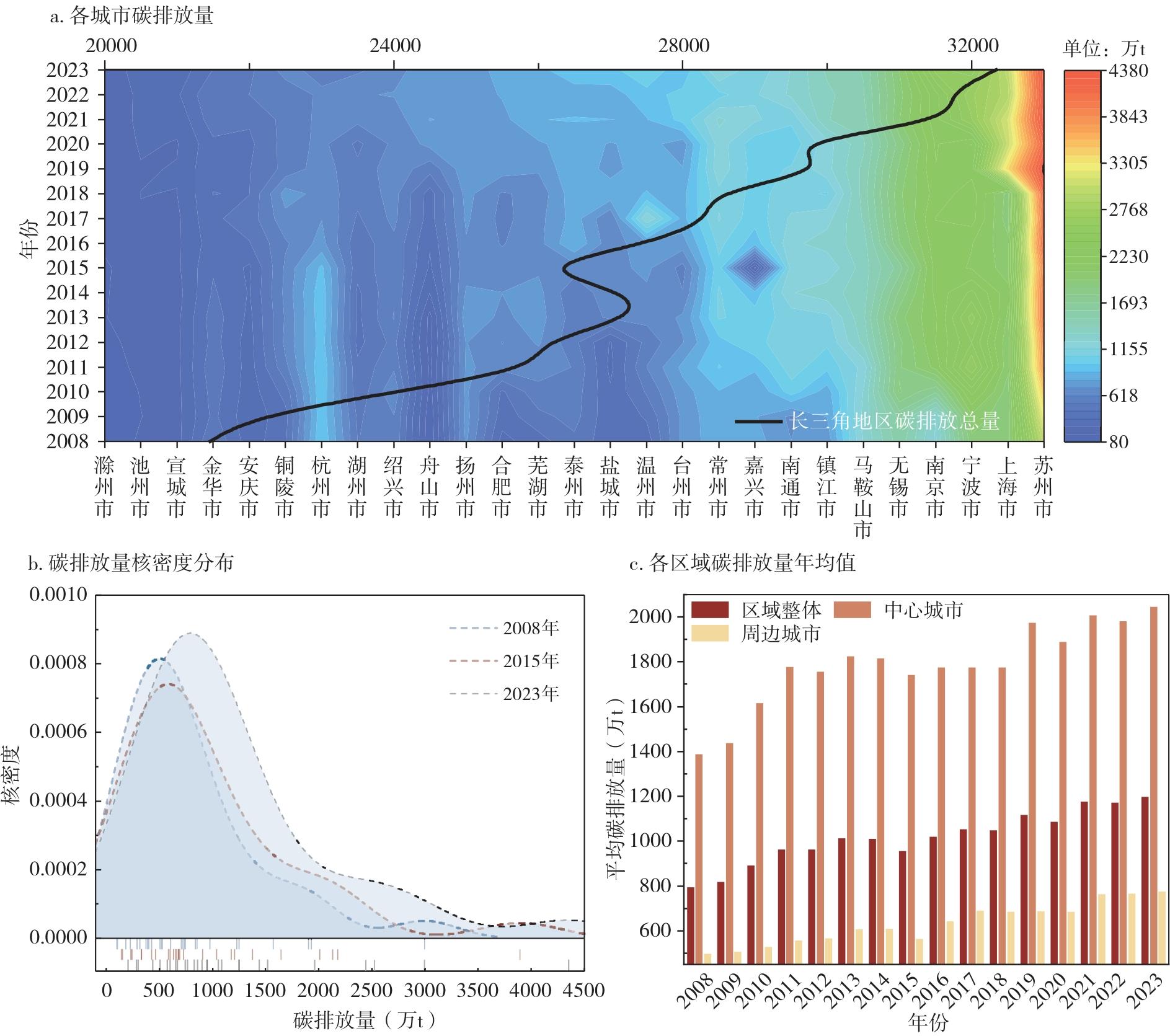
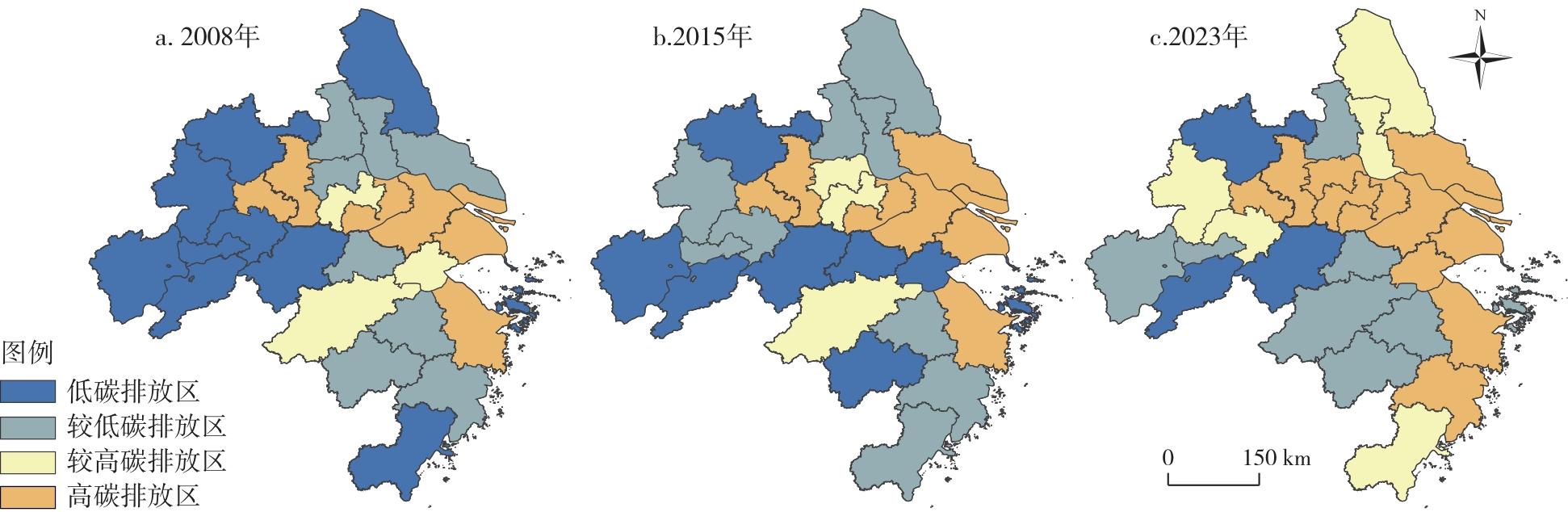
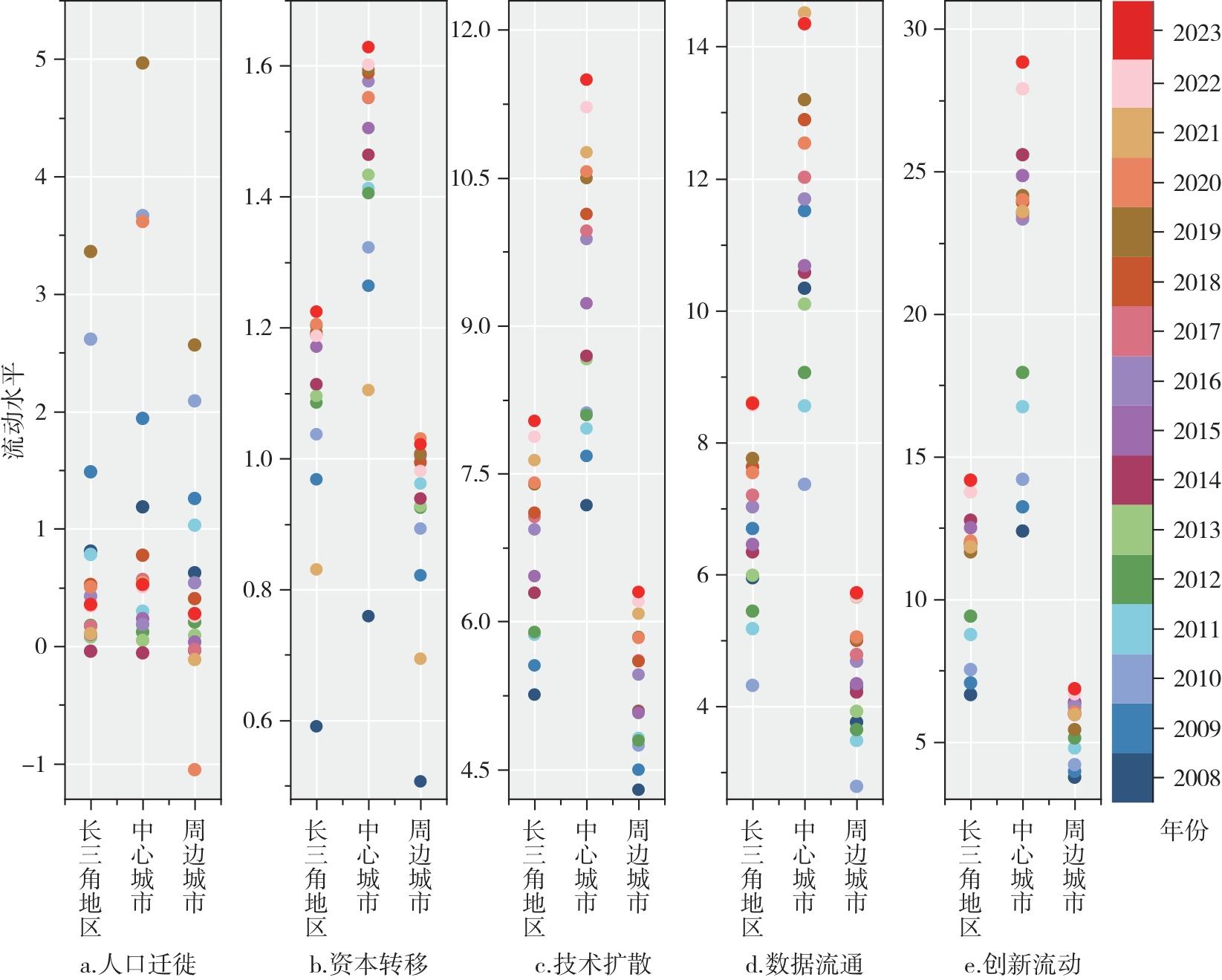
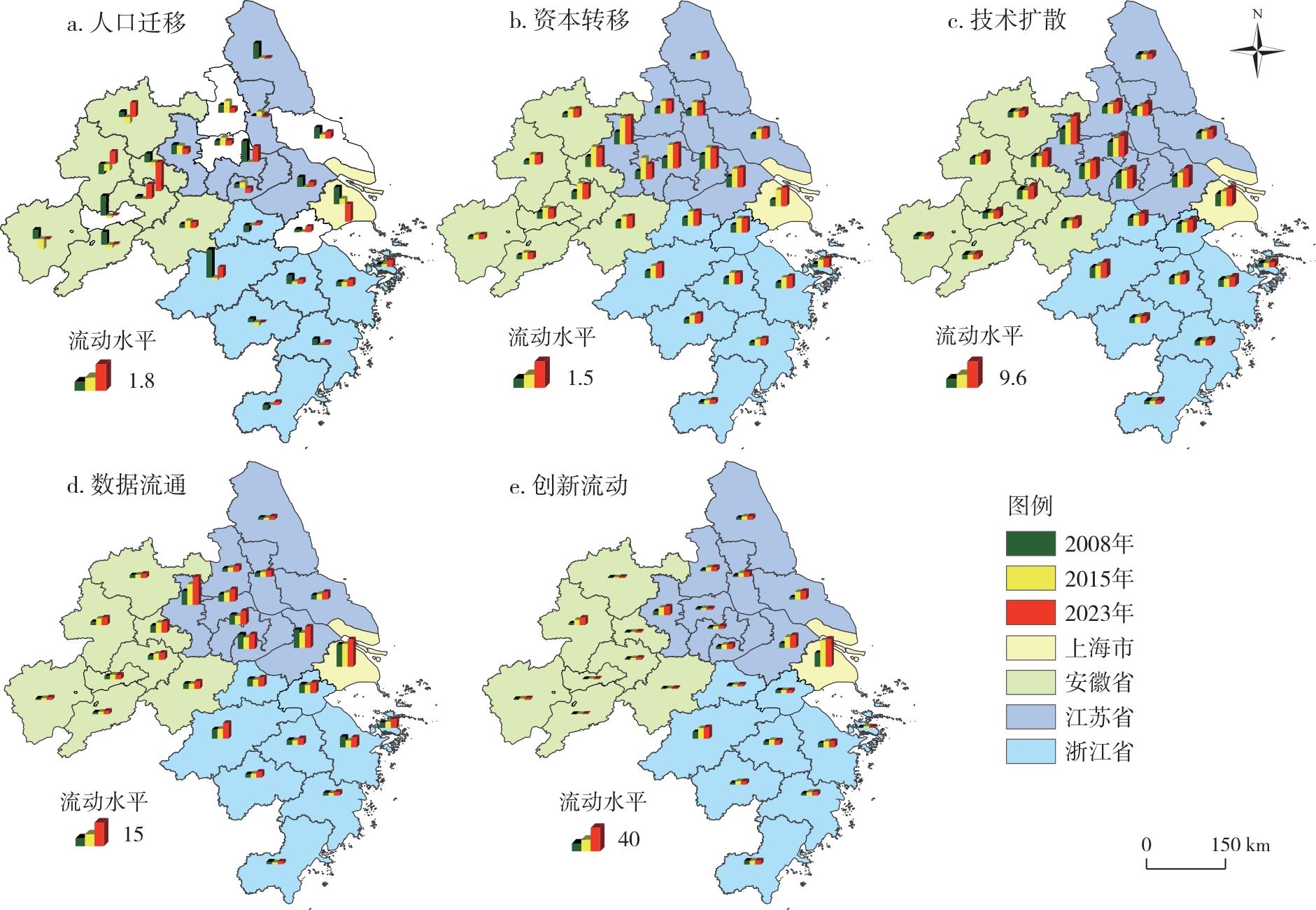
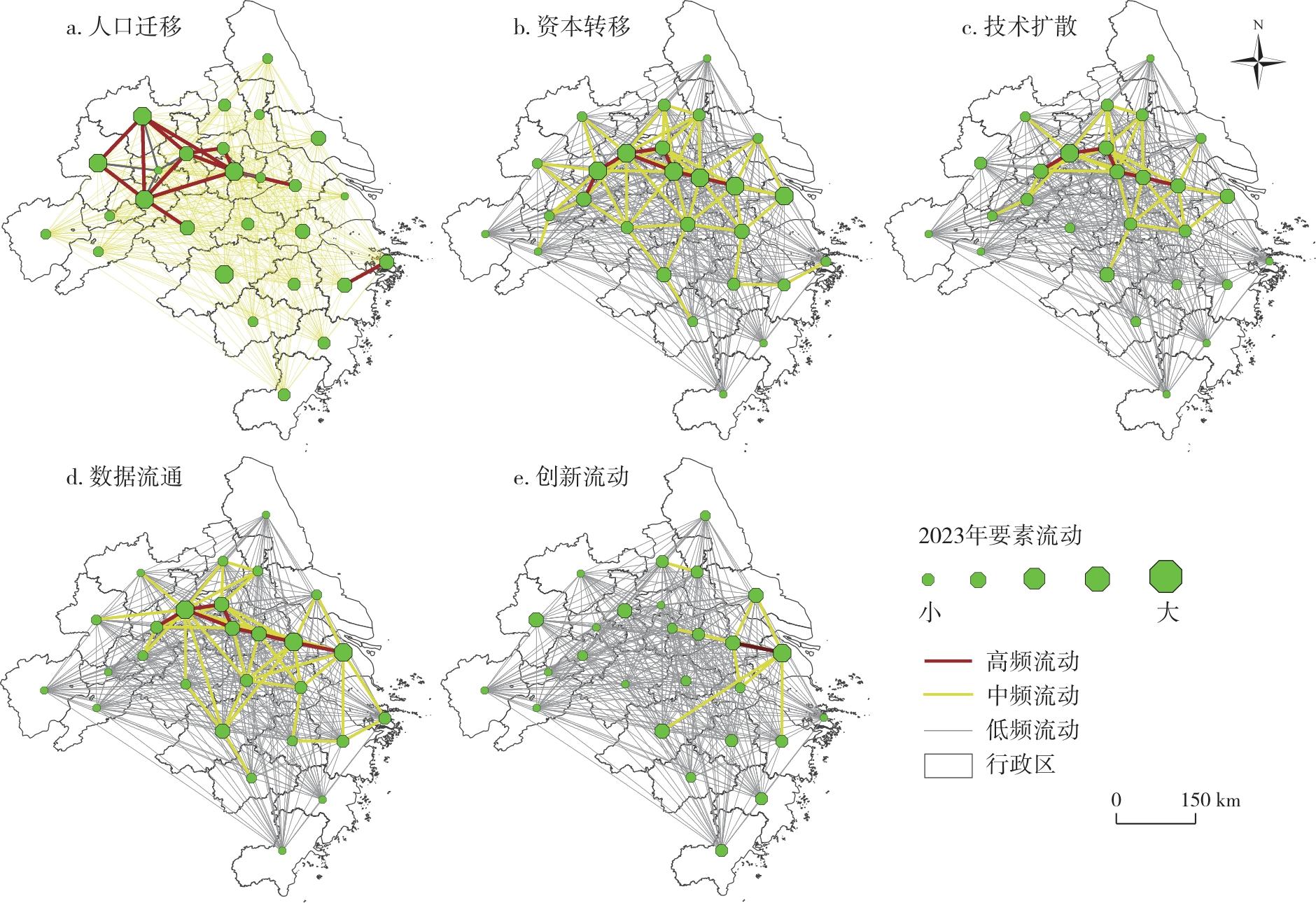
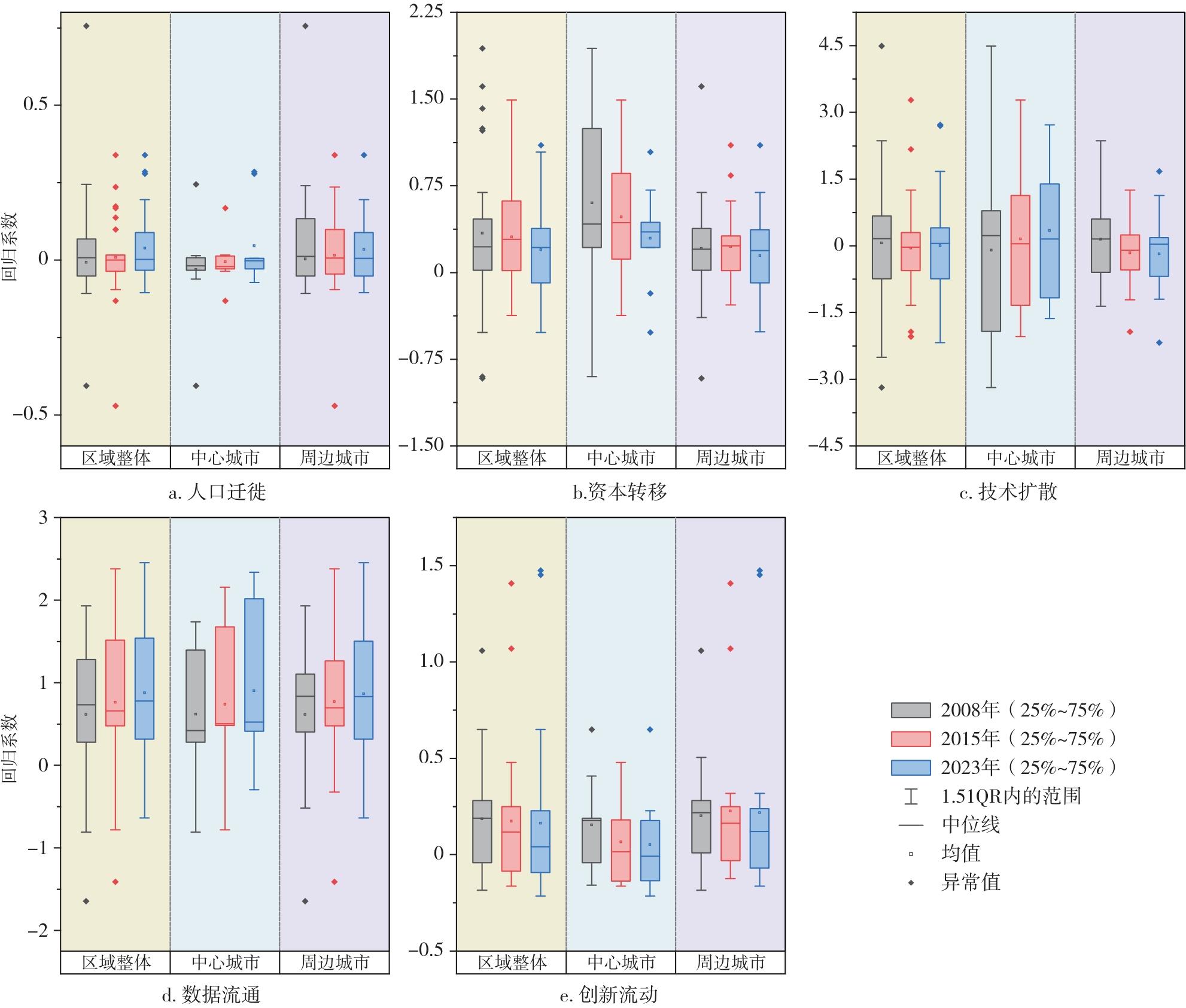
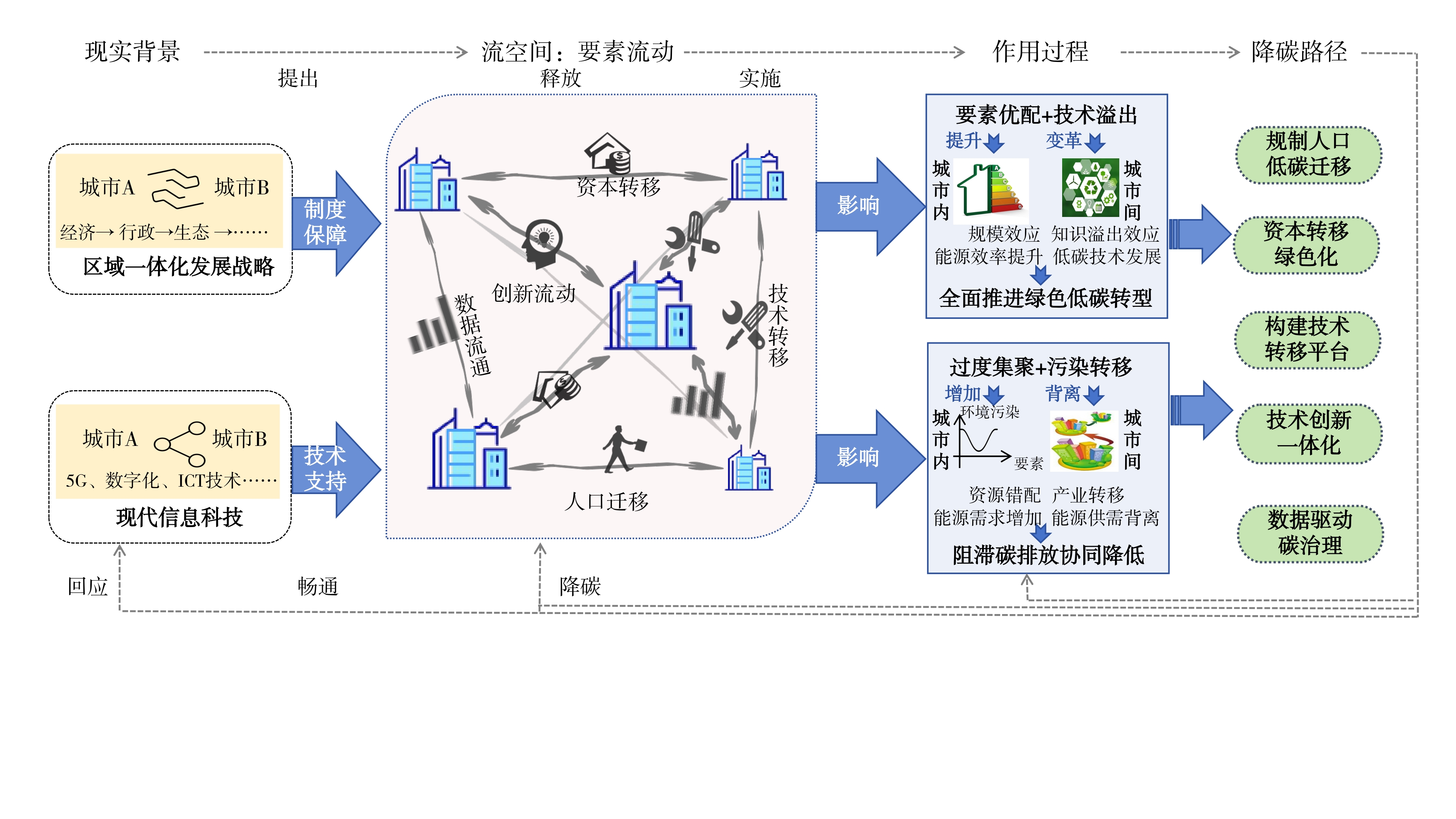
Clarifying the spatial correlations and heterogeneous impacts of multidimensional factor flows on carbon emissions within a flow-space framework is an effective approach to supporting pollution and carbon reduction efforts. This article takes the multidimensional factor flows of population,capital,technology,data and innovation as an entry point to measure the carbon emissions in the Yangtze River Delta region from 2008 to 2023,and analyzes its spatial correlation and heterogeneous impacts by using the gravity model,exploratory data analysis,geographically and temporally weighted regression model. The results show that: 1) Carbon emissions in the Yangtze River Delta region fluctuate and increase from 214.6 million tons in 2008 to 3.234 million tons in 2023,with an increase of 50.716%. There is a significant positive spatial correlation,it shows the overall spatial pattern of "high-value agglomeration in central cities spreading to neighboring cities. 2) Multidimensional factor flows are becoming increasingly active,exhibiting the uneven development characteristics of "dense in the middle of research area and sparse in the north and south of research area". It builds the chain network of "preferential linkage among Shanghai, Ningbo and Hangzhou with a polycentric flow pattern" and forms the development pattern of "strong cities connecting with weak cities". 3) Multidimensional factor flows have spatial and temporal differences in carbon emission reduction effects, and the emission reduction effect of data flow is the most significant. The research findings contribute to deepening the understanding of the intrinsic relationship between multidimensional factor flows and carbon emission reduction,providing a theoretical basis for facilitating factor mobility and advancing the low-carbon transformation of urban agglomerations.
LYU Tiangui , ZHAO Qiao , FU Shufei , QIU Rong , HU Han . Spatial Correlation Characteristics and Heterogeneity of Carbon Emissions in the Yangtze River Delta region Based on the Multidimensional Factor Flows[J]. Economic geography, 2026 , 46(3) : 46 -57 . DOI: 10.15957/j.cnki.jjdl.2026.03.005
表1 全局莫兰值结果Tab.1 Results of Global Moran index |
| 年份 | 莫兰值 | Z值 | P值 | 年份 | 莫值兰 | Z值 | P值 |
|---|---|---|---|---|---|---|---|
| 2008 | 0.146* | 1.734 | 0.051 | 2016 | 0.187** | 2.252 | 0.019 |
| 2009 | 0.131* | 1.710 | 0.052 | 2017 | 0.172** | 2.026 | 0.025 |
| 2010 | 0.148** | 1.809 | 0.044 | 2018 | 0.165** | 2.078 | 0.029 |
| 2011 | 0.123* | 1.629 | 0.059 | 2019 | 0.217** | 2.486 | 0.014 |
| 2012 | 0.137* | 1.715 | 0.056 | 2020 | 0.217** | 2.527 | 0.015 |
| 2013 | 0.127** | 1.674 | 0.048 | 2021 | 0.216** | 2.428 | 0.017 |
| 2014 | 0.151** | 1.876 | 0.037 | 2022 | 0.207** | 2.366 | 0.012 |
| 2015 | 0.084 | 1.202 | 0.109 | 2023 | 0.207** | 2.163 | 0.036 |
注:*、**分别表示在0.10、0.05水平上显著。 |
表2 评价模型对比分析Tab.2 Comparative analysis of evaluation models |
| 参数/模型 | GTWR | GOLS | GWR | TWR |
|---|---|---|---|---|
| AICc | 235.805 | 623.097 | 225.673 | 617.663 |
| R2 | 0.896 | 0.523 | 0.877 | 0.551 |
| 校正后R2 | 0.895 | - | 0.876 | 0.545 |
表3 各变量回归系数的描述性统计结果Tab.3 Descriptive statistical results of regression coefficients for each variable |
| 项目/变量 | 观测量 | 区间 | 上四分位数 | 平均值 | 中位数 | 下四分位数 | 标准偏差 | 方差 |
|---|---|---|---|---|---|---|---|---|
| 常数 | 432 | [-12.109,7.480] | -4.801 | -1.058 | 0.133 | 2.670 | 4.863 | 23.645 |
| 人口迁移 | 432 | [-1.262,0.756] | -0.040 | 0.013 | 0.000 | 0.056 | 0.185 | 0.034 |
| 资本转移 | 432 | [-0.914,1.937] | -0.022 | 0.270 | 0.228 | 0.449 | 0.495 | 0.245 |
| 技术扩散 | 432 | [-3.188,9.907] | -0.689 | 0.279 | 0.075 | 0.670 | 1.890 | 3.574 |
| 数据流通 | 432 | [-1.646,2.852] | 0.290 | 0.766 | 0.686 | 1.428 | 0.914 | 0.835 |
| 创新流动 | 432 | [-0.261,1.523] | -0.072 | 0.167 | 0.114 | 0.236 | 0.357 | 0.128 |
| [1] |
单玉红, 韩晴. 要素区际流动对土地绿色生产效率的影响——以武汉城市圈为例[J]. 长江流域资源与环境, 2023, 32(10):2060-2071.
|
| [2] |
晏龙旭. 流空间结构性影响的理论分析[J]. 城市规划学刊, 2021(5):32-39.
|
| [3] |
仇方道, 徐新, 刘继斌, 等. 淮海经济区工业碳排放网络结构演化特征及其影响因素[J]. 经济地理, 2025, 45(1):134-144.
|
| [4] |
|
| [5] |
王帅龙. 数字经济之于城市碳排放:“加速器”抑或“减速带”?[J]. 中国人口·资源与环境, 2023, 33(6):11-22.
|
| [6] |
邵帅, 范美婷, 杨莉莉. 经济结构调整、绿色技术进步与中国低碳转型发展——基于总体技术前沿和空间溢出效应视角的经验考察[J]. 管理世界, 2022, 38(2):46-69,4 - 10.
|
| [7] |
|
| [8] |
陆苹茹, 陈波. 碳减排目标下贵阳市土地利用结构优化分析[J]. 贵州师范大学学报(自然科学版), 2023, 41(5):18-25.
|
| [9] |
|
| [10] |
|
| [11] |
张正峰, 张栋. 基于社会网络分析的京津冀地区碳排放空间关联与碳平衡分区[J]. 中国环境科学, 2023, 43(4):2057-2068.
|
| [12] |
邹秀清, 孙学成, 葛天越, 等. 长三角地区碳排放差异、影响机理及碳达峰预测[J]. 长江流域资源与环境, 2023, 32(3):548-557.
|
| [13] |
|
| [14] |
杨冕, 徐江川, 杨福霞. 能源价格、资本能效与中国工业部门碳达峰路径[J]. 经济研究, 2022, 57(12):69-86.
|
| [15] |
张兵兵, 王捷, 闫志俊. 中国城市碳达峰路径及其驱动因素的结构分解[J]. 中国人口·资源与环境, 2023, 33(9):38-44.
|
| [16] |
郭艺, 曹贤忠, 魏文栋, 等. 长三角区域一体化对城市碳排放的影响研究[J]. 地理研究, 2022, 41(1):181-192.
|
| [17] |
汪克亮, 赵斌, 许如玉. 区域一体化对碳排放强度的影响——基于国家级城市群政策的考察[J]. 中国人口·资源与环境, 2025, 35(8):27-39.
|
| [18] |
白俊红, 王钺, 蒋伏心, 等. 研发要素流动、空间知识溢出与经济增长[J]. 经济研究, 2017, 52(7):109-123.
|
| [19] |
黄明凤, 姚栋梅. 研发要素流动、空间溢出效应与区域创新效率——基于省际面板数据的空间杜宾模型分析[J]. 科研管理, 2022, 43(4):149-157.
|
| [20] |
沈路, 钞小静. 多元要素流动对城市群高质量发展的影响——以长株潭城市群为例[J]. 科技进步与对策, 2023, 40(3):30-40.
|
| [21] |
|
| [22] |
彭影, 李士梅. 创新要素流动与城市绿色创新发展——数据要素流动环境的空间调节作用[J]. 科技进步与对策, 2023, 40(1):30-39.
|
| [23] |
|
| [24] |
袁晓玲, 郗继宏, 钟楚潮, 等. 中国城市“减污降碳”协同驱动因素及实现路径研究[J]. 管理学刊, 2023, 36(4):26-46.
|
| [25] |
聂永有, 郭秦洋, 宋玮, 等. 长三角区域一体化与碳绩效:作用机制、调节效应及空间溢出研究[J]. 长江流域资源与环境, 2025, 34(12):2619-2631.
|
| [26] |
|
| [27] |
邹璇, 杨旭, 刘晨. 中国城市内部多中心结构对碳排放强度的影响及其机制[J]. 资源科学, 2024, 46(7):1284-1298.
|
| [28] |
金刚, 沈坤荣. 以邻为壑还是以邻为伴?——环境规制执行互动与城市生产率增长[J]. 管理世界, 2018, 34(12):43-55.
|
| [29] |
|
| [30] |
|
| [31] |
|
| [32] |
姚常成, 沈凯玙. 要素流动视角下数字经济与区域经济的包容性增长效应[J]. 经济地理, 2023, 43(4):10-19.
|
| [33] |
李云, 沈凤钱, 申霄媛, 等. 跨界治理网络视角下深港跨界区域协同发展研究[J]. 热带地理, 2023, 43(12):2249-2262.
|
| [34] |
|
| [35] |
张文彬, 宋建波. 中国低碳经济协同效率的区域差异及其影响因素[J]. 经济地理, 2024, 44(3):22-32,54.
|
/
| 〈 |
|
〉 |