


Impact of Extreme Climate on Carbon Emissions in Planting Industry at the Provincial Level Based on the XGBoost-SHAP Model
Received date: 2025-10-27
Revised date: 2025-12-25
Online published: 2026-04-29
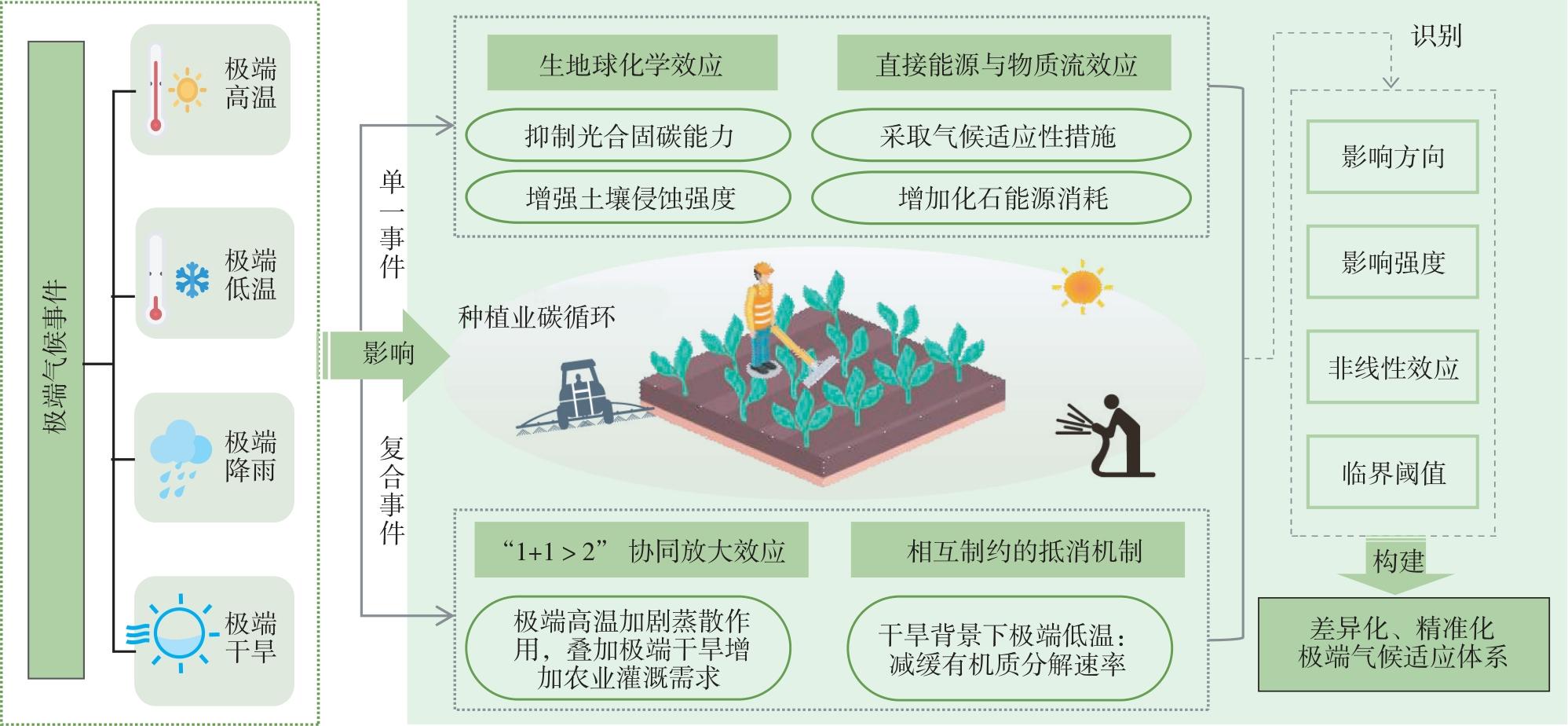
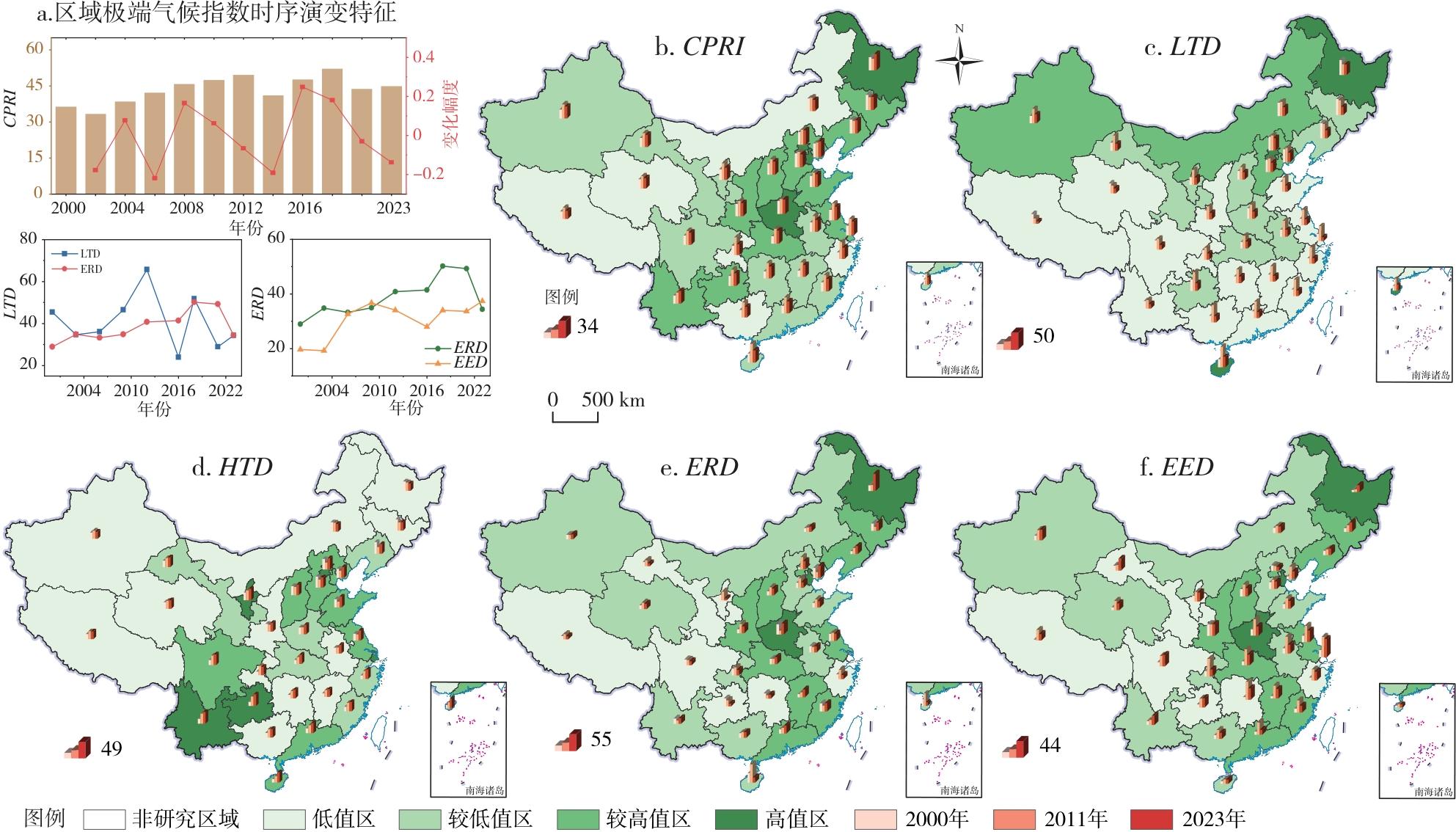
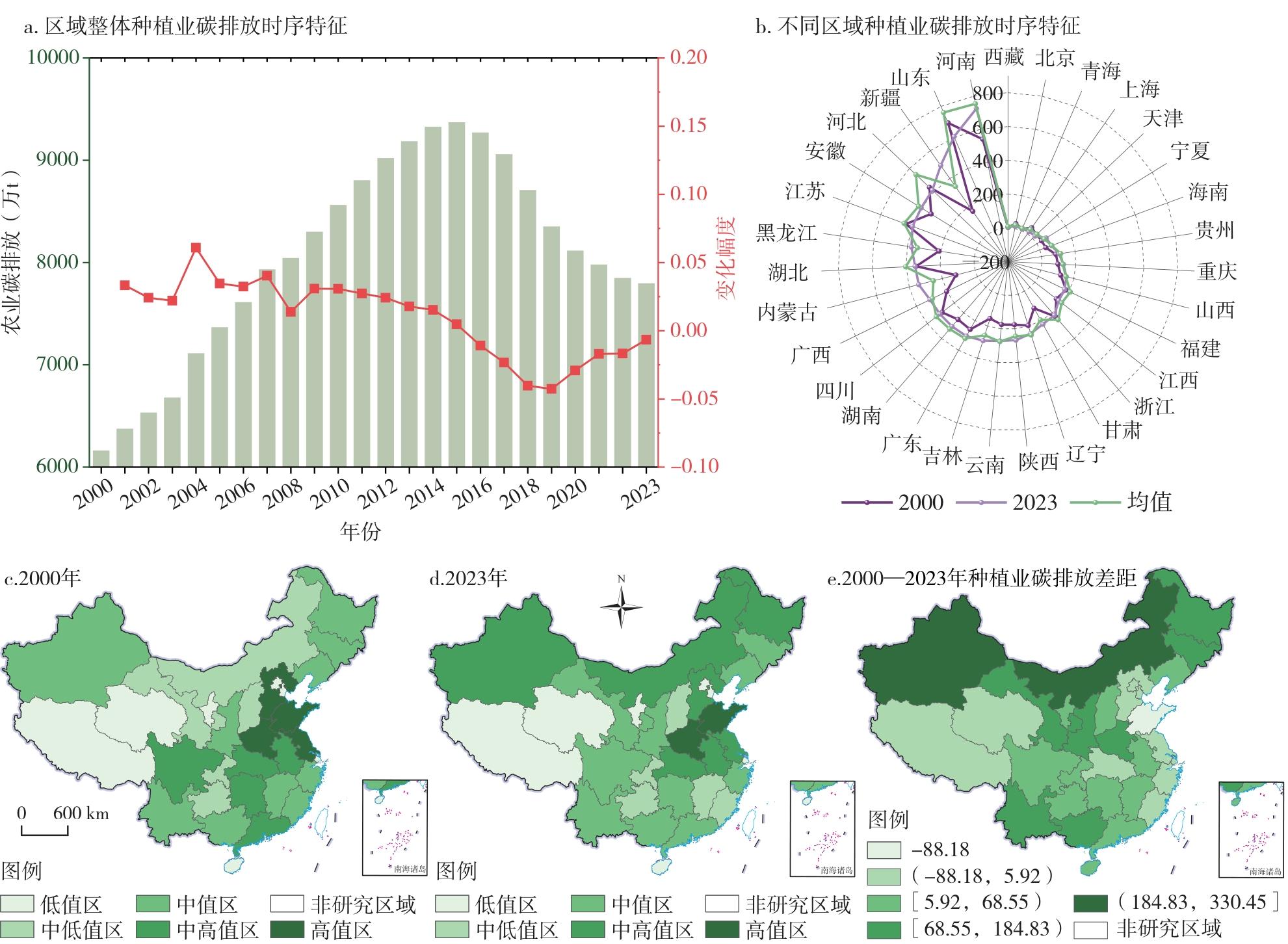
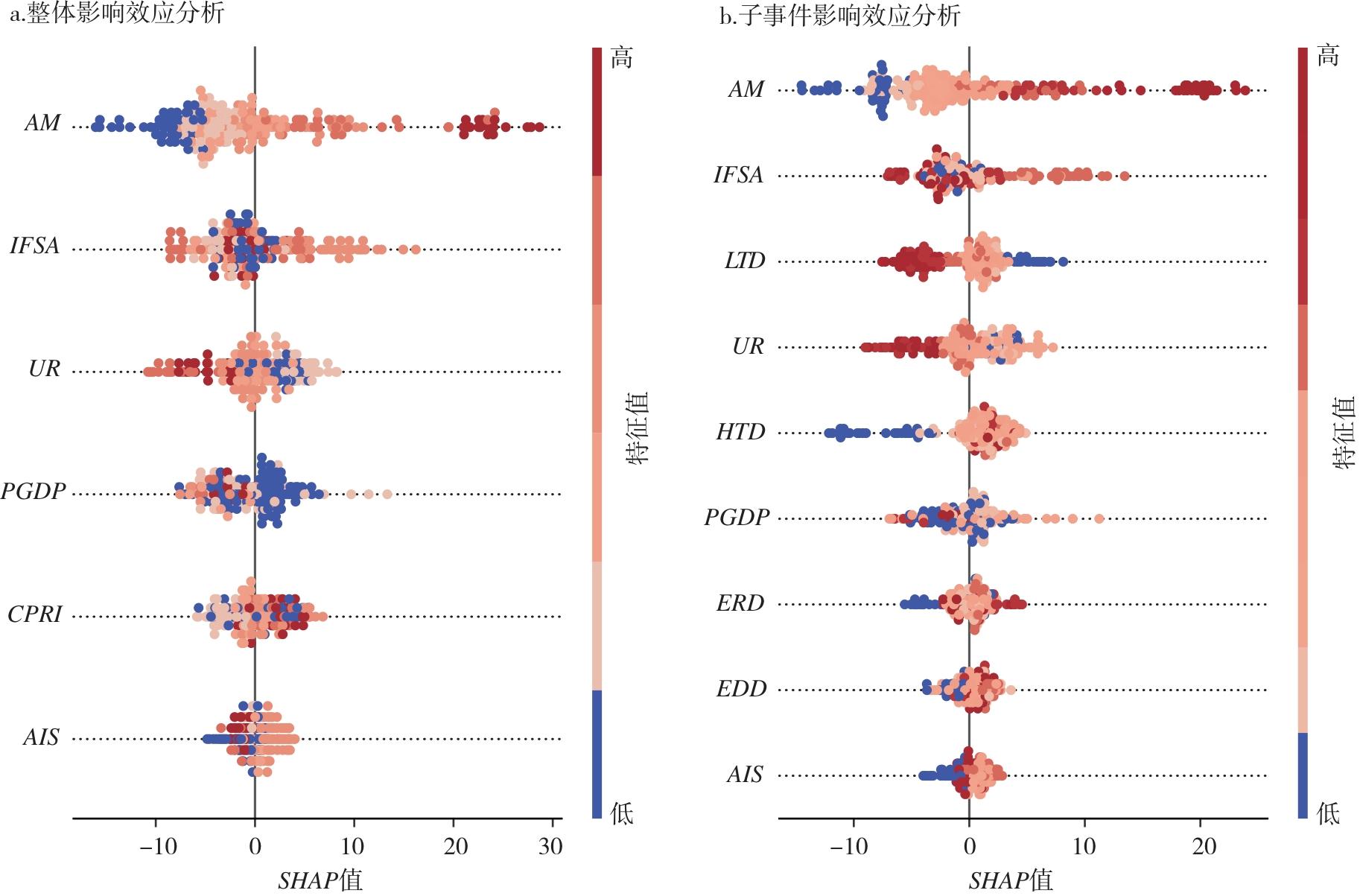
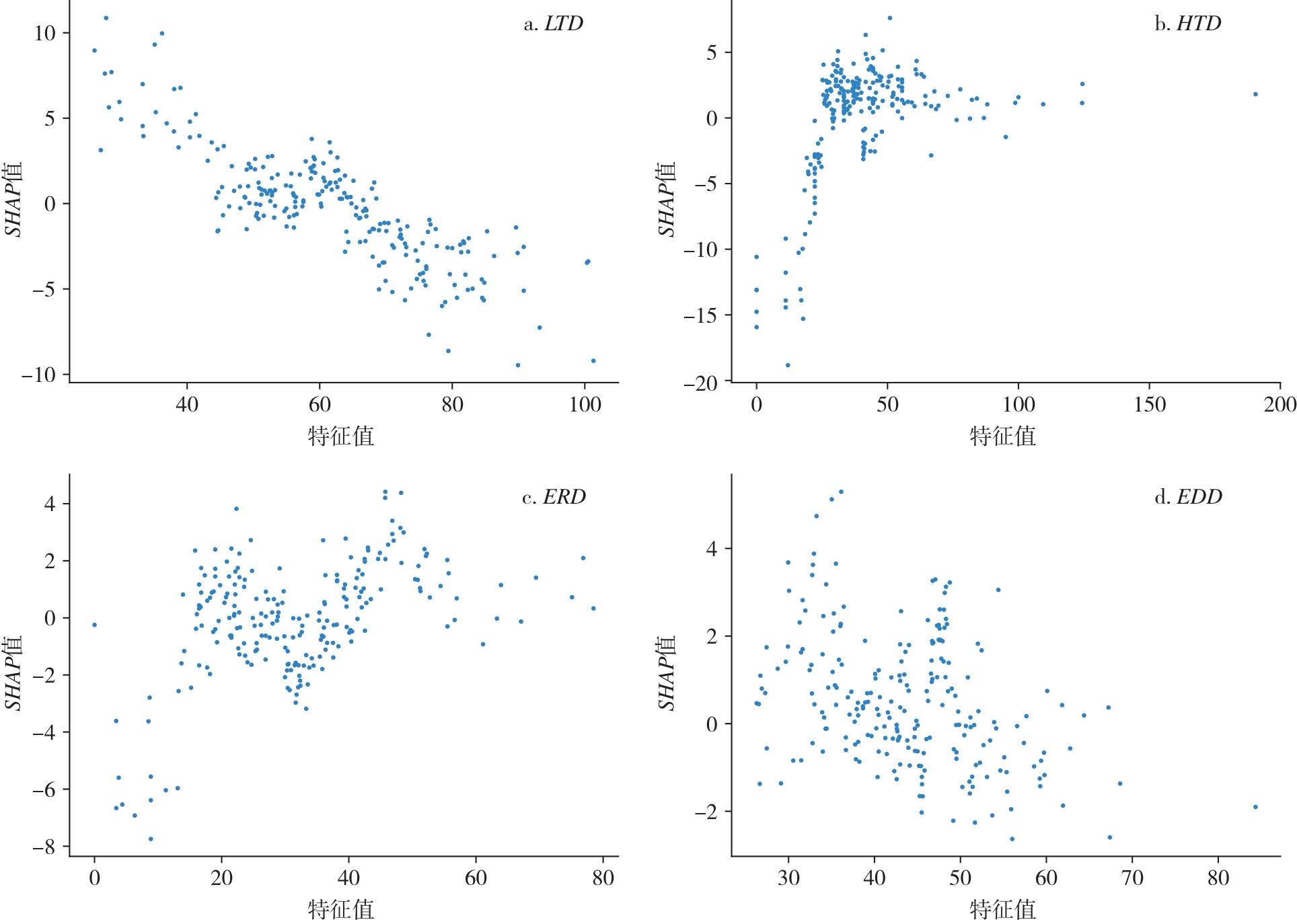
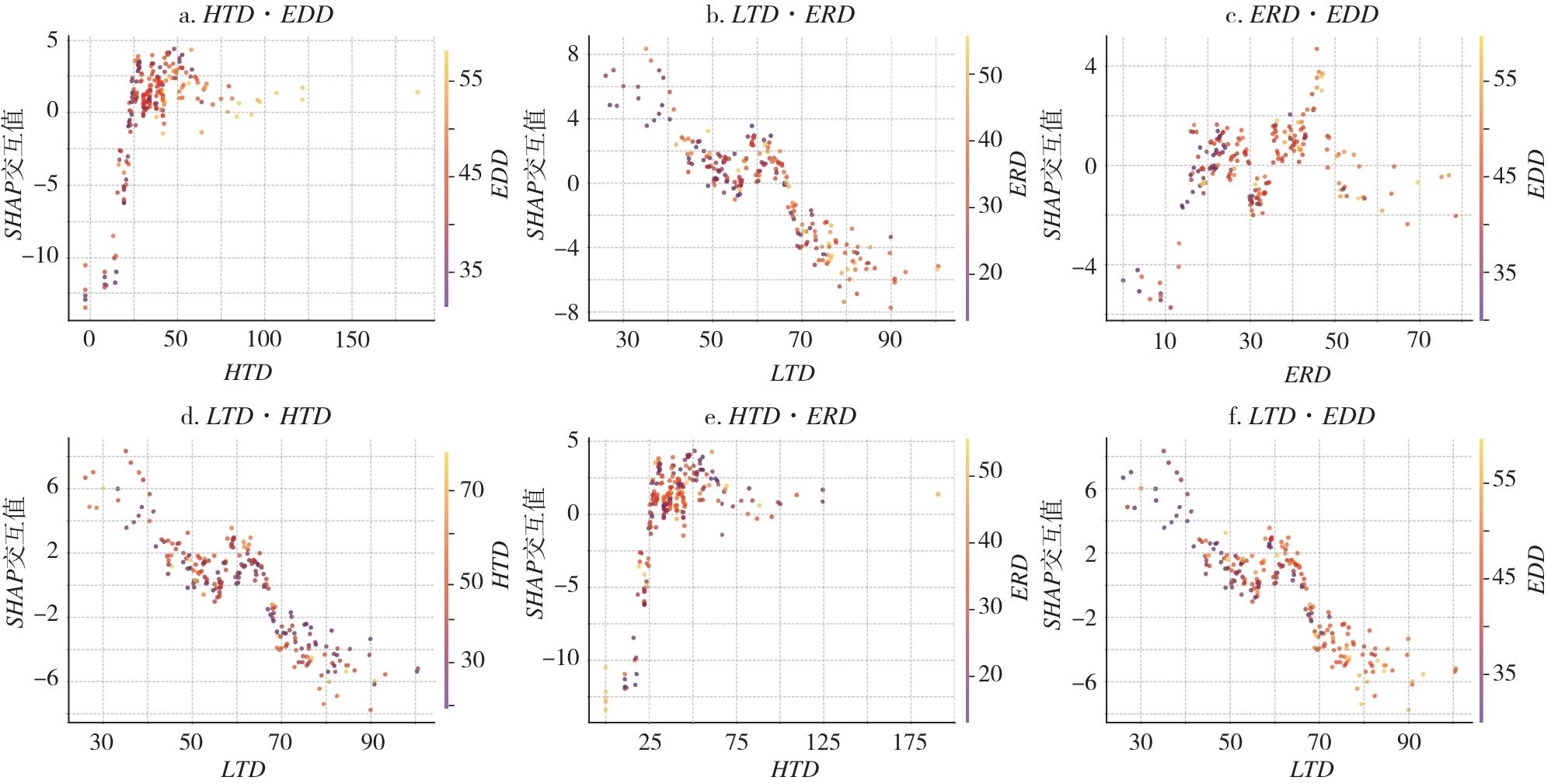
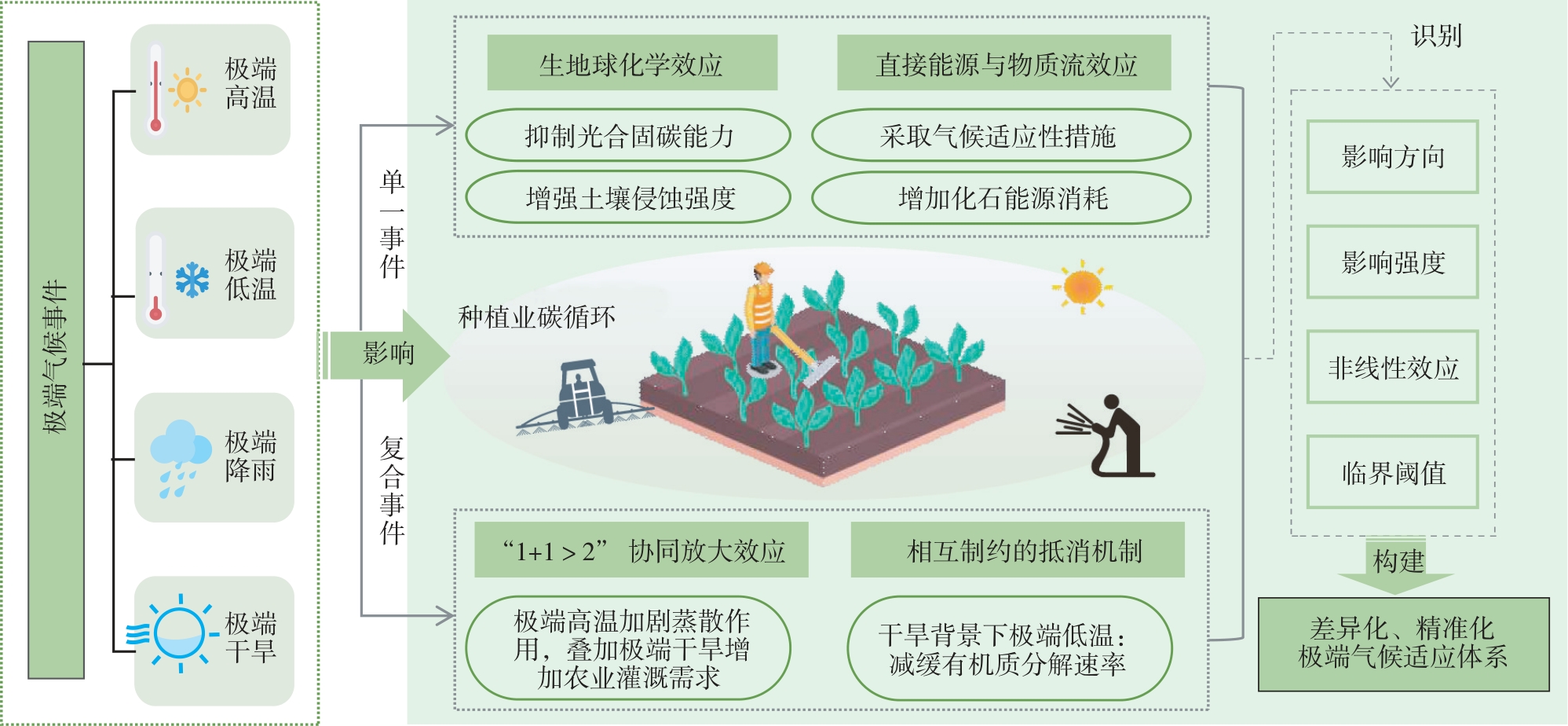
Under the background of frequent extreme climate events caused by global warming, the agricultural system is simultaneously confronted with the emission reduction pressures and the climate vulnerability challenges. This study systematically measured the spatiotemporal patterns of extreme climate and carbon emissions in planting industry in China at the provincial level from 2000 to 2023, and utilized the XGBoost-SHAP model to reveal their overall impact, individual effects, and synergistic mechanisms. The results indicate that: 1) During the study period, risk index of China's extreme climate rose from 36.35 to 44.89, reflecting a trend of intensifying extreme heat and concurrent increases in both aridity and humidity. High-risk zones concentrated around the Bohai Rim region, with a decreasing pattern observed from the northeast of China to the southwest of China. 2) China's total carbon emissions in planting industry increased from 61.6191 million tons in 2000 to 77.9764 million tons in 2023, with the spatial pattern evolving from "high in the southeast of China, low in the northwest of China" to "high in the north of China, low in the south of China". 3) Extreme weather events contribute 11.19% to carbon emissions of planting industry. Extreme heat, extreme rainfall, and extreme drought show a positive correlation with carbon emissions of planting industry, while extreme cold exhibits a significant inhibitory effect. 4) The synergistic effects of multiple extreme events are significant. Among them, the combination of high temperature and drought, as well as alternating wet and dry conditions, produces an "1+1>2" effect that increases carbon emissions. Conversely, the combinations of low temperature and drought, and low temperature and rainfall, achieve synergistic carbon emission reductions by suppressing microbial activity and decreasing irrigation requirements. Therefore, in the context of escalating extreme climate threats, deciphering the resulting growth in carbon emissions has become an urgent task for promoting the transition of agriculture towards low-carbon and high-resilience.
YANG Peitao , YANG Yining . Impact of Extreme Climate on Carbon Emissions in Planting Industry at the Provincial Level Based on the XGBoost-SHAP Model[J]. Economic geography, 2026 , 46(3) : 215 -225 . DOI: 10.15957/j.cnki.jjdl.2026.03.021

表1 模型精度比较Tab.1 Model accuracy comparison |
| 模型 | 样本 | RMSE | MAE | R2 |
|---|---|---|---|---|
| XGboost | 训练集 | 0.029 | 0.019 | 0.985 |
| 测试集 | 0.149 | 0.111 | 0.535 | |
| 支持向量机 | 训练集 | 0.193 | 0.150 | 0.342 |
| 测试集 | 0.182 | 0.146 | 0.298 | |
| 神经网络 | 训练集 | 0.191 | 0.153 | 0.348 |
| 测试集 | 0.190 | 0.154 | 0.269 | |
| 随机森林 | 训练集 | 0.057 | 0.040 | 0.942 |
| 测试集 | 0.138 | 0.106 | 0.552 |

| [1] |
|
| [2] |
吕添贵, 邱蓉, 李泽英, 等. 长江中游粮食主产区耕地碳源汇时空演化特征及驱动因素分析[J]. 农业工程学报, 2024, 40(18):251-261.
|
| [3] |
|
| [4] |
|
| [5] |
王韶华, 吴海霞, 肖琴, 等. 极端高温对农业碳排放的影响[J]. 中国人口·资源与环境, 2025, 35(2):68-77.
|
| [6] |
温涛, 孙鹏翔, 张林. 中国农业碳排放的动态演进与区域格局[J]. 经济地理, 2024, 44(10):165-175.
|
| [7] |
沈玉洁, 裴小涵, 赵敏娟. 互联网使用对农业碳排放效率的影响——来自豫湘黑三省粮食种植户的实证检验[J]. 资源科学, 2024, 46(7):1314-1329.
|
| [8] |
童伟伟, 李玉霖, 张董敏. 农业服务化水平提升对中国农业碳排放强度的影响研究[J]. 中国农业资源与区划, 2024, 45(6):23-36.
|
| [9] |
|
| [10] |
宁静, 王震, 杜国明, 等. 东北地区农业碳排放特征与农业经济的脱钩状态分析[J]. 经济地理, 2023, 43(11):173-180.
|
| [11] |
张晶, 王姝心, 吴兆飞, 等. 极端气候事件对中国温带森林秋季物候的影响[J]. 地理学报, 2025, 80(7):1786-1800.
|
| [12] |
史军, 崔林丽. 上海城市生态特征及其极端天气气候年差异对比[J]. 长江流域资源与环境, 2025, 34(3):600-609.
|
| [13] |
王莹, 陈卫洪. 极端气候、农机作业服务市场与粮食产量——基于13个粮食主产区面板数据的实证分析[J]. 农业技术经济, 2024(10):70-90.
|
| [14] |
|
| [15] |
|
| [16] |
|
| [17] |
高雁鹏, 陈文俊. 1984—2020年辽宁省极端气温时空变化及粮食产量响应研究[J]. 地理科学, 2021, 41(11):2052-2062.
|
| [18] |
覃朝晖, 潘昱辰, 丁志国. 极端气温对长江经济带农业碳排放的影响研究:抑制还是促进?[J]. 华中农业大学学报(社会科学版), 2023(6):70-82.
|
| [19] |
|
| [20] |
|
| [21] |
|
| [22] |
刘彦随, 赵雨, 李裕瑞. 气候变化对农业地域系统的影响及其应对[J]. 科学通报, 2025, 17(36):6123-6136.
|
| [23] |
|
| [24] |
吴强, 陈金兰. 农业机械化对农业碳排放的影响及其空间溢出效应[J]. 统计与决策, 2025, 41(12):60-65.
|
| [25] |
张晟博, 吴作航, 党皓飞, 等. 近20年武夷山地区不同遥感指标对极端气候事件的响应及差异[J]. 生态环境学报, 2025, 34(8):1240-1254.
|
| [26] |
|
| [27] |
付舒斐, 吕添贵, 朱丽萌, 等. 农业绿色发展对耕地利用碳排放强度的影响机制和空间效应[J]. 中国农业大学学报, 2025, 30(4):286-299.
|
| [28] |
苏培添, 王磊. 数字普惠金融对中国农业碳排放强度影响的空间效应与机制[J]. 资源科学, 2023, 45(3):593-608.
|
| [29] |
吉雪强, 刘慧敏, 张跃松. 中国农地流转对农业碳排放强度的影响及作用机制研究[J]. 中国土地科学, 2023, 37(2):51-61.
|
| [30] |
郭岚瑄, 王贺封, 沈石凯, 等. 京津冀地区kNDVI时空变化及对气候因子的响应[J]. 西南农业学报, 2024, 37(8):1837-1849.
|
| [31] |
|
| [32] |
王火根, 胡梦婷, 刘小春. 基于机器学习和SHAP算法的我国粮食安全水平测度重构及可解释性分析[J]. 中国农业大学学报, 2025, 30 (7):264-274.
|
| [33] |
|
| [34] |
|
| [35] |
|
/
| 〈 |
|
〉 |