


Spatial Organization Pattern of Airport Agglomeration based on Aviation Passenger's Big Data: A Case Study of Shandong Province
Received date: 2025-02-24
Revised date: 2025-12-15
Online published: 2026-04-10
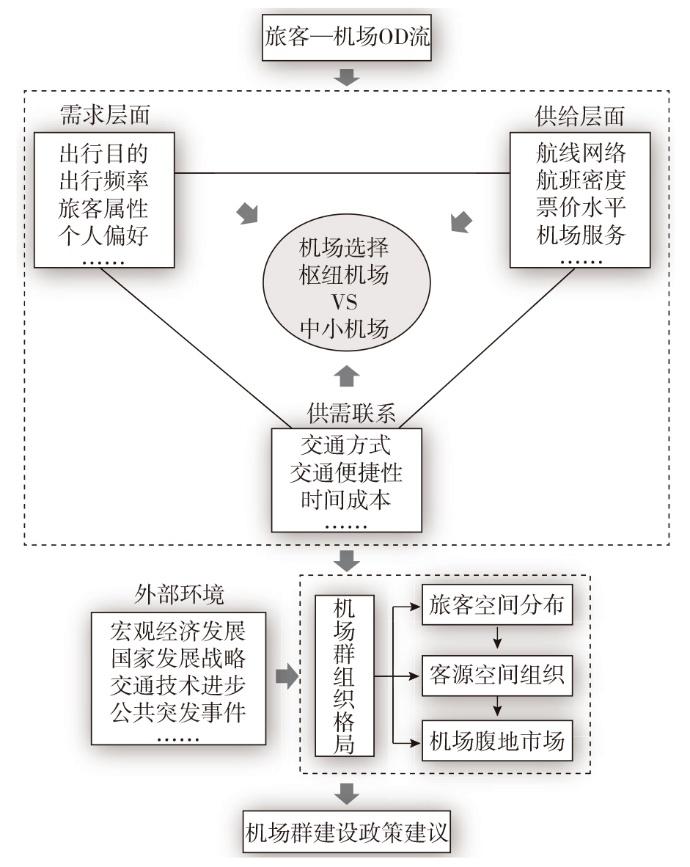
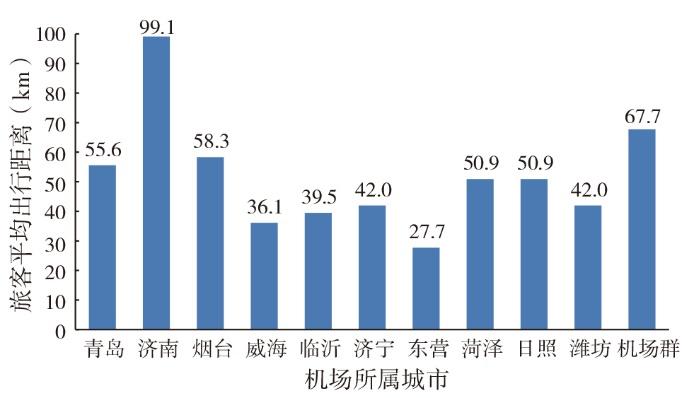
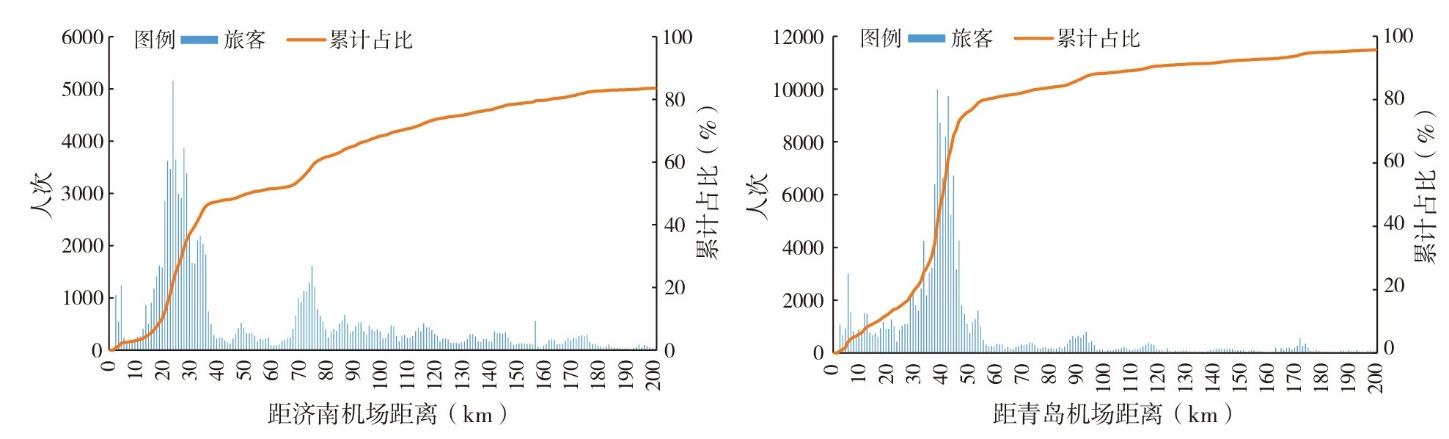
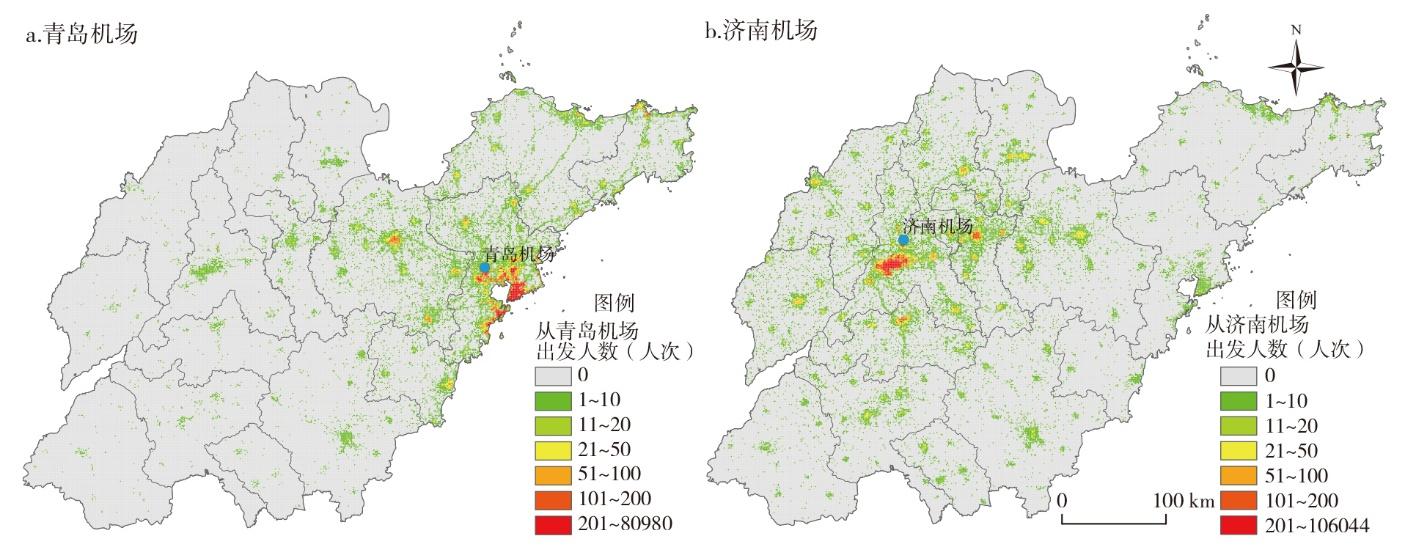
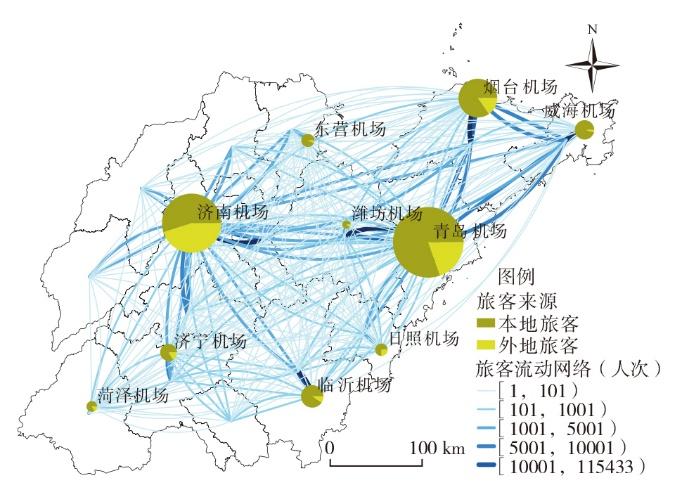
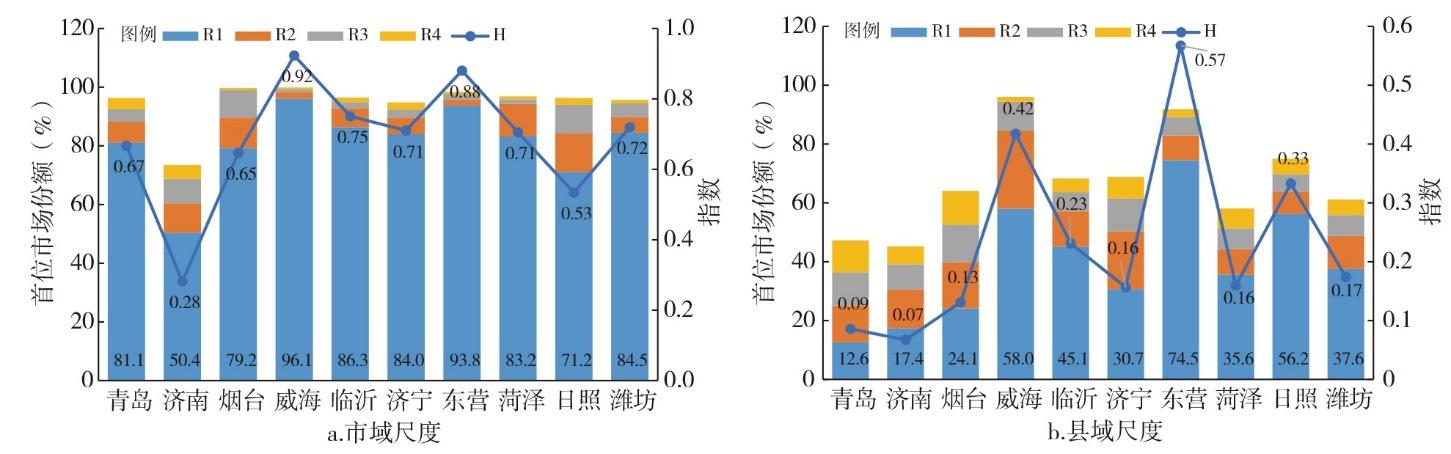
Based on the big data of mobile users' online check-in in Shandong Province, this paper analyzes the spatial distribution of passenger sources, regional market organization, and market competition pattern of airport agglomeration. It's found that: 1) The overall distribution of aviation passenger source in the Shandong airport agglomeration is characterized by the superposition of a "gradually increasing dependence on cities" and an "accelerating decline in regional demand". The statistical characteristics of aviation passenger travel exhibit both a monocentric circle pattern and a multi-centric radiation pattern. 2) The majority of airport hinterland passenger are concentrated within 100km, with nearly two-thirds of passengers in the airport agglomeration located within 50km. 3) There is a significant spatial scale effect in the distribution of aviation passenger markets at the city and county levels, but the overall market shows high concentration characteristics. The primary market share at the city level is mostly above 80%, and the concentration of city-level aviation passenger in most airports is above 0.5, while the county-level is above 0.15. 4) There is no spatial scale effect difference in the structure of aviation passenger markets, and the index of regional differences in market structure between airports at the city level and county level is generally above 0.80. The level of interaction between the source hinterland markets of each airport is relatively low. 5) Qingdao and Ji'nan, the two major air hubs, have become the dominant markets in the hinterland of Shandong airport agglomeration, accounting for over 60% of the total number of counties. The degree of monopoly in the county-level passenger markets is relatively high, with the total number of counties in oligopolistic and monopolistic competitive markets accounting for over 90% of the total. This paper provides a basic research framework and methodological system for the analysis of the spatial organization pattern of airport agglomeration.
MO Huihui , ZHANG Bing , WANG Han , HE Wanqin , DU Fangye , WANG Jiaoe . Spatial Organization Pattern of Airport Agglomeration based on Aviation Passenger's Big Data: A Case Study of Shandong Province[J]. Economic geography, 2026 , 46(2) : 115 -123 . DOI: 10.15957/j.cnki.jjdl.2026.02.011
表1 山东各机场腹地客源市场差异性指数Tab.1 Market differentiation of aviation passenger hinterlands in Shandong |
| Tij | TAO | TNA | YNT | WEH | LYI | JNG | DOY | HZA | RIZ | WEF |
|---|---|---|---|---|---|---|---|---|---|---|
| TAO | 0.79 | 0.82 | 0.92 | 0.93 | 0.96 | 0.96 | 0.97 | 0.79 | 0.85 | |
| TNA | 0.83 | 0.85 | 0.93 | 0.92 | 0.88 | 0.91 | 0.92 | 0.83 | 0.85 | |
| YNT | 0.82 | 0.88 | 0.86 | 0.95 | 0.98 | 0.98 | 0.98 | 0.87 | 0.92 | |
| WEH | 0.93 | 0.94 | 0.86 | 0.98 | 0.98 | 0.99 | 0.98 | 0.96 | 0.95 | |
| LYI | 0.94 | 0.93 | 0.96 | 0.97 | 0.93 | 0.98 | 0.95 | 0.78 | 0.95 | |
| JNG | 0.97 | 0.91 | 0.98 | 0.99 | 0.94 | 0.98 | 0.82 | 0.95 | 0.96 | |
| DOY | 0.96 | 0.91 | 0.99 | 0.99 | 0.98 | 0.98 | 0.98 | 0.96 | 0.94 | |
| HZA | 0.97 | 0.93 | 0.98 | 0.99 | 0.97 | 0.84 | 0.99 | 0.98 | 0.97 | |
| RIZ | 0.80 | 0.86 | 0.88 | 0.97 | 0.80 | 0.96 | 0.98 | 0.97 | 0.93 | |
| WEF | 0.88 | 0.86 | 0.92 | 0.97 | 0.97 | 0.98 | 0.95 | 0.98 | 0.95 |
注:表格上对角数值基于市域测算、下对角数值基于县域测算。 |
表2 山东机场群腹地客源市场优势区及竞合度情况Tab.2 Advantageous market areas and competitive integration levels of the passenger source market within the core area of Shandong airport agglomeration |
| 机场 | 优势区(竞合度) |
|---|---|
| 青岛(TAO) | 城阳区(0.99)、崂山区(0.98)、李沧区(0.98)、黄岛区(0.98)、市北区(0.97)、即墨区(0.97)、高密市(0.95)、平度市(0.94)、市南区(0.94)、莱西市(0.94)、诸城市(0.90)、海阳市(0.75)、寒亭区(0.73)、昌邑市(0.70)、莱阳市(0.69)、乳山市(0.67)、奎文区(0.63)、安丘市(0.62)、坊子区(0.61)、莱州市(0.60)、潍城区(0.50)、胶州市(0.49)、昌乐县(0.42) |
| 济南(TNA) | 历下区(0.98)、历城区(0.98)、市中区(0.97)、文登区(0.65)、张店区(0.90)、槐荫区(0.97)、天桥区(0.96)、章丘区(0.98)、泰山区(0.93)、滨城区(0.96)、东昌府区(0.96)、寿光市(0.58)、岱岳区(0.93)、莱芜区(0.98)、德城区(0.96)、青州市(0.72)、邹平市(0.98)、临淄区(0.87)、长清区(0.98)、垦利区(0.58)、济阳区(0.99)、周村区(0.93)、淄川区(0.96)、博兴县(0.93)、广饶县(0.71)、桓台县(0.90)、肥城市(0.95)、新泰市(0.91)、博山区(0.94)、临朐县(0.65)、齐河县(0.98)、滕州市(0.66)、沂源县(0.93)、禹城市(0.97)、茌平区(0.98)、高青县(0.97)、惠民县(0.97)、临邑县(0.98)、商河县(0.99)、平阴县(0.99)、钢城区(0.98)、东平县(0.79)、临清市(0.97)、东阿县(0.97)、乐陵市(0.98)、无棣县(0.95)、利津县(0.61)、高唐县(0.99)、平原县(0.98)、阳信县(0.96)、阳谷县(0.92)、薛城区(0.66)、沾化区(0.82)、莘县(0.89)、夏津县(1.00)、陵城区(0.97)、冠县(0.97)、宁津县(0.98)、庆云县(0.98)、武城县(1.00)、山亭区(0.67)、峄城区(0.53) |
| 烟台(YNT) | 福山区(0.94)、芝罘区(0.88)、莱山区(0.84)、蓬莱区(0.87)、龙口市(0.90)、牟平区(0.82)、招远市(0.70)、栖霞市(0.77) |
| 威海(WEH) | 环翠区(0.44)、荣成市(0.61) |
| 临沂(LYI) | 兰山区(0.87)、河东区(0.86)、罗庄区(0.89)、沂水县(0.45)、莒南县(0.63)、费县(0.79)、沂南县(0.75)、临沭县(0.87)、平邑县(0.53)、蒙阴县(0.52)、兰陵县(0.83)、郯城县(0.88)、台儿庄区(0.41) |
| 济宁(JNG) | 任城区(0.74)、兖州区(0.83)、邹城市(0.68)、曲阜市(0.55)、嘉祥县(0.69)、宁阳县(0.56)、汶上县(0.68)、梁山县(0.44)、金乡县(0.63)、泗水县(0.57)、鱼台县(0.69)、微山县(0.50) |
| 东营(DOY) | 东营区(0.63)、河口区(0.52) |
| 菏泽(HZA) | 牡丹区(0.88)、郓城县(0.57)、巨野县(0.62)、定陶区(0.89)、曹县(0.87)、单县(0.73)、成武县(0.85)、鄄城县(0.79)、东明县(0.85) |
| 日照(RIZ) | 东港区(0.52)、莒县(0.33)、岚山区(0.55)、五莲县(0.46) |
| 潍坊(WEF) | - |
| [1] |
王姣娥, 莫辉辉. 航空运输地理学研究进展及展望[J]. 地理科学进展, 2011, 30(8):670-680.
|
| [2] |
|
| [3] |
|
| [4] |
Federal Aviation Administration and Airport Operation Council International. Planning the Metropolitan Airport System(150-5070-5)[M]. Washington: U. S. Government Printing Office, 1970.
|
| [5] |
|
| [6] |
|
| [7] |
肖凡, 莫辉辉, 王姣娥, 等. 多机场体系的概念内涵、识别方法与实证研究[J]. 地理科学, 2023, 43(4):606-616.
|
| [8] |
莫辉辉, 王姣娥, 黄洁. 2010年以来我国航空运输地理学研究进展与展望[J]. 人文地理, 2023, 38(5):9-15,35.
|
| [9] |
莫辉辉, 王姣娥, 高超, 等. 机场群研究进展与展望[J]. 地理科学进展, 2021, 40(10):1761-1770.
|
| [10] |
The Port of New York Authority Aviation Department,Forecast and Analysis Division. New York's Air Travelers (1956 Edition)[R]. Saugatuck: The Eno Foundation for Highway Traffic Control, 1956.
|
| [11] |
|
| [12] |
|
| [13] |
|
| [14] |
莫辉辉, 王姣娥, 彭峥, 等. 机场群航线网络竞合评价方法及实证探讨:以粤港澳大湾区世界级机场群为例[J]. 热带地理, 2022, 42(11):1797-1805.
|
| [15] |
张莉, 张越, 胡华清. 核心机场与多核机场群发展模式及其特点研究[J]. 综合运输, 2018, 40(1):50-55.
|
| [16] |
蒋永雷, 杨忠振, 王璐, 等. 区域机场同质化发展特征分析:以长三角地区机场群为例[J]. 经济地理, 2013, 33(2):122-127.
|
| [17] |
|
| [18] |
刘瑜, 康朝贵, 王法辉. 大数据驱动的人类移动模式和模型研究[J]. 武汉大学学报(信息科学版), 2014, 39(6):660-666.
|
| [19] |
黄洁, 王姣娥. 交通大数据在人文与经济地理学的应用及学科影响[J]. 地球信息科学学报, 2020, 22(6):1180-1188.
|
| [20] |
姚海芳, 刘云溪, 刘劲松. 基于手机信令大数据的机场腹地识别算法研究[J]. 地理与地理信息科学, 2021, 37(2):77-83.
|
| [21] |
|
| [22] |
|
| [23] |
|
| [24] |
|
| [25] |
莫辉辉, 刘雪妮, 高超, 等. 我国航空枢纽经济发展的思考[J]. 综合运输, 2023, 45(2):43-49.
|
| [26] |
|
| [27] |
|
| [28] |
莫辉辉, 王涵, 高超, 等. 纽约大都市区机场体系的组织格局探讨[J]. 民航学报, 2023, 7(1):25-29,122.
|
| [29] |
|
| [30] |
|
| [31] |
金凤君. 我国航空客流网络发展及其地域系统研究[J]. 地理研究, 2001(1):31-39.
|
| [32] |
王姣娥, 金凤君, 孙炜, 等. 中国机场体系的空间格局及其服务水平[J]. 地理学报, 2006, 61(8):829-838.
|
/
| 〈 |
|
〉 |