


Spatial Pattern and Influencing Factors of Township's Population Shrinkage in the Hilly and Mountainous Region Based on Machine Learning
Received date: 2024-10-23
Revised date: 2025-06-27
Online published: 2026-02-04
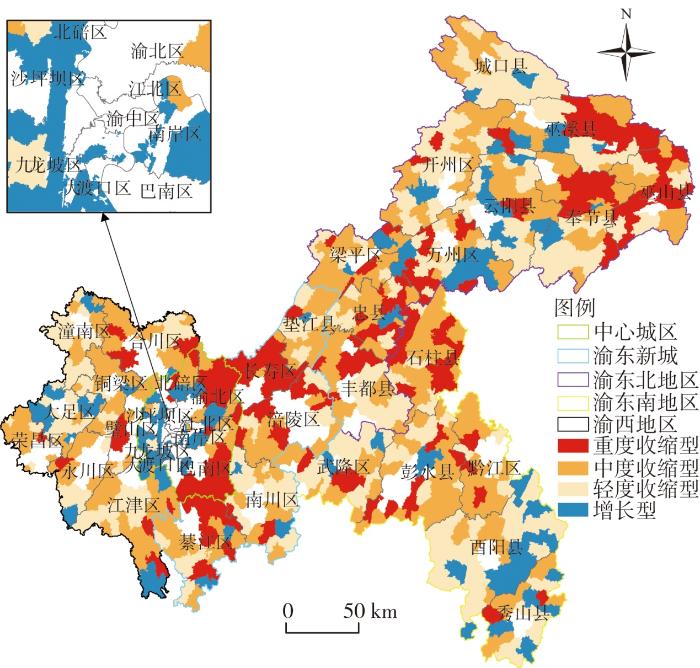
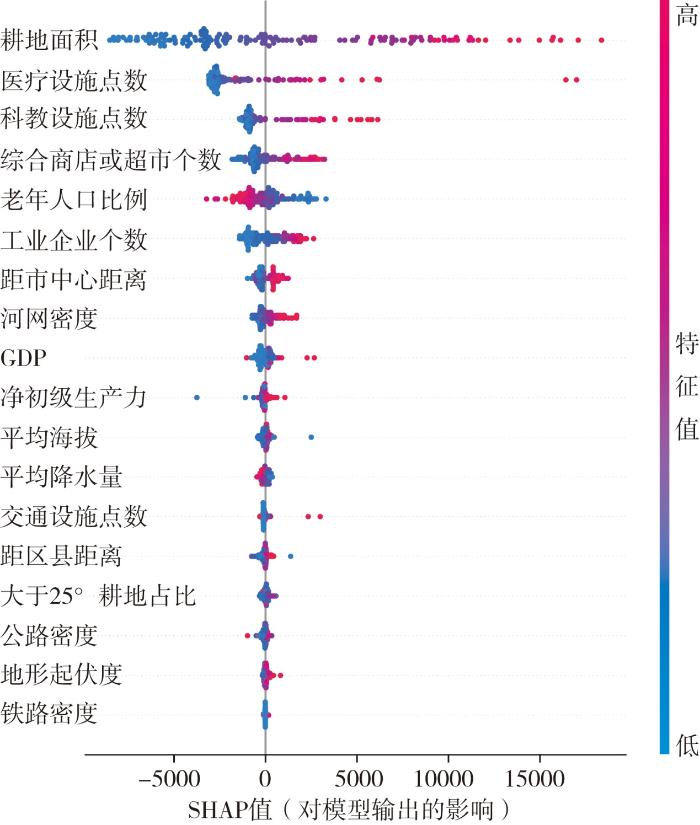
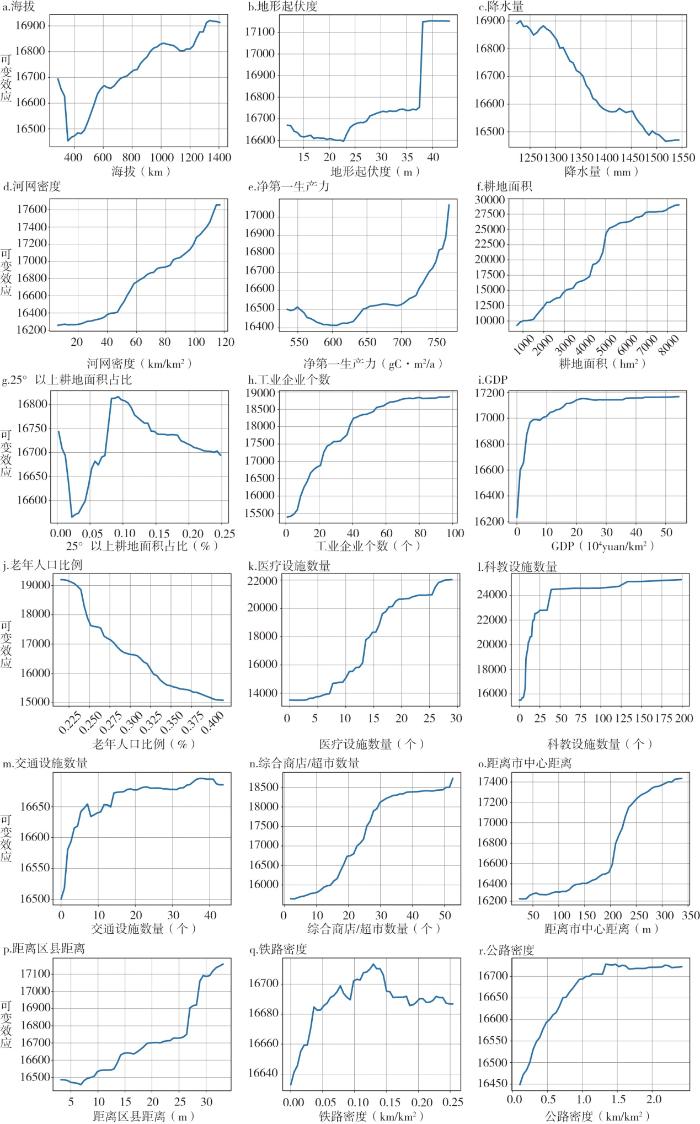
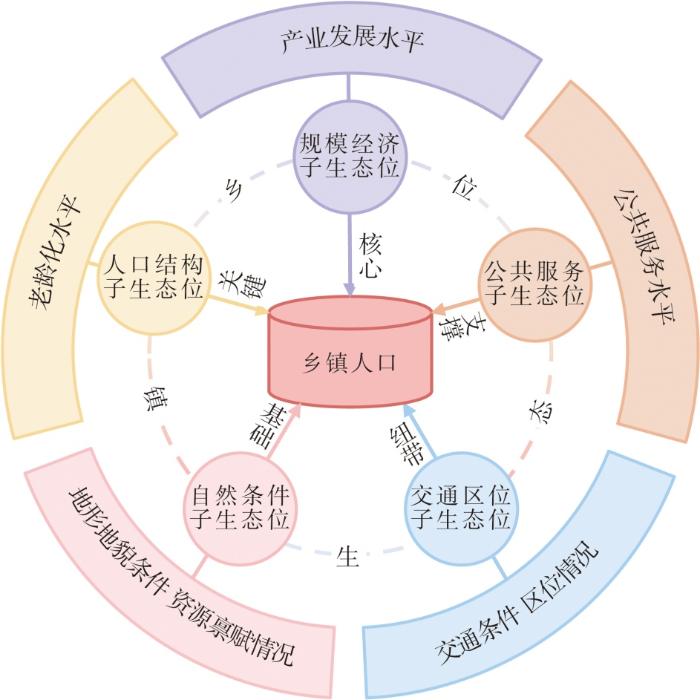
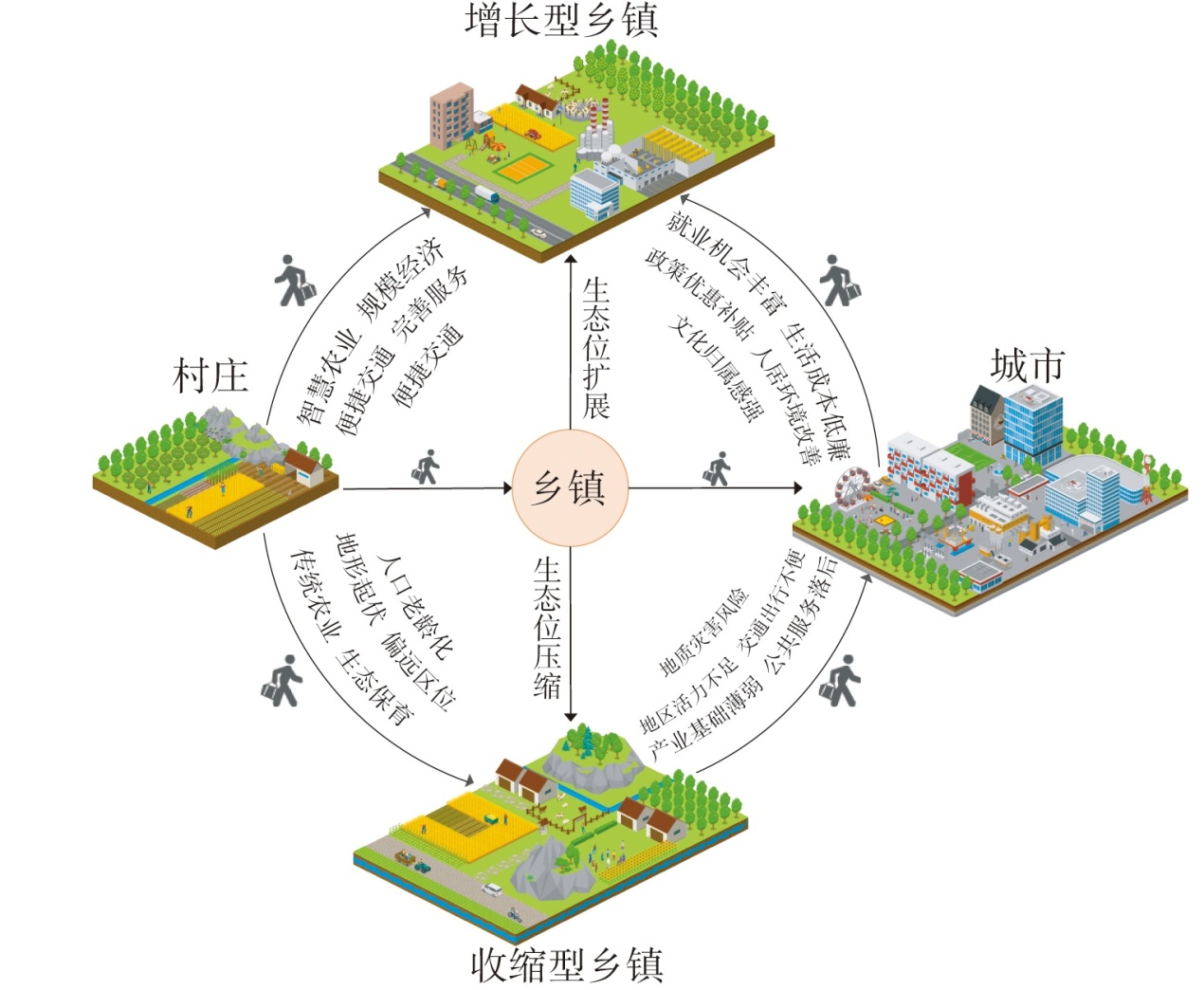
Based on the population data of the Sixth and Seventh National Population Census, this paper characterizes the population shrinkage pattern in Chongqing at the township level, uses various machine learning methods such as multiple linear regression, random forest model, Shapley values, and partial dependence graphs to analyze the contribution and marginal effects of factors affecting population shrinkage in hilly and mountainous region. The findings are as following: 1) During the research period, 88.47% of small town in Chongqing experienced population shrinkage, and the spatial structure of the township shrinking population is constantly restructuring. The growth townships showing a scattered distribution of "one center, multiple areas" and shrinking townships showing a patchy distribution of "two belts, five rings". 2) The random forest regression model is significantly better than the multiple linear regression model in analyzing influencing factors. The results indicate that the scale economy sub-niche contributes most significantly to population shrinkage, with cultivated land area being the primary influencing indicator. This is followed by the public service sub-niche, where medical facilities represent the major contributing factor. The population structure and natural condition sub-niches are relatively similar in their contributions. In addition, the heterogeneity and homogeneity of the factors affecting the population in different regions coexist. 3) The relationship between the influencing factors and the population shrinkage of the township is non-linear and complex through partial dependence graphs, with significant thresholds for the factors of relief, GDP, educational facilities, supermarkets, transport facilities and road density.
LI Tao , CHANG Xinyue , CHEN Zehao , WANG Qian , XIE Chuanfeng , CHEN Xinan . Spatial Pattern and Influencing Factors of Township's Population Shrinkage in the Hilly and Mountainous Region Based on Machine Learning[J]. Economic geography, 2025 , 45(12) : 65 -75 . DOI: 10.15957/j.cnki.jjdl.2025.12.007
表1 丘陵山区乡镇人口收缩变量选取与解释Tab.1 Selection and explanation of influencing variables of population shrinking in hilly and mountainous township |
| 变量类型 | 维度层 | 指标层 | 计算方法 | 数据来源 |
|---|---|---|---|---|
| 被解释变量 | 常住人口数量 | 各乡镇常住人口数量 | 第七次全国人口普查 | |
| 解释变量 | 自然条件 子生态位 | 平均海拔 | 各乡镇平均海拔 | DEM数据 |
| 年平均降水量 | ArcGIS的“Zonal statistics as table” | 中国科学院资源环境科学数据中心 | ||
| 河网密度 | 乡镇内总河流长度/乡镇面积 | 中国科学院资源环境科学数据中心 | ||
| 地形起伏度 | ArcGIS的“Zonal statistics as table” | DEM数据 | ||
| 净初级生产力 | ArcGIS的“Zonal statistics as table” | 中国科学院资源环境科学数据中心 | ||
| 规模经济 子生态位 | 耕地面积 | ArcGIS的“Zonal statistics as table” | 中国科学院资源环境科学数据中心 | |
| 坡度大于25°耕地占比 | 25°以上耕地面积/耕地面积 | 中国科学院资源环境科学数据中心 | ||
| 工业企业个数 | 各乡镇工业企业个数 | 《中国县域统计年鉴(乡镇卷)2020》 | ||
| GDP | ArcGIS的“Zonal statistics as table” | 中国科学院资源环境科学数据中心 | ||
| 人口结构 子生态位 | 老年人口比例 | 60岁及以上人数/常住人口数 | 第七次全国人口普查 | |
| 公共服务 子生态位 | 交通设施数量 | ArcGIS的“spatial join” | 高德地图网络爬虫 | |
| 科教设施数量 | ArcGIS的“spatial join” | 高德地图网络爬虫 | ||
| 医疗设施数量 | ArcGIS的“spatial join” | 高德地图网络爬虫 | ||
| 综合商店或超市数量 | 各乡镇营业面积50 m2以上的综合商店或超市个数 | 《中国县域统计年鉴(乡镇卷)2020》 | ||
| 交通区位 子生态位 | 铁路密度 | 铁路长度/乡镇行政区域面积 | 中国科学院资源环境科学数据中心 | |
| 公路密度 | 公路长度/乡镇行政区域面积 | 中国科学院资源环境科学数据中心 | ||
| 距离市中心距离 | ArcGIS的“Near Analysis” | 高德地图网络爬虫 | ||
| 距离区县距离 | ArcGIS的“Near Analysis” | 高德地图网络爬虫 |
表2 重庆市不同区域子生态位贡献度排序Tab.2 Ranking of sub-niche shap values in different regions of Chongqing City |
| 贡献度排序 | 中心城区 | 渝西地区 | 渝东新城 | 渝东北 三峡库区 | 渝东南 武陵山区 |
|---|---|---|---|---|---|
| 1 | 公共服务 | 规模经济 | 规模经济 | 规模经济 | 规模经济 |
| 2 | 规模经济 | 公共服务 | 公共服务 | 公共服务 | 公共服务 |
| 3 | 自然条件 | 人口结构 | 人口结构 | 自然条件 | 人口结构 |
| 4 | 人口结构 | 自然条件 | 自然条件 | 人口结构 | 自然条件 |
| 5 | 区位条件 | 区位条件 | 区位条件 | 区位条件 | 区位条件 |
| [1] |
柯文前, 肖宝玉, 林李月, 等. 中国省际城乡流动人口空间格局演变及与区域经济发展的关系[J]. 地理学报, 2023, 78(8):2041-2057.
|
| [2] |
刘振, 齐宏纲, 戚伟, 等. 1990-2010年中国人口收缩区分布的时空格局演变——基于不同测度指标的分析[J]. 地理科学, 2019, 39(10):1525-1536.
|
| [3] |
刘雅雯, 肖长江, 马晓冬, 等. 乡村人口减少对耕地利用转型的作用路径研究[J]. 地理科学进展, 2024, 43(6):1088-1101.
|
| [4] |
田玉军, 李秀彬, 马国霞, 等. 劳动力析出对生态脆弱区耕地撂荒的影响[J]. 中国土地科学, 2010, 24(7):4-9.
|
| [5] |
|
| [6] |
|
| [7] |
|
| [8] |
|
| [9] |
|
| [10] |
|
| [11] |
|
| [12] |
|
| [13] |
侯晓静, 喻忠磊, 李雨婷, 等. 中国山区县域人口收缩的空间格局及其形成机制[J]. 地理研究, 2024, 43(5):1205-1224.
|
| [14] |
张学良, 潘婷. 双重边界视角下乡镇人口收缩的精准识别与特征分析——以黄河流域为例[J]. 经济地理, 2024, 44(3):1-10.
|
| [15] |
|
| [16] |
佘丽敏, 邱永胜. 山东省县域乡村收缩时空格局及其影响因素[J]. 中国农业资源与区划, 2024, 45(7):207-220.
|
| [17] |
董朝阳, 薛东前, 马蓓蓓, 等. 70a来中国乡村人口收缩时空过程及其水土资源效应[J]. 长江流域资源与环境, 2023, 32(3):638-652.
|
| [18] |
焦林申, 张敏. 收缩乡村的空废成因与精明收缩规划策略——基于豫东典型乡村的田野调查[J]. 经济地理, 2021, 41(4):221-232.
|
| [19] |
张梦梦, 张丽君, 秦耀辰, 等. 黄河流域乡镇人口—经济增长与收缩格局及影响因素[J]. 地理科学进展, 2022, 41(6):999-1011.
|
| [20] |
|
| [21] |
|
| [22] |
|
| [23] |
何青松, 查莹莹. 中国县域乡村人口收缩的空间识别及驱动机制:基于斑块尺度的研究[J]. 华中农业大学学报, 2024, 43(6):39-52.
|
| [24] |
王露, 封志明, 杨艳昭, 等. 2000—2010年中国不同地区人口密度变化及其影响因素[J]. 地理学报, 2014, 69(12):1790-1798.
|
| [25] |
田俊, 李旭东, 滕明塔. 贵州乌江流域人口收缩的时空格局演变及影响因素[J]. 西华师范大学学报(自然科学版), 2024, 45(6):622-631.
|
| [26] |
张旖琳, 吴相利, 程李佳. 人口收缩与老龄化双重时空格局演变及影响因素——以黑龙江省为例[J]. 人文地理, 2024, 39(1):80-92.
|
| [27] |
尹旭, 王婧, 李裕瑞, 等. 中国乡镇人口分布时空变化及其影响因素[J]. 地理研究, 2022, 41(5):1245-1261.
|
| [28] |
王超, 阚瑷珂, 曾业隆, 等. 基于随机森林模型的西藏人口分布格局及影响因素[J]. 地理学报, 2019, 74(4):664-680.
|
| [29] |
齐秀琳, 汪心如. 基于机器学习方法的农业转移人口市民化水平影响因素研究[J]. 中国农村经济, 2024(5):128-150.
|
| [30] |
刘振, 戚伟, 王雪芹, 等. 国内外人口收缩研究进展综述[J]. 世界地理研究, 2019, 28(1):13-23.
|
| [31] |
朱春全. 生态位态势理论与扩充假说[J]. 生态学报, 1997(3):324-332.
|
| [32] |
王如松, 陈亮. 中国人口生态态势的系统分析和空间发展格局探讨[J]. 人口研究, 2007(2):1-14.
|
| [33] |
张学良, 潘婷. 中国式现代化背景下的中国乡镇实践与发展路径探析[J]. 重庆大学学报(社会科学版), 2024, 30(1):1-17.
|
| [34] |
罗刚, 廖和平, 李涛, 等. 地理资本视角下村级多维贫困测度及贫困类型划分——基于重庆市1919个市级贫困村调研数据[J]. 中国农业资源与区划, 2018, 39(8):244-254.
|
| [35] |
杜志威, 张虹鸥, 叶玉瑶, 等. 2000年以来广东省城市人口收缩的时空演变与影响因素[J]. 热带地理, 2019, 39(1):20-28.
|
| [36] |
李裕瑞, 尹旭. 镇域发展研究进展与展望[J]. 经济地理, 2019, 39(7):1-8.
|
| [37] |
柏中强, 王卷乐, 杨雅萍, 等. 基于乡镇尺度的中国25省区人口分布特征及影响因素[J]. 地理学报, 2015, 70(8):1229-1242.
|
| [38] |
刘振, 戚伟, 齐宏纲, 等. 1990—2015年中国县市尺度人口收缩的演变特征及影响因素[J]. 地理研究, 2020, 39(7):1565-1579.
|
| [39] |
|
| [40] |
|
/
| 〈 |
|
〉 |