


Study on Supply Pattern and Spatial Adaptability of Charging Facilities in Changsha
Received date: 2023-12-14
Revised date: 2024-03-30
Online published: 2025-12-23
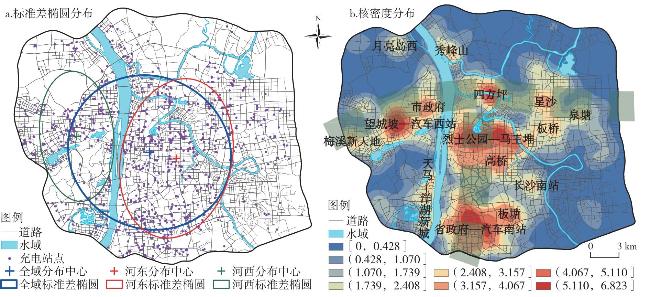
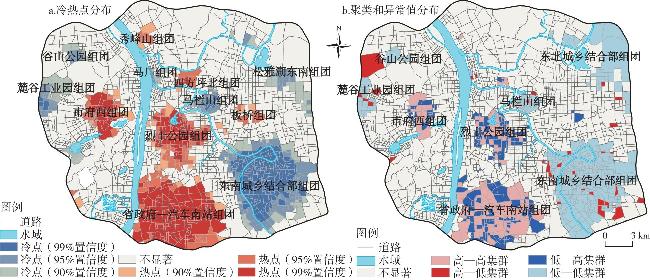
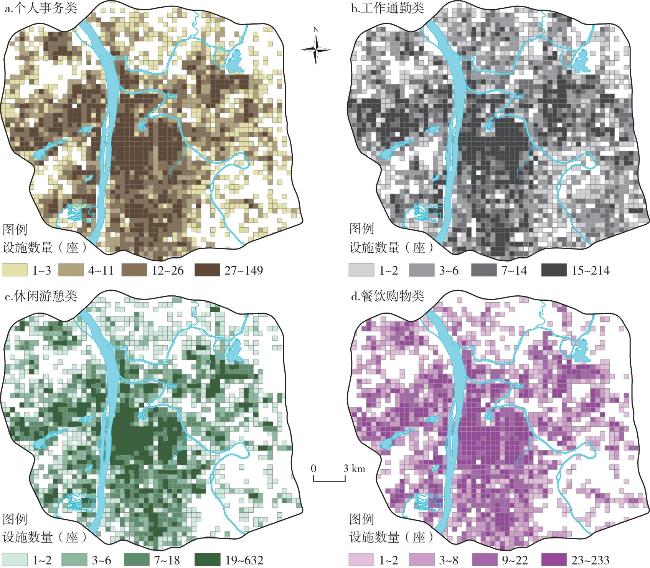
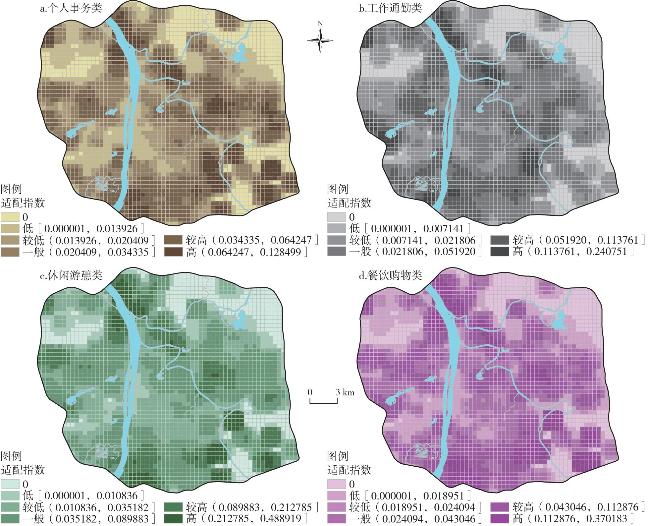
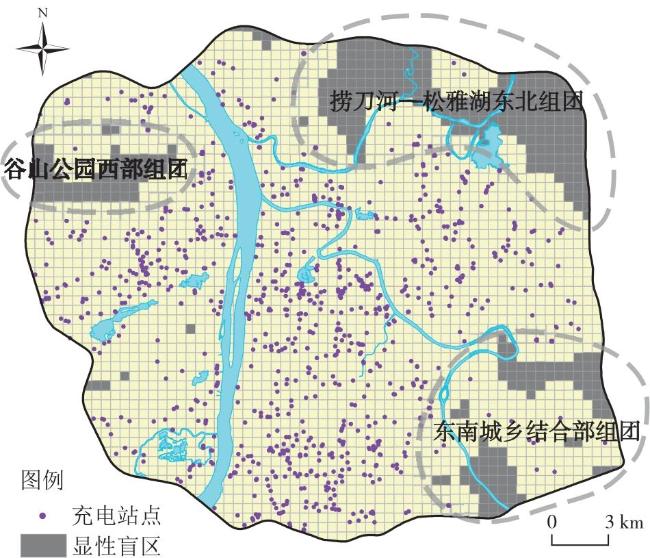
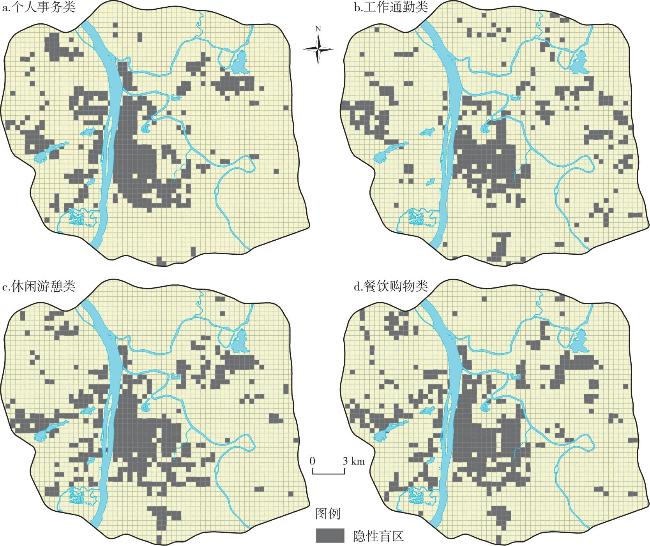
Electric vehicle charging stations play an important role in China's new infrastructure strategy. The article considered the walking convenience of drivers and passengers in the process of charging electric vehicles and obtaining other services, used the point of interest (POI) data obtained from AutoNavi open platform and road-net data based on Open Street Map (OSM), and adopted the method of exploratory spatial data analysis, modified Gaussian two-step floating catchment area based on the Gaussian distance decay function and blank areas to calculate the supply pattern and spatial adaptability of charging facilities within the Third Ring Road of Changsha. The results show that: 1) The spatial distribution of charging stations shows a T-shaped agglomeration tendency in the whole region, the density of stations decreases from the central urban to the suburban area, which is consistent with the spatial distribution of road network and public facilities; 2) In general, the spatial adaptability level between charging stations and all kinds of public facilities is not high, and there is a great difference in the adaptability of charging stations and public facilities in different urban functional areas; 3) The dominant blind areas are distributed in the urban fringe, including northeast, southeast and near Gushan Park, the recessive blind areas are mainly concentrated in the central urban areas, which are important target regions for further optimizing the layout of public charging stations.
PENG Peng , FENG Yuming , HUANG Junlin , GAO Xiaotong , XU Leining . Study on Supply Pattern and Spatial Adaptability of Charging Facilities in Changsha[J]. Economic geography, 2025 , 45(11) : 149 -159 . DOI: 10.15957/j.cnki.jjdl.2025.11.015
表1 公共设施分类Tab.1 Categories of public facilities |
| 大类 | 中类 | 小类 |
|---|---|---|
| 个人事务类 | 机构团体 | 政府机关、社会团体 |
| 科教文化 | 学校、各类文化场馆 | |
| 医疗保健 | 综合医院、专科医院 | |
| 金融保险 | 银行、保险公司、证券公司、财务公司 | |
| 工作通勤类 | 公司企业 | 知名企业、公司、工厂 |
| 交通设施 | 港口码头、火车站等 | |
| 休闲游憩类 | 风景名胜 | 公园广场、风景名胜 |
| 体育休闲 | 大型运动场馆、开放休闲场所、影剧院 | |
| 住宿服务 | 宾馆、酒店 | |
| 餐饮购物类 | 餐饮服务 | 中餐厅、外国餐厅、茶艺馆、咖啡厅 |
| 购物服务 | 商场、商业街、大型超市、各类综合市场 |
表2 长沙市三环内充电站适配性水平分级统计Tab.2 Statistics of adaptability level of charging stations within the Third Ring Road, Changsha |
| 适配等级 | 个人事务类 | 工作通勤类 | 休闲游憩类 | 餐饮购物类 | |||||||
|---|---|---|---|---|---|---|---|---|---|---|---|
| 数量(座) | 占比(%) | 数量(座) | 占比(%) | 数量(座) | 占比(%) | 数量(座) | 占比(%) | ||||
| 高 | 273 | 9.61 | 122 | 4.29 | 136 | 4.79 | 262 | 9.22 | |||
| 较高 | 697 | 24.53 | 600 | 21.12 | 391 | 13.76 | 763 | 26.86 | |||
| 一般 | 642 | 22.60 | 947 | 33.33 | 1022 | 35.97 | 727 | 25.59 | |||
| 较低 | 342 | 12.04 | 568 | 19.99 | 635 | 22.35 | 193 | 6.79 | |||
| 低 | 399 | 14.04 | 116 | 4.08 | 169 | 5.95 | 408 | 14.36 | |||
| 不适配 | 488 | 17.18 | 488 | 17.18 | 488 | 17.18 | 488 | 17.18 | |||
| [1] |
张佩, 王姣娥, 肖凡. 中国新基建发展的时空演变及驱动因素[J]. 地理科学进展, 2023, 42(2):209-220.
|
| [2] |
金凤君. 以“新基建”为牵引促进东北地区融合创新发展[J]. 学习与探索, 2021(1):120-124.
|
| [3] |
刘艳红, 黄雪涛, 石博涵. 中国“新基建”:概念、现状与问题[J]. 北京工业大学学报(社会科学版), 2020, 20(6):1-12.
|
| [4] |
张佩, 王姣娥, 马丽. 新基建助推区域协调发展的作用机制及优化对策[J]. 区域经济评论, 2022(5):30-36.
|
| [5] |
曹小曙, 胡培婷, 刘丹. 电动汽车充电站选址研究进展[J]. 地理科学进展, 2019, 38(1):139-152.
|
| [6] |
吴钟鸣, 卢军锋, 孙丽, 等. 可移动式电动汽车充电桩的设计[J]. 电力系统保护与控制, 2021, 49(23):148-154.
|
| [7] |
严干贵, 刘华南, 韩凝晖, 等. 计及电动汽车时空分布状态的充电站选址定容优化方法[J]. 中国电机工程学报, 2021, 41(18):6271-6284.
|
| [8] |
朱继忠, 何晨可, 陈婧韵, 等. 综合能源系统环境下电动汽车充换电设施规划综述[J]. 南方电网技术, 2022, 16(1):14-32.
|
| [9] |
郭春林, 肖湘宁. 电动汽车充电基础设施规划方法与模型[J]. 电力系统自动化, 2013, 37(13):70-75.
|
| [10] |
易校石, 祁宝川, 易正俊. 新能源电动汽车充电桩的优化选址[J]. 公路交通科技, 2022, 39(7):166-171,180.
|
| [11] |
卞芸芸, 黄嘉玲, 郑郁. 基于供需平衡的广州市充电基础设施规划探索[J]. 规划师, 2017, 33(12):124-130.
|
| [12] |
岳为众, 刘颖琦, 童宇, 等. 政府补贴在新能源汽车充电桩产业中的作用:三方博弈视角[J]. 中国人口·资源与环境, 2020, 30(11):119-126.
|
| [13] |
曹昉, 郑怡馨, 王斯琪, 等. 计及实时交通特征的电动公交车备用率与充电桩联合优化[J]. 电力自动化设备, 2024(4):127-134,150.
|
| [14] |
孟旭瑶, 张维戈, 鲍谚, 等. 考虑充电功率的电动汽车快充站充电设施优化配置[J]. 电力自动化设备, 2018, 38(7):28-34.
|
| [15] |
邵赛, 关伟, 毕军. 考虑排队时间和里程约束的竞争充电站选址问题[J]. 交通运输系统工程与信息, 2016, 16(6):169-175.
|
| [16] |
孙小慧, 刘锴, 左志. 考虑时空间限制的电动汽车充电站布局模型[J]. 地理科学进展, 2012, 31(6):686-692.
|
| [17] |
齐琳, 姚俭, 王心月. 基于改进粒子群算法的电动汽车充电站布局优化[J]. 公路交通科技, 2017, 34(6):136-143.
|
| [18] |
高建树, 王明强, 宋兆康, 等. 基于遗传算法的机场充电桩布局选址研究[J]. 计算机工程与应用, 2018, 54(23):210-216.
|
| [19] |
曾文, 向梨丽, 张小林. 南京市社区服务设施可达性的空间格局与低收入社区空间剥夺研究[J]. 人文地理, 2017, 32(1):73-81.
|
| [20] |
黄洁, 高阳, 付晓, 等. 基于出行链的新能源汽车公共充电站点可达性研究——以北京市为例[J]. 地理研究, 2022, 41(12):3305-3317.
|
| [21] |
高巍, 欧阳玉歆, 赵玫, 等. 公共服务设施可达性度量方法研究综述[J]. 北京大学学报(自然科学版), 2023, 59(2):344-354.
|
| [22] |
|
| [23] |
|
| [24] |
陶卓霖, 程杨. 两步移动搜寻法及其扩展形式研究进展[J]. 地理科学进展, 2016, 35(5):589-599.
|
| [25] |
王子琳, 李志刚, 程晗蓓. 社区网格尺度下城市密度对居民绿地暴露水平的影响——以特大城市武汉市为例[J]. 经济地理, 2022, 42(12):82-91,161.
|
| [26] |
|
| [27] |
韩非, 罗仁朝. 基于可达性测度的城市社区居家养老服务供需匹配研究——以南京为例[J]. 经济地理, 2020, 40(9):91-101.
|
| [28] |
贾斯佳, 袁竞峰. 电动汽车基础设施选址定容研究——以南京市河西新城为例[J]. 科技管理研究, 2018, 38(1):223-232.
|
| [29] |
董美辰, 胡刚. 基于POI数据的汽车充电站空间布局特征及影响因素研究——以青岛市城区为例[J]. 青岛大学学报(自然科学版), 2023, 36(3):144-150.
|
| [30] |
贺三维, 王伟武, 曾晨, 等. 中国区域发展时空格局变化分析及其预测[J]. 地理科学, 2016, 36(11):1622-1628.
|
| [31] |
[美]王法辉, 基于GIS的数量方法与应用[M]. 姜世国,滕骏华,译. 北京: 商务印书馆, 2009.
|
| [32] |
|
| [33] |
李国平, 王春杨. 我国省域创新产出的空间特征和时空演化——基于探索性空间数据分析的实证[J]. 地理研究, 2012, 31(1):95-106.
|
| [34] |
王劲峰, 廖一兰, 刘鑫. 空间数据分析教程(2版)[M]. 北京: 科学出版社, 2019.
|
| [35] |
魏晓芳, 吕飞, 张宇峰, 等. 健康城市导向下新能源汽车充电桩的空间布局研究[J]. 城市建筑, 2023, 20(5):54-61.
|
| [36] |
李萌. 基于居民行为需求特征的“15分钟社区生活圈”规划对策研究[J]. 城市规划学刊, 2017(1):111-118.
|
| [37] |
赵兵, 李露露, 曹林. 基于GIS的城市公园绿地服务范围分析及布局优化研究——以花桥国际商务城为例[J]. 中国园林, 2015, 31(6):95-99.
|
| [38] |
高喆, 顾朝林, 顾江. “新型城镇化”与“乡村振兴”场景下新基建对产业转型的启示[J]. 经济地理, 2021, 41(4):8-14.
|
/
| 〈 |
|
〉 |