


Education-led Residential Mobility in Chinese Big Cities from the Perspective of Field Theory
Received date: 2024-12-22
Revised date: 2025-05-20
Online published: 2025-11-20
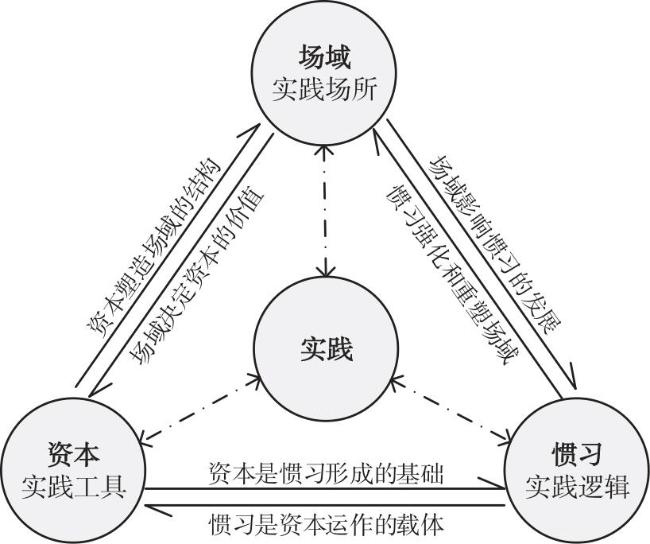
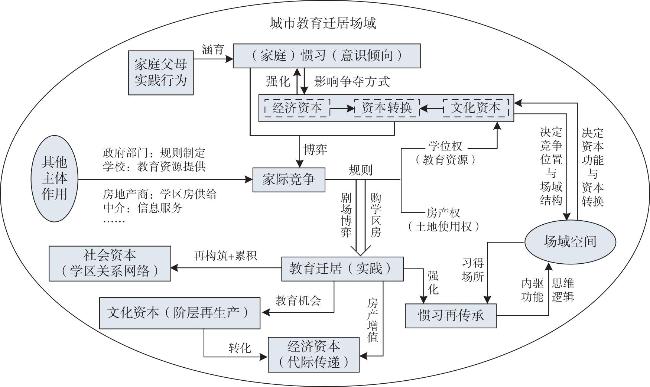
Intra-urban residential mobility represents a common and complex socio-spatial phenomenon, marked by the relocation of individuals or families within the same city, essentially constituting a re-selection of housing. Notably, education-led residential mobility is increasingly becoming one of the dominant modes of family migration within large cities. This study integrates Pierre Bourdieu's theory of fields into the analytical framework for examining education-led residential mobility. Utilizing data from 5,000 relocation questionnaires in Nanjing, it systematically explores the spatio-temporal characteristics, underlying mechanisms, and social effects of education-led residential mobility. The findings reveal: 1) Education-driven relocation forms a relatively independent and multi-agent social field characterized by competitiveness and capital transformation driven by capital (instrumental) and habitual (logical) practices; 2) Families involved in education-led residential mobility generally possess higher socio-economic attributes and engage in competition for educational resources through their capital's scale and structure, with economic capital being the primary driving factor, while class and cultural habits significantly contribute to their decisions; 3) This form of mobility highlights the supply-demand contradiction in quality compulsory education, leading to issues such as the capitalization of educational resources and gentrification of school districts, exacerbating resource allocation imbalances and social spatial segregation. The disparity in educational quality within cities is both a cause and a consequence of education-led residential mobility. Analyzing the field of education-led residential mobility is crucial for a systematic understanding of the deep-seated social mechanisms behind educational differentiation and mobility, providing theoretical support and practical guidance for government efforts aimed at achieving educational equity through optimizing field rules and instituting pathways for balanced inter-school development.
SONG Weixuan , SONG Zhengna , WANG Fuping , HE Qiong , LIU Chunhui . Education-led Residential Mobility in Chinese Big Cities from the Perspective of Field Theory[J]. Economic geography, 2025 , 45(10) : 58 -69 . DOI: 10.15957/j.cnki.jjdl.2025.10.007
表1 教育迁居场域的行动者Tab.1 Agents of education-led mobility field |
| 行动者 | 角 色 |
|---|---|
| 迁居家庭 | 基本行动者。基于对当前教育环境的不满,以及对未来教育成果的期望做出迁居决策 |
| 学校 | 优质教育资源提供者。以优秀办学质量吸引生源,间接影响周边房地产市场 |
| 个人房东 | 最重要的学区房提供者。他们拥有并出售/出租自己的学区房 |
| 房地产开发商 | 学区房提供者。开发和销售与优质教育资源相关的学区房(通常来说该部分占比较小) |
| 政府机构 | 规则制定者、市场引导和监督者。通过制定教育政策、规划教育资源配置,影响教育迁居 |
| 房产中介等社会服务机构 | 极其重要的辅助者。为迁居者提供信息咨询、学区房评估、协助过户、资金支持等服务 |
表2 教育迁居样本社会经济属性结构(单位:%)Tab.2 Socio-economic attribute structure of samples due to education(Unit:%) |
| 职业特征 | 收入水平 | |||||
|---|---|---|---|---|---|---|
| 职业分类 | 教育迁居 | 其他样本 | 家庭收入(万元/年) | 教育迁居 | 其他样本 | |
| 政府企事业单位管理人员 | 31.59 | 21.85 | <10 | 11.16 | 20.28 | |
| 专业技术人员 | 28.98 | 27.44 | 10~20 | 19.00 | 29.42 | |
| 办事人员 | 8.08 | 8.41 | 20~30 | 23.75 | 19.91 | |
| 私营企业主和个体工商户 | 6.89 | 6.74 | 30~40 | 17.34 | 12.93 | |
| 商业服务业人员 | 8.08 | 9.61 | 40~60 | 15.91 | 10.44 | |
| 学生和自由职业者 | 8.55 | 15.05 | 60~100 | 8.79 | 4.76 | |
| 产业工人、离退休及无业 | 7.83 | 10.90 | >100 | 4.05 | 2.26 | |
| 教育程度 | 住房情况 | |||||
| 最高学历 | 教育迁居 | 其他样本 | 住房数量(套) | 教育迁居 | 其他样本 | |
| 初中及以下 | 2.37 | 4.53 | 0 | 4.75 | 23.79 | |
| 高中/中专 | 6.41 | 10.07 | 1 | 38.00 | 46.05 | |
| 大学专科 | 17.34 | 19.86 | 2 | 44.89 | 23.18 | |
| 大学本科 | 42.52 | 45.27 | 3 | 9.50 | 5.36 | |
| 硕士研究生 | 18.53 | 13.12 | 4 | 0.95 | 0.83 | |
| 博士研究生 | 12.83 | 7.15 | ≥5 | 1.91 | 0.79 | |
| [1] |
|
| [2] |
|
| [3] |
|
| [4] |
|
| [5] |
|
| [6] |
|
| [7] |
|
| [8] |
|
| [9] |
|
| [10] |
|
| [11] |
|
| [12] |
|
| [13] |
|
| [14] |
|
| [15] |
|
| [16] |
|
| [17] |
|
| [18] |
|
| [19] |
|
| [20] |
崔璨, 穆学英, 常鹤影, 等. 上海市居民居住迁移的区位选择及其影响因素研究[J]. 地理科学进展, 2021, 40(3):422-432.
|
| [21] |
宋伟轩, 毛宁, 陈培阳, 等. 基于住宅价格视角的居住分异耦合机制与时空特征——以南京为例[J]. 地理学报, 2017, 72(4):589-602.
|
| [22] |
谭一洺, 杨永春, 李甜甜. 基于居民属性视角的转型期中国城市居民住宅区位选择研究——以成都市为例[J]. 地域研究与开发, 2015, 34(2):75-80.
|
| [23] |
李梦洁, 林赛南, 黄经南, 等. 21世纪国外居住迁移研究进展与评述[J]. 国际城市规划, 2021, 36(4):64-72.
|
| [24] |
刘天宝, 叶子聪, 王天依. 基础教育分异的时空间行为研究框架[J]. 热带地理, 2021, 41(5):1046-1059.
|
| [25] |
|
| [26] |
陈培阳. 中国城市学区绅士化及其社会空间效应[J]. 城市发展研究, 2015, 22(8):55-60.
|
| [27] |
宋伟轩, 曹辉, 涂唐奇, 等. 南京主城区优质教育资源导向的学区绅士化研究[J]. 地理学报, 2023, 78(4):792-810.
|
| [28] |
杨振山, 粟子林, 丁悦, 等. 学区化外部性对城市空间的影响[J]. 人文地理, 2018, 33(4):60-67.
|
| [29] |
|
| [30] |
|
| [31] |
方长春. 生源效应:居住空间阶层化与教育不平等[J]. 社会科学文摘, 2019(10):62-64.
|
| [32] |
宋正娜, 华芙莉, 刘少丽. 义务教育资源资本化相关研究进展与述评[J]. 地理科学进展, 2021, 40(10):1771-1787.
|
| [33] |
宋伟轩, 叶玲, 路以豪, 等. 南京中产阶层居住迁移的时空特征与典型模式[J]. 地理研究, 2024, 43(5):1187-1204.
|
| [34] |
|
| [35] |
杨兴柱, 苏云清, 周玲, 等. 场域理论视角下城市文化空间旅游化的特征与机制——以合柴1972工业记忆小镇为例[J]. 旅游学刊, 2024, 39(7):54-70.
|
| [36] |
宫留记. 布迪厄的社会实践理论[M]. 郑州: 河南大学出版社, 2009.
|
| [37] |
雒占福, 柏雪. 场域视角下城市影子教育的空间分异研究——以西安市主城区为例[J]. 地理研究, 2024, 43(6):1462-1481.
|
| [38] |
宋伟轩, 涂唐奇, 尹上岗, 等. 南京义务教育资源的社会——空间可达性差异及效应研究[J]. 地理研究, 2019, 38(8):2008-2026.
|
| [39] |
刘宏燕, 陈雯. 中国基础教育资源布局研究述评[J]. 地理科学进展, 2017, 36(5):557-568.
|
| [40] |
袁振杰, 郭隽万果, 杨韵莹, 等. 中国优质基础教育资源空间格局形成机制及综合效应[J]. 地理学报, 2020, 75(2):318-331.
|
| [41] |
刘天宝, 陈子叶, 陈爽. 基于义务教育校际分异的学校类型及其空间分布模式——以大连市初中为例[J]. 地理科学, 2022, 42(8):1402-1412.
|
| [42] |
刘春卉, 谷跃, 刘予, 等. 城市影子教育机构的空间分异与教育资源领域化——以南京为例[J]. 经济地理, 2021, 41(5):155-164.
|
| [43] |
陈杰, 茆三芹. 义务教育空间均衡与居住融合的互动关系研究[J]. 社会科学辑刊, 2022(6):170-180.
|
/
| 〈 |
|
〉 |