


The Construction of Linear Cultural Heritage Corridor Based on SNA and Circuit Theory: Taking Guanlong Ancient Road as an Example
Received date: 2025-01-19
Revised date: 2025-06-06
Online published: 2025-11-20
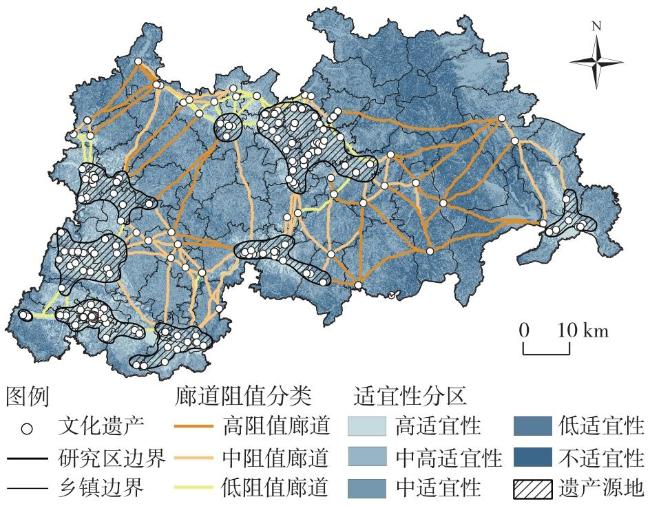
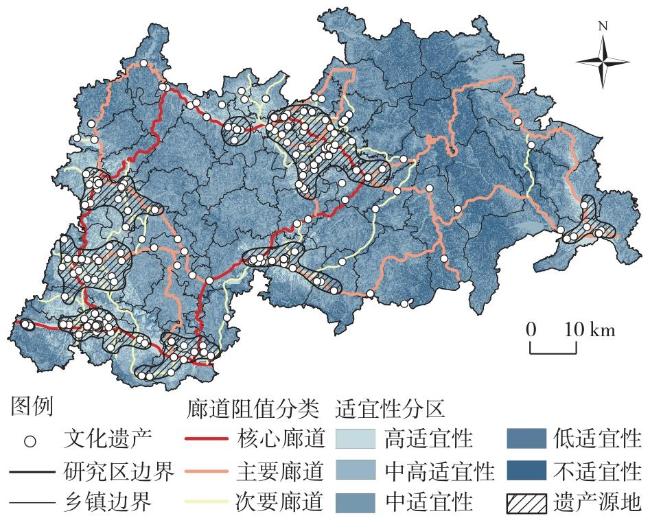
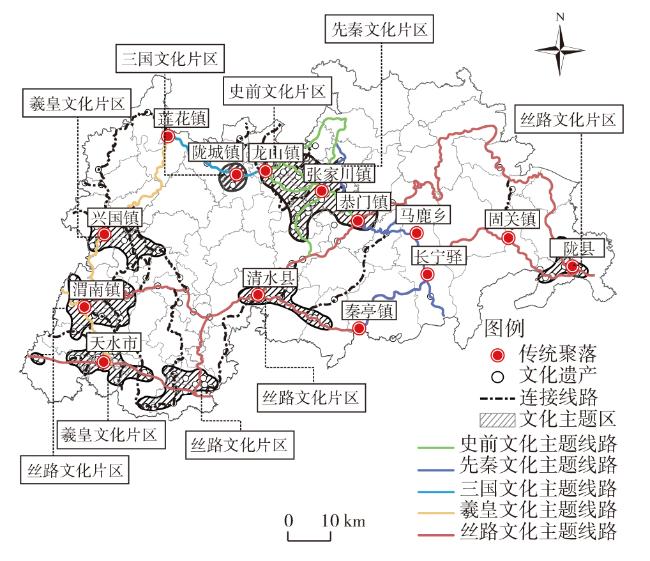
Building a systematic and continuous heritage corridor is a key step in promoting the comprehensive protection and rational utilization of cultural heritage. Taking the Guanlong Ancient Trail linear cultural heritage as the research object, this study explores the characteristics of heritage nodes and network attributes through cognitive network structure analysis, and identifies potential heritage corridors using the minimum cumulative resistance model and circuit theory model in conjunction with heritage clusters as heritage sources. By integrating and optimizing potential corridors based on factors such as heritage centrality evaluation, actual transportation conditions, and corridor relative resistance, this study constructs the cultural heritage system of the Guanlong Ancient Trail. The results indicate that: 1) The heritage network of the ancient Guanlong Ancient Trail linear cultural heritage presents a spatial pattern of "multiple cores and clustered groups". 2) The application of the "kernel density estimation + block model" collaborative division of heritage source areas can effectively enhance the scientific nature of the division of heritage source areas. 3) The potential heritage corridors in the study area were manually corrected, and after optimization, a three-level corridor system of "core-main-secondary" was constructed. Based on this, the development and application strategies of the cultural heritage corridor system were proposed, with the aim of providing reference and inspiration for the overall protection and coordinated development of linear cultural heritage in the northwest region and even the whole country.
LI Hongfei , CHANG Kai . The Construction of Linear Cultural Heritage Corridor Based on SNA and Circuit Theory: Taking Guanlong Ancient Road as an Example[J]. Economic geography, 2025 , 45(10) : 234 -244 . DOI: 10.15957/j.cnki.jjdl.2025.10.024
表1 关陇古道线性文化遗产关联性指标选择及说明Tab.1 Selection of indicators for assessing the relevance of linear cultural heritage along the Guanlong Ancient Road |
| 中间层 | 指标层 | 指标解释与测度 | 指标权重 |
|---|---|---|---|
| 地理联系 | 空间距离 | 衡量文化遗产的地理联系强度。通过全国公路数据集构建OD成本矩阵,计算文化遗产之间的交通距离并求倒数,最后将数据归一化处理后得到关陇古道文化遗产的地理联系强度 | 0.223 |
| 文化联系 | 历史时期 | 衡量文化遗产所处历史时期的联系强度。基于文化遗产所处阶段,赋值同一时间阶段的文化遗产为1,不同时间阶段为0 | 0.462 |
| 类别联系 | 遗产类别 | 衡量文化遗产不同类别之间的联系。赋值同一类别的文化遗产为1,不同类别为0;历史文化名村名镇等传统聚落是人类活动的根据地,因此传统聚落之间赋值为1,传统聚落与其他遗产类别赋值为0.5 | 0.315 |
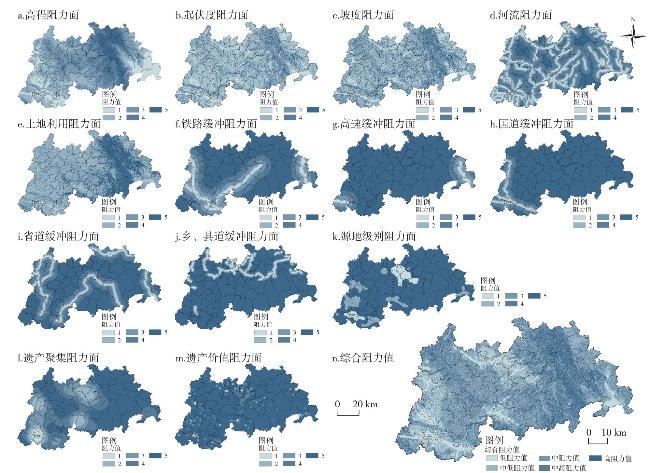
表2 阻力因子分类、权重与赋值Tab.2 Classification, weighting and assignment of resistance factors |
| 阻力因子 | 权重 | 阻力值 | ||||||
|---|---|---|---|---|---|---|---|---|
| 1 | 2 | 3 | 4 | 5 | ||||
| 自然环境 | 高程(m) | 0.016 | [843,1311) | [1311,1578) | [1578,1810) | [1810,2096) | [2096,2744] | |
| 坡度(°) | 0.027 | [0.00,8.20) | [8.20,14.51) | [14.51,21.06) | [21.06,29.50) | [29.50,59.68] | ||
| 地形起伏度(°) | 0.034 | [0,16) | [16,28) | [28,41) | [41,60) | [60,154] | ||
| 河流缓冲(km) | 0.024 | [0.0,0.5) | [0.5,1.0) | [1,2) | [2,5) | [5,∞) | ||
| 土地利用类型 | 0.061 | 非、建设用地 | 农田 | 草地 | 水体 | 森林 | ||
| 交通区位 | 距铁路距离(km) | 0.092 | [0,1) | [1,2) | [2,5) | [5,10) | [10,∞) | |
| 距高速路距离(km) | 0.078 | [0,1) | [1,2) | [2,5) | [5,10) | [10,∞) | ||
| 距国道路距离(km) | 0.051 | [0.0,0.5) | [0.5,1.0) | [1,2) | [2,5) | [5,∞) | ||
| 距省道路距离(km) | 0.047 | [0.0,0.5) | [0.5,1.0) | [1,2) | [2,5) | [5,∞) | ||
| 距县、乡道距离(km) | 0.029 | [0.0,0.5) | [0.5,1.0) | [1.0,1.5) | [1.5,2.0) | [2,∞) | ||
| 遗产属性 | 源地级别 | 0.159 | 一级 | 二级 | 三级 | 其他区域 | , | |
| 遗产价值 | 0.118 | 国家级 | 省级 | 市县级 | 一般 | , | ||
| 遗产聚集程度 | 0.264 | [0.00,0.07) | [0.07,0.14) | [0.14,0.22) | [0.22,0.30) | [0.30,0.37] | ||
表3 遗产廊道优化分级Tab.3 Heritage corridor optimization hierarchy |
| 遗产廊道级别 | 基本条件 |
|---|---|
| 核心廊道 | 五级点度中心度的文化遗产点至少2处 |
| 五级中介中心度的遗产点至少2处 | |
| 遗产廊道的相对阻力不大于4.762 | |
| 铁路、高速道路、国道 | |
| 主要廊道 | 四级以上点度中心度的文化遗产点至少5处 |
| 四级以上中介中心度的遗产点至少5处 | |
| 遗产廊道的相对阻力不大于5.483 | |
| 省道、县道 | |
| 次要廊道 | - |
| [1] |
张振宇. 探访关陇古道:揭开玉帛之路的迷雾[J]. 丝绸之路, 2016(6):29-35.
|
| [2] |
王志芳, 孙鹏. 遗产廊道——一种较新的遗产保护方法[J]. 中国园林, 2001(5):86-89.
|
| [3] |
|
| [4] |
赵耀, 龙彬, 张菁. 区域尺度下的传统村落景观安全格局构建与保护策略研究——以云南腾冲为例[J]. 中国园林, 2023, 39(9):67-73.
|
| [5] |
李辛夷, 夏海山. 铁路遗产廊道再生价值评价研究——以京张铁路(北京段)为例[J]. 南方建筑, 2023(3):40-51.
|
| [6] |
朱永杰, 王亚男. 运河对北京城市空间结构的影响研究——兼论运河文化带保护和建设策略[J]. 城市发展研究, 2019, 26(12):44-48.
|
| [7] |
王海英, 陶犁, 李云涛, 等. 文化廊道视角下京杭大运河(北京段)空间整体性构建研究[J]. 地理研究, 2023, 42(10):2622-2643.
|
| [8] |
马源, 陈丽华, 关志烨. 国土空间规划背景下生态与文化遗产协同保护体系构建研究——以佛山市为例[J]. 中国园林, 2024, 40(1):106-112.
|
| [9] |
李鸿飞, 何颖茹, 唐琇尧, 等. 中国传统村落木结构建筑防火研究[J]. 林产工业, 2020, 57(10):60-64.
|
| [10] |
杜怡帆, 史承勇, 唐英, 等. 流域视角下黄河流域遗产廊道空间构建研究[J]. 文博, 2024(4):103-112.
|
| [11] |
贺鼎, 王子瑜, 吴海怡. 基于MCR与MCA模型的景德镇瓷业遗产廊道体系构建研究[J]. 地理与地理信息科学, 2022, 38(3):74-82.
|
| [12] |
陈治儒, 陈岚, 谭林. 区域协同发展下井盐文化遗产空间网络构建研究——以自贡市为例[J]. 中国园林, 2023, 39(10):124-130.
|
| [13] |
|
| [14] |
张泉, 葛敬松. 文化生态视角下徽州遗产廊道网络构建研究[J]. 工业建筑, 2024, 54(4):20-29.
|
| [15] |
|
| [16] |
段秋岑. 线性文化遗产廊道的保护研究[D]. 昆明: 云南大学, 2014.
|
| [17] |
|
| [18] |
李梦然, 郑潼, 汤楚乔, 等. 叙事与空间——南粤古驿道遗产网络构建研究[J]. 南方建筑, 2022(3):47-55.
|
| [19] |
|
| [20] |
|
| [21] |
张国藩. 陇山古道遗址[J]. 档案, 2013(6):29-32.
|
| [22] |
张国藩, 赵建平. 丝绸之路陇坂古道考察散记[J]. 丝绸之路, 2001(S1):107-111.
|
| [23] |
张星烺. 中西交通史料汇编[M]. 北京: 中华书局, 2003.
|
| [24] |
刘承良, 桂钦昌, 段德忠, 等. 全球科研论文合作网络的结构异质性及其邻近性机理[J]. 地理学报, 2017, 72(4):737-752.
|
| [25] |
初楠臣, 吴相利, 张平宇, 等. 基于现实与虚拟流视角下的东北地区城市空间网络特征[J]. 经济地理, 2022, 42(5):66-74.
|
| [26] |
王心蕊, 黄丹丹, 李毓. 廊道旅游地空间网络结构及其形成机制[J]. 经济地理, 2025, 45(1):236-245.
|
| [27] |
俞孔坚, 李伟, 李迪华, 等. 快速城市化地区遗产廊道适宜性分析方法探讨——以台州市为例[J]. 地理研究, 2005(1):69-76.
|
| [28] |
|
| [29] |
|
| [30] |
张新红, 杨玉欢, 刘奔腾. 中国工业遗产的时空分布特征与空间整合保护[J]. 经济地理, 2023, 43(2):103-114.
|
| [31] |
朱其静, 杨钊, 蒋鹏飞, 等. 有机生长视角下廊道型乡村旅游地业态空间演化与机制——以皖南川藏线为例[J]. 经济地理, 2023, 43(4):206-216.
|
| [32] |
宋利利, 秦明周. 整合电路理论的生态廊道及其重要性识别[J]. 应用生态学报, 2016, 27(10):3344-3352.
|
| [33] |
周详, 汤雨杭, 苏俊吉. 基于历史性城市景观与数字足迹视角的遗产廊道选线方法——以中国南京市历史城区为例[J]. 景观设计学(中英文), 2023, 11(3):11-37.
|
| [34] |
王丽萍. 试论滇藏茶马古道文化遗产廊道的构建[J]. 贵州民族研究, 2009, 29(4):61-65.
|
| [35] |
郭建晖. 文化遗存保护传承的当代价值与现实路径——基于景德镇青白瓷遗址群的调查[J]. 江西社会科学, 2023, 43(1):29-39.
|
| [36] |
|
/
| 〈 |
|
〉 |