


Impact of Knowledge Flow Based on Patent on Innovation Quality in the Yangtze River Delta Region
Received date: 2025-04-29
Revised date: 2025-09-11
Online published: 2025-11-20
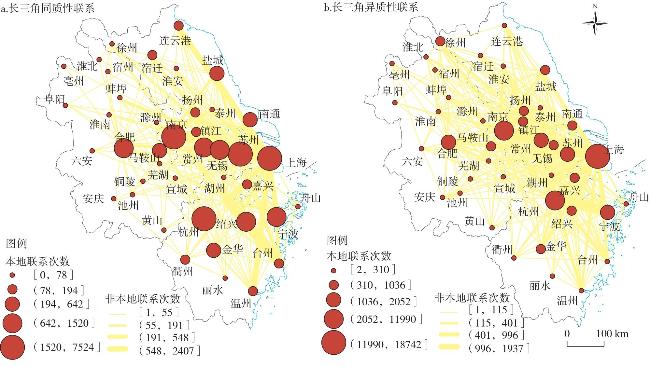
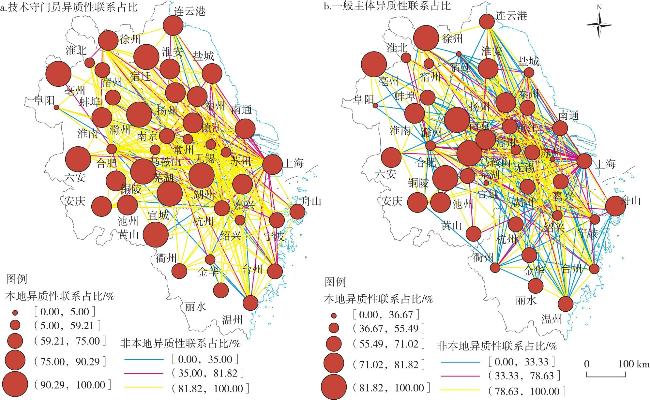
The improvement of regional innovation quality is an important component of the development of new quality productivity. Based on the "Buzz-and-Pipeline" theory, this article uses the invention patent information of 41 prefecture level and above cities in the Yangtze River Delta region from 2003 to 2022 as raw data to define and characterize the local and nonlocal homogeneous and heterogeneous connections, measure and compare their impact on the quantity and quality of regional innovation, and analyze the role of technology gatekeepers in knowledge coupling. The research results find that: 1)The nonlocal homogeneous connections in the Yangtze River Delta exhibit the characteristics of "concentrated intensity and low density", while heterogeneous connections exhibit the characteristics of "balanced intensity and high density". 2)The positive effects of heterogeneous connections at different scales on the quantity and quality of regional innovation are significantly stronger than those of homogeneous connections. The construction of a global "pipeline" is crucial for improving the quality of regional innovation. 3)Local "buzz" can significantly positively regulate the impact of nonlocal heterogeneous connections on the quantity and quality of regional innovation. 4)The technological gatekeepers maintains a high proportion of heterogeneous connections in different technical categories, playing a key role in the process of knowledge coupling at different scales. The research conclusion deepens the understanding of the "Buzz-and-Pipeline" theory from the perspectives of homogeneous and heterogeneous knowledge flow, and has certain reference value for the development of new quality productivity.
MI Zefeng , FU Jingxuan , ZENG Gang , ZHOU Jianping , SUN Yin . Impact of Knowledge Flow Based on Patent on Innovation Quality in the Yangtze River Delta Region[J]. Economic geography, 2025 , 45(10) : 111 -120 . DOI: 10.15957/j.cnki.jjdl.2025.10.012
表1 长三角地区“技术守门员”与“一般主体”各项主要创新指标平均数值比较Tab.1 Comparison of the average values of the main innovation indicators of "technical goalkeeper" and "general subject" in the Yangtze River Delta |
| 类型 | 专利 数量 (项) | 合享 价值度 | 被引 程度 | 同质性联系数量(次) | 异质性联系数量(次) | 异质性联系比重(%) |
|---|---|---|---|---|---|---|
| 技术守门员 | 310.89 | 7.48 | 1.13 | 22.04 | 45.21 | 67.23 |
| 一般主体 | 59.97 | 7.31 | 0.92 | 3.94 | 4.35 | 52.47 |
表2 本地、非本地及同异质联系对区域创新影响的面板OLS回归结果Tab.2 Panel OLS regression results of local,non-local,and homogeneous linkages on regional innovation |
| 变量 | 模型1 | 模型2 | 模型3 | 模型4 | 模型5 | 模型6 |
|---|---|---|---|---|---|---|
| 专利数量 | 被引程度 | 合享价值度 | 专利数量 | 被引程度 | 合享价值度 | |
| 本地联系 | 0.050** | 0.072*** | 0.031 | |||
| 非本地联系 | 0.214*** | 0.211*** | 0.203*** | |||
| 同质性联系 | 0.073*** | 0.093*** | 0.058* | |||
| 异质性联系 | 0.179*** | 0.181*** | 0.162*** | |||
| 人均GDP | 0.860*** | 0.840*** | 0.973*** | 0.872*** | 0.852*** | 0.985*** |
| 固定资产投资额 | -0.003 | -0.003 | -0.003 | -0.002 | -0.002 | -0.002 |
| 高等学校在校学生数 | 0.334*** | 0.399*** | 0.324*** | 0.328*** | 0.394*** | 0.317*** |
| 科学投入占政府财政支出比重 | 0.225*** | 0.206*** | 0.246*** | 0.228*** | 0.208*** | 0.250*** |
| 教育投入占政府财政支出比重 | 0.217*** | 0.201*** | 0.250*** | 0.219*** | 0.202*** | 0.253*** |
表3 第一阶段工具变量回归结果Tab.3 Regression results of instrumental variables in the first stage |
| 变量 | 模型7 | 模型8 | 模型9 | 模型10 |
|---|---|---|---|---|
| 本地联系 | 非本地联系 | 同质性联系 | 异质性联系 | |
| 宗族文化 | 0.037*** | 0.055*** | 0.031*** | 0.045*** |
| 佛寺数量 | -0.236*** | -0.089*** | -0.110*** | -0.152*** |
| 基督教堂数量 | 0.036 | -0.038 | 0.063 | -0.042 |
表4 第二阶段工具变量回归结果Tab.4 Regression results of instrumental variables in the second stage |
| 变量 | 模型11 | 模型12 | 模型13 | 模型14 | 模型15 | 模型16 | |
|---|---|---|---|---|---|---|---|
| 专利 数量 | 被引 程度 | 合享 价值度 | 专利 数量 | 被引 程度 | 合享 价值度 | ||
| 本地联系 | 0.337** | 0.420*** | 0.253 | ||||
| 非本地联系 | 0.549*** | 0.406*** | 0.536*** | ||||
| 同质性联系 | 1.276*** | 1.457*** | 1.299*** | ||||
| 异质性联系 | 0.697*** | 0.694*** | 0.697*** | ||||
| Anderson LM 统计量 | 15.741*** | 8.858*** | |||||
| C-D Wald F 统计量 | 14.439 | 13.606 | |||||
表5 不同尺度同、异质联系对区域创新影响的面板OLS回归结果Tab.5 Regression results of panel OLS and substitution variables for the impact of homogeneous and heterogeneous linkages at different scales on regional innovation |
| 变量 | 模型17 | 模型18 | 模型19 |
|---|---|---|---|
| 专利数量 | 被引程度 | 合享价值度 | |
| 本地同质性联系 | 0.012* | 0.011 | 0.005 |
| 本地异质性联系 | 0.049** | 0.072** | 0.035** |
| 非本地同质性联系 | 0.035*** | 0.055 | 0.027 |
| 非本地异质性联系 | 0.134*** | 0.110*** | 0.125*** |
表6 本地同质、异质性联系调节作用的简单斜率分析Tab.6 Simple slope analysis of the moderating effect of local homogeneity and heterogeneity linkages |
| 被解释变量 | 解释变量 | 调节变量 | 调节变量水平 | t | p | 斜率 |
|---|---|---|---|---|---|---|
| 专利数量 | 非本地异质性联系 | 本地同质性联系 | 高水平 | 2.640 | 0.008 | 0.131 |
| 低水平 | 3.642 | 0.000 | 0.243 | |||
| 本地异质性联系 | 高水平 | 2.788 | 0.005 | 0.133 | ||
| 低水平 | 3.345 | 0.001 | 0.235 | |||
| 被引程度 | 非本地异质性联系 | 本地同质性联系 | 高水平 | 2.494 | 0.013 | 0.136 |
| 低水平 | 3.099 | 0.002 | 0.227 | |||
| 本地异质性联系 | 高水平 | 2.328 | 0.020 | 0.122 | ||
| 低水平 | 2.729 | 0.007 | 0.210 | |||
| 合享价值度 | 非本地异质性联系 | 本地同质性联系 | 高水平 | 2.066 | 0.039 | 0.110 |
| 低水平 | 3.166 | 0.002 | 0.227 | |||
| 本地异质性联系 | 高水平 | 2.263 | 0.024 | 0.116 | ||
| 低水平 | 3.007 | 0.003 | 0.227 |
| [1] |
方创琳, 孙彪. 新质生产力的地理学内涵及驱动城乡融合发展的重点方向[J]. 地理学报, 2024, 79(6):1357-1370.
|
| [2] |
|
| [3] |
宓泽锋, 曾刚. 本地知识基础对新兴产业知识流动的影响——以中国燃料电池产业为例[J]. 地理学报, 2021, 76(4):1006-1008.
|
| [4] |
宓泽锋, 邱志鑫, 尚勇敏, 等. 长三角区域创新集群的技术创新联系特征及影响探究——以新材料产业为例[J]. 地理科学, 2022, 42(9):1522-1533.
|
| [5] |
|
| [6] |
任传堂, 章屹祯, 王璐玮, 等. 基于“蜂鸣—管道”理论的显,隐性知识流动与影响机理对比研究[J]. 地理研究, 2023, 42(9):2369-2385.
|
| [7] |
叶琴, 曾刚. 解析型与合成型产业创新网络特征比较——以中国生物医药、节能环保产业为例[J]. 经济地理, 2018, 38(10):142-154.
|
| [8] |
|
| [9] |
许吉黎, 张虹鸥, 陈奕嘉, 等. 演化经济地理学的理论脉络演进与研究议题展望[J]. 地理研究, 2023, 42(9):2433-2450.
|
| [10] |
蒋晟, 贺灿飞. 区域产业相关多样化和非相关多样化对中国出口市场多样化的影响[J]. 地理科学进展, 2022, 41(5):770-784.
|
| [11] |
|
| [12] |
|
| [13] |
|
| [14] |
徐洁, 李琳. 技术关联、产业政策与中国城市突破性创新[J]. 地理研究, 2023, 42(10):2796-2816.
|
| [15] |
王璐玮, 汪涛, 张晗. 城市双元创新驱动因素的时空异质性——以生物医药多元创新要素耦合分区为例[J]. 地理科学, 2021, 41(9):1556-1568.
|
| [16] |
|
| [17] |
曹湛, 戴靓, 杨宇, 等. 基于“蜂鸣—管道”模型的中国城市知识合作模式及其对知识产出的影响[J]. 地理学报, 2022, 77(4):960-975.
|
| [18] |
王启轩, 任婕, 曹湛. 上海大都市圈创新网络的演化特征及其对创新产出的影响——基于“蜂鸣—管道”视角[J]. 经济地理, 2024, 44(1):107-117.
|
| [19] |
袁燕, 吴妍, 杨大鹏. 小世界、结构洞与城市创新的网络机制:来自长三角城市群的证据[J]. 管理工程学报, 2025, 39(2):14-26.
|
| [20] |
王菲菲, 董家鑫, 薛蕊, 等. 基于知识流动的技术守门人识别——以区块链技术领域为例[J]. 情报理论与实践, 2024, 47(7):126-134.
|
| [21] |
|
| [22] |
李语杨, 谷人旭, 王腾飞, 等. 长三角地区知识守门人空间演变与作用机制研究[J]. 地理科学进展, 2021, 40(6):925-936.
|
| [23] |
|
| [24] |
|
| [25] |
龙小宁, 刘灵子, 张靖. 企业合作研发模式对创新质量的影响——基于中国专利数据的实证研究[J]. 中国工业经济, 2023(10):174-192.
|
/
| 〈 |
|
〉 |