


Coupling Coordination between Green Finance and Tourism High-quality Development and Its Influencing Factors in China
Received date: 2025-02-25
Revised date: 2025-06-16
Online published: 2025-10-17
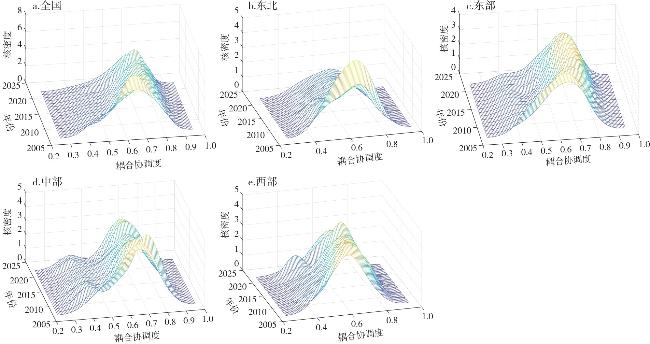
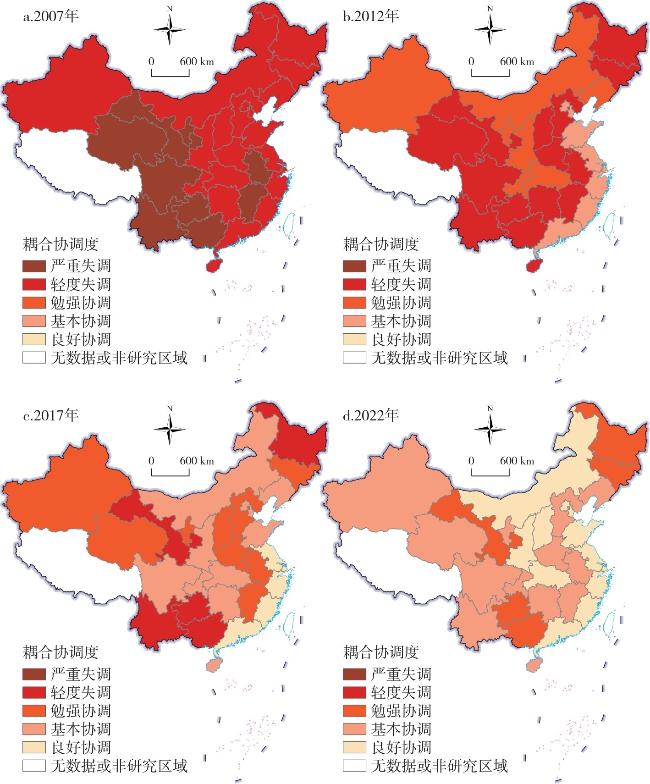
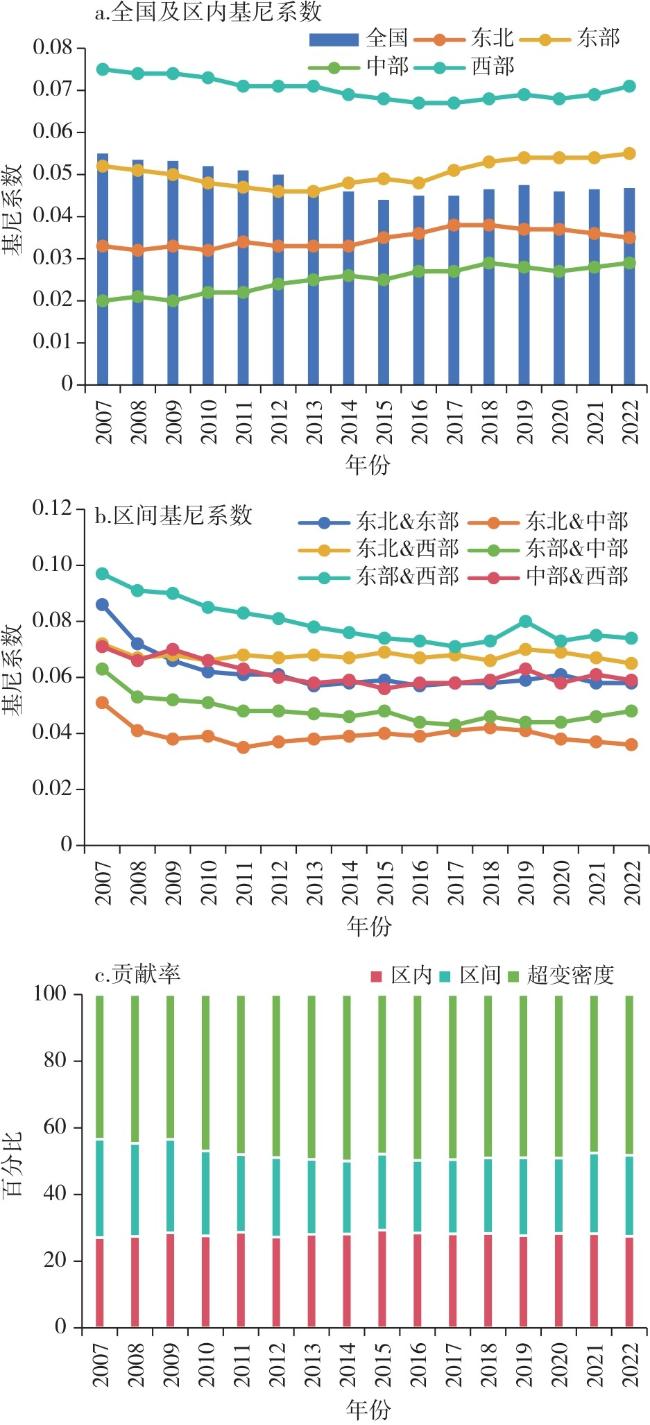
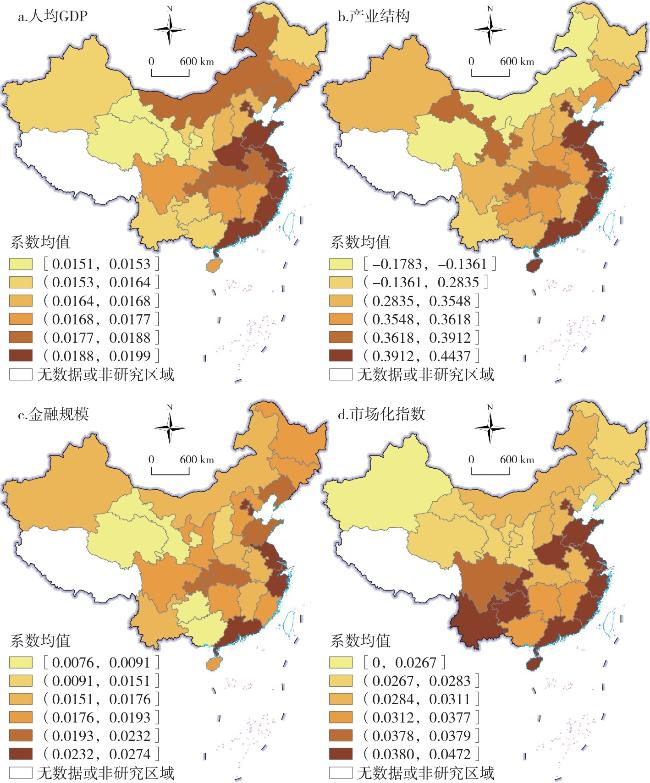
Based on 2007-2022 China 30 provincial panel data, the coupling coordination degree model is utilized to examine the relationship between green finance and tourism high-quality development, Kernel Density and Dagum Gini Coefficient were used to analyze the spatio-temporal characteristics and interval characteristics of the coupling coordination degree, and the internal influence factors and external influence factors affecting the coupling coordination degree were identified by the Obstacle Degree Model and Geographically and Temporally Weighted Regression Model respectively. It's found that: 1) The center of Kernel Density curve moves to the right, the coupling coordination of green finance and tourism industry increases significantly;the peak of the curve shows a downward trend and the peak width widens slowly, the gap of national coupling coordination degree is gradually widening; the curve is always the left tail without the right tail, indicating that a certain proportion of relatively low coupling coordination provinces, and the proportion of high-value provinces is not increase; there are no side peaks and multiple peaks, that is, no polarization or multiple polarization. 2)The vast majority of provinces have experienced the process of mild dissonance-barely coordination-basic coordination-good coordination, the coupling coordination development of the eastern and central provinces is superior to that of the western and northeast regions. 3)The Gini coefficient has risen overall across all regions, accompanied by widening intra-regional disparities, and the hierarchical gradient of Gini coefficient in each region is obvious; the gap between regions is gradually narrowed, and the overlap between regions is serious. 4) The main internal factors affecting coupling and coordination are the proportion of fiscal expenditure on energy conservation and environmental protection, the proportion of loan interest of six energy-intensive industries, the proportion of pollution control investment, total energy consumption of tourism, per capita tourism income, Number of star rated hotels, and the number of scenic spots, forest coverage rate. 5) The external influence factors affecting the coupling and coordination are mainly industrial structure, market index, economic strength and financial scale, among which the industrial structure has the greatest influence degree.
SHEN Jinghong , JIN Cheng . Coupling Coordination between Green Finance and Tourism High-quality Development and Its Influencing Factors in China[J]. Economic geography, 2025 , 45(9) : 239 -248 . DOI: 10.15957/j.cnki.jjdl.2025.09.024
表1 绿色金融与旅游业高质量发展耦合协调指标体系及其说明Tab.1 Index system for the coordinated evaluation of green finance and tourism high-quality development |
| 系统层 | 一级指标 | 二级指标 | 指标解释 | 方向 | 权重 |
|---|---|---|---|---|---|
| 绿 色 金 融 | 绿色信贷 | X1环保项目信贷占比(%) | 环保项目信贷额/信贷总额 | + | 0.1127 |
| X2六大高耗能产业贷款利息占比(%) | 高耗能贷款利息/产业贷款总利息 | - | 0.1362 | ||
| X3金融机构本外币涉农贷款占比(%) | 本外币涉农贷款/本外币贷款总额 | + | 0.1420 | ||
| 绿色保险 | X4农业保险赔付比率(%) | 赔付支出/保费收入 | + | 0.0281 | |
| X5农业保险规模占比(%) | 农业保险收入/财产保险收入 | + | 0.0422 | ||
| 绿色投资 | X6节能环保财政支出占比(%) | 财政节能环保支出/财政总支出 | + | 0.1099 | |
| X7污染治理投资占比(%) | 完成投资总额/GDP | + | 0.0919 | ||
| 绿色证券 | X8六大高耗能产业A股占比(%) | 六大高耗能产业A股市值/A股总市值 | - | 0.1668 | |
| 碳金融 | X9CO2排放强度(106t/亿元) | CO2排放量/GDP | - | 0.1702 | |
| 旅 游 业 高 质 量 发 展 | 创新 | Y1旅游R&D经费投入强度(亿元) | R&D经费总额·(旅游业总收入/GDP) | + | 0.0582 |
| Y2旅游R&D人员投入强度(万人) | R&D人员数量·(旅游业总收入/GDP) | + | 0.0573 | ||
| Y3万人拥有旅游专利数(个/万人) | / | + | 0.0310 | ||
| 协调 | Y4旅游业与第一产业对比度(%) | 旅游业总收入与第一产业增加值比重/全国旅游总收入与全国第一产业增加值比重 | + | 0.0162 | |
| Y5旅游业与第二产业对比度(%) | 旅游业总收入与第二产业增加值比重/全国旅游总收入与全国第二产业增加值比重 | + | 0.0466 | ||
| Y6旅游业与第三产业对比度(%) | 旅游业总收入与第三产业增加值比重/全国旅游总收入与全国第三产业增加值比重 | + | 0.0554 | ||
| Y7旅游产业集聚度(%) | 旅游总收入与GDP比重/全国旅游总收入与全国GDP比重 | + | 0.0569 | ||
| 绿色 | Y8森林覆盖率(%) | / | + | 0.0931 | |
| Y9人均公园绿地面积(m2/人) | / | + | 0.0688 | ||
| Y10旅游业能源消费总量(t/万元) | (旅游总收入/GDP)·能源消耗总量·1/8 | - | 0.1307 | ||
| 开放 | Y11国际旅游收入比重(%) | 国际旅游收入/旅游总收入 | + | 0.0266 | |
| Y12国际旅游人次比重(%) | 国际旅游人次/旅游总人次 | + | 0.0119 | ||
| Y13A级旅游景区接待人次(亿人次) | / | + | 0.0498 | ||
| 共享 | Y14人均旅游收入(元/人) | 旅游总收入/总人口 | + | 0.0751 | |
| Y15旅游就业贡献率(%) | (星级饭店+旅行社+A级景区)就业人数/总就业人数 | + | 0.0432 | ||
| Y16文化艺术表演场次(次) | / | + | 0.0260 | ||
| Y17星级饭店数量(个) | / | + | 0.0744 | ||
| Y18景区数量(个) | / | + | 0.0788 |
表2 耦合协调主要障碍因子及排序Tab.2 Major obstacle factors of coupling coordination |
| 地区 | 年份 | 绿色金融主要因子 障碍度排序 | 旅游业高质量发展主要 因子障碍度排序 | |||||||||
|---|---|---|---|---|---|---|---|---|---|---|---|---|
| 第一 | 第二 | 第三 | 第四 | 第五 | 第一 | 第二 | 第三 | 第四 | 第五 | |||
| 东北 | 2007 | X6 | X2 | X7 | X8 | X3 | Y10 | Y14 | Y17 | Y18 | Y8 | |
| 2012 | X6 | X2 | X8 | X1 | X3 | Y18 | Y14 | Y17 | Y15 | Y8 | ||
| 2017 | X6 | X2 | X7 | X9 | X3 | Y10 | Y14 | Y17 | Y18 | Y8 | ||
| 2022 | X6 | X2 | X7 | X1 | X7 | Y10 | Y8 | Y17 | Y18 | Y14 | ||
| 东部 | 2007 | X6 | X2 | X7 | X1 | X3 | Y10 | Y14 | Y17 | Y7 | Y1 | |
| 2012 | X6 | X2 | X7 | X8 | X1 | Y18 | Y14 | Y17 | Y15 | Y8 | ||
| 2017 | X6 | X2 | X7 | X3 | X1 | Y10 | Y14 | Y17 | Y18 | Y8 | ||
| 2022 | X6 | X2 | X7 | X1 | X3 | Y10 | Y14 | Y18 | Y15 | Y8 | ||
| 中部 | 2007 | X2 | X3 | X6 | X7 | X2 | Y10 | Y14 | Y13 | Y18 | Y8 | |
| 2012 | X2 | X3 | X7 | X1 | X6 | Y10 | Y14 | Y17 | Y18 | Y8 | ||
| 2017 | X6 | X2 | X3 | X1 | X7 | Y14 | Y10 | Y17 | Y18 | Y8 | ||
| 2022 | X6 | X2 | X7 | X1 | X3 | Y10 | Y14 | Y17 | Y18 | Y8 | ||
| 西部 | 2007 | X6 | X1 | X7 | X2 | X3 | Y8 | Y17 | Y10 | Y18 | Y14 | |
| 2012 | X6 | X7 | X2 | X1 | X3 | Y10 | Y14 | Y8 | Y18 | Y17 | ||
| 2017 | X6 | X2 | X7 | X1 | X3 | Y10 | Y14 | Y17 | Y18 | Y8 | ||
| 2022 | X6 | X2 | X7 | X1 | X3 | Y8 | Y10 | Y17 | Y18 | Y14 | ||
| 全国 | 2007 | X6 | X2 | X7 | X1 | X3 | Y10 | Y14 | Y17 | Y18 | Y8 | |
| 2012 | X6 | X2 | X7 | X1 | X3 | Y10 | Y14 | Y17 | Y18 | Y8 | ||
| 2017 | X6 | X2 | X7 | X1 | X3 | Y10 | Y14 | Y17 | Y18 | Y8 | ||
| 2022 | X6 | X2 | X1 | X8 | X3 | Y10 | Y14 | Y15 | Y18 | Y8 | ||
| [1] |
|
| [2] |
|
| [3] |
|
| [4] |
张德亮. 可持续发展:环保产业发展新机遇[J]. 经济问题探索, 1998(12):59-60.
|
| [5] |
王军华. 论金融业的“绿色革命”[J]. 生态经济, 2000(10):45-48.
|
| [6] |
天大研究院课题组. 中国绿色金融体系:构建与发展战略[J]. 财贸经济, 2011(10):38-46.
|
| [7] |
王凤荣, 王康仕. 绿色金融的内涵演进、发展模式与推进路径——基于绿色转型视角[J]. 理论学刊, 2018(3):59-66.
|
| [8] |
安伟. 绿色金融的内涵、机理和实践初探[J]. 经济经纬, 2008(5):156-158.
|
| [9] |
吴成颂, 昂昊. 中国绿色金融效率时空分异及其提升路径[J]. 资源科学, 2022, 44(12):2456-2469.
|
| [10] |
刘华珂, 何春. 绿色金融促进城市经济高质量发展的机制与检验——来自中国272个地级市的经验证据[J]. 投资研究, 2021(7):37-52.
|
| [11] |
张颖, 邹国昊. 绿色金融政策对碳排放的空间溢出效应研究[J]. 武汉大学学报(哲学社会科学版), 2024, 77(5):60-72.
|
| [12] |
李苏, 赵军, 达潭枫. 绿色金融对工业绿色发展的影响机制检验[J]. 统计与决策, 2024(14):137-143.
|
| [13] |
刘霄雅, 张颖. 绿色金融有助于提升共同富裕水平吗[J]. 现代经济探讨, 2024(8):27-43.
|
| [14] |
于璐瑶, 梁泽, 高洋. 绿色金融与数字经济协同赋能地区绿色发展的机制研究[J]. 统计与信息论坛, 2024, 39(10):56-71.
|
| [15] |
程龙, 唐恒. 环境政策与知识产权政策协同对绿色金融发展的影响研究[J]. 管理学报, 2024, 21(6):876-885.
|
| [16] |
柏建成, 张利霞, 严翔, 等. 长江经济带绿色金融发展的空间关联结构及驱动因素研究[J]. 管理评论, 2024, 36(4):63-74.
|
| [17] |
王仁曾, 詹姝珂, 刘耀彬. 金融科技对普惠金融与绿色金融协同发展的驱动效应研究[J]. 厦门大学学报(哲学社会科学版), 2024(4):27-40.
|
| [18] |
刘柯, 王兆萍, 杜然, 等. 绿色金融和数字技术耦合协调发展水平测度、时空演化及降污减排效应[J]. 经济问题探索, 2024(9):113-129.
|
| [19] |
陈文婷, 许达恒, 杨丽玲. 绿色普惠金融与乡村振兴耦合能否助推经济发展?[J]. 财经理论与实践, 2023, 44(6):100-107.
|
| [20] |
韩叙, 柳潇明, 刘文婷, 等. 黄河流域绿色金融与经济高质量发展耦合协调时空特征及驱动因素[J]. 经济地理, 2023, 43(9):121-130.
|
| [21] |
何建民. 新时代我国旅游业高质量发展系统与战略研究[J]. 旅游学刊, 2018, 33(10):9-11.
|
| [22] |
刘雨婧, 唐健雄. 长江经济带旅游业发展质量评价及其时空演变[J]. 经济地理, 2022, 42(4):9-19.
|
| [23] |
舒伯阳, 蒋月华, 刘娟. 新时代乡村旅游高质量发展的理论思考及实践路径[J]. 华中师范大学学报(自然科学版), 2022, 56(1):73-82.
|
| [24] |
戴斌, 马晓芬. 大力推进红色旅游高质量发展的若干思考[J]. 湖南社会科学, 2021(4):77-85.
|
| [25] |
严伟. 数字经济赋能旅游业高质量发展的演化机理及政策协同[J]. 社会科学家, 2023(1):42-48.
|
| [26] |
王金伟, 陆林, 王兆峰, 等. 新质生产力赋能旅游业高质量发展:理论内涵与科学问题[J]. 自然资源学报, 2024, 39(7):1643-1663.
|
| [27] |
李鹏, 邓爱民. 旅游业高质量发展促进共同富裕的路径分析[J]. 社会科学家, 2022(2):37-41.
|
| [28] |
王金伟, 王启翔, 冯凌. 中国数字经济与旅游业高质量发展的协调格局及驱动机制[J]地理科学, 2024, 44(1):130-139.
|
| [29] |
张广海, 邢澜. 我国绿色金融对旅游业高质量发展的影响研究——基于省级面板数据的空间计量分析[J]. 经济问题探索, 2022(12):52-68.
|
| [30] |
石培华, 吴普. 中国旅游业能源消耗与CO2排放量的初步估算[J]. 地理学报, 2011, 66(2):235-243.
|
| [31] |
吴儒练. 旅游业高质量发展与乡村振兴耦合协调测度、演化及空间效应研究[D]. 南昌: 江西财经大学, 2022.
|
| [32] |
|
| [33] |
舒小林, 闵浙思, 郭向阳, 等. 省域数字经济与旅游业高质量发展耦合协调及驱动因素[J]. 经济地理, 2024, 44(1):197-208.
|
/
| 〈 |
|
〉 |