


Spin-off,Cluster Formation,and Rural Spatial Restructuring:A Case Study of National Musical Instrument Industry Cluster in Lankao County of Henan Province
Received date: 2018-10-11
Revised date: 2019-04-23
Online published: 2025-04-24
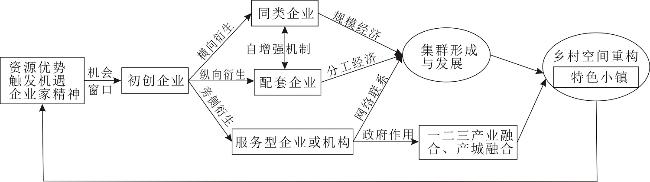
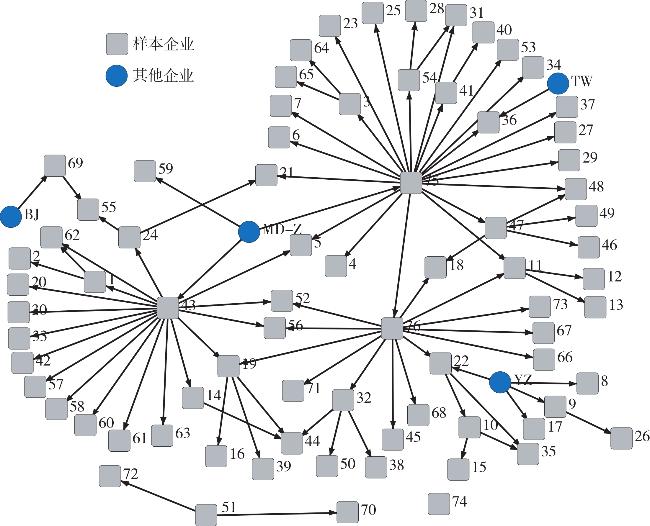
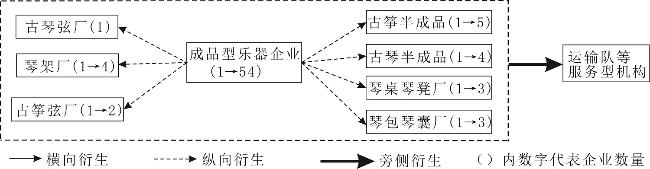
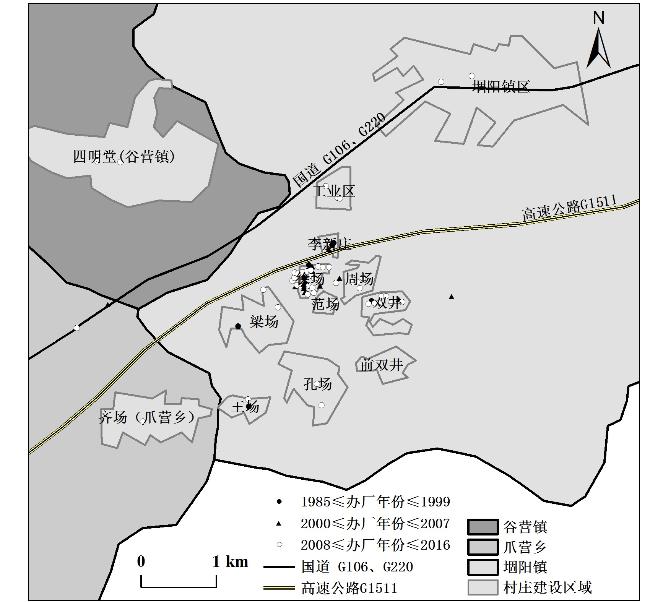
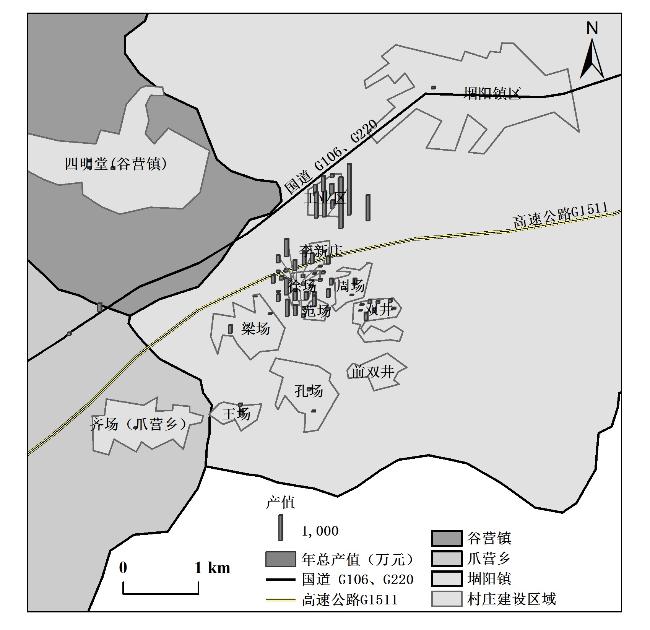
The formation of distinctive industrial clusters and characteristic towns in traditional agricultural areas acts as an effective approach to rural revitalization. And spin-offs play a vital role in cluster formation and production of space. This article takes the national musical instrument industry cluster in Lankao County of Henan Province as an example and explores how rural industry clusters come into being under the effect of enterprise spin-off and promote rural transformation and spatial restructure applying the field investigation, the social network analysis and the ArcGIS. Results show that: 1) Relying on the superiority of local resources, the start-up enterprises open the opportunity window for a traditional rural area to develop a certain specialty industry. They spread the innovative technology through various spin-off paths and generate new enterprises or institutions. They co-exist, compete and cooperate with each other, and form characteristic industrial clusters. 2) The spatial proximity and functional diversity of spin-offs have spawned the formation of new industrial space and urbanization of traditional agricultural areas. The government's involvement has accelerated the rural spatial restructuring. 3) National musical instrument industry cluster in Lankao County has formed under the coaction of master-apprentice spin-off, enterprise fission spin-off, family spin-off, outsourcing spin-off and market spin-off. And then, a music characteristic town has been formed by the space and complete function of the national musical instrument industry. Under the strategic of targeted poverty alleviation and rural vitalization, traditional agricultural areas rely on local resource potential, seize the opportunity to develop characteristic industries, and form characteristic towns depending on the enterprise spin-off mechanism and the cluster self-enhancing mechanism. All these can be regarded as a "cluster mode" for traditional rural areas to achieve rural revitalization and poverty alleviation.
LI Erling , WEI Lixia . Spin-off,Cluster Formation,and Rural Spatial Restructuring:A Case Study of National Musical Instrument Industry Cluster in Lankao County of Henan Province[J]. Economic geography, 2019 , 39(6) : 127 -135 . DOI: 10.15957/j.cnki.jjdl.2019.06.014
表1 集群内76个样本企业的基本信息Tab.1 Basic information of 76 sample enterprises in the cluster |
| 企业类型 | 数量 | 比重(%) | 企业规模 | 数量 | 比重(%) |
|---|---|---|---|---|---|
| 成品型企业 | 54 | 71.1 | 大型企业 | 13 | 17.1 |
| 半成品型企业 | 9 | 11.8 | 中型企业 | 37 | 48.7 |
| 配件型企业 | 13 | 17.1 | 小型企业 | 26 | 34.2 |
表2 集群内76个样本企业的衍生路径Tab.2 Spin-off paths of 76 sample enterprises in the cluster |
| 衍生路径 | 裂变衍生 | 家族衍生 | 外包衍生 | 市场衍生 | ||||||||
|---|---|---|---|---|---|---|---|---|---|---|---|---|
| 总数量 | 42 | 22 | 9 | 3 | ||||||||
| 企业规模 | 大型 | 中型 | 小型 | 大型 | 中型 | 小型 | 大型 | 中型 | 小型 | 大型 | 中型 | 小型 |
| 数量 | 10 | 22 | 10 | 1 | 12 | 9 | 0 | 2 | 7 | 1 | 2 | 0 |
| 比例(%) | 23.8 | 52.4 | 23.8 | 4.5 | 54.5 | 10.9 | 0 | 22.2 | 77.8 | 33.3 | 66.7 | 0 |
| [1] |
|
| [2] |
|
| [3] |
刘彦随. 中国县域农村贫困化分异机制的地理探测与优化决策[J]. 地理学报, 2017, 72(1):161-173.
|
| [4] |
|
| [5] |
|
| [6] |
|
| [7] |
李二玲, 李小建. 欠发达农区传统制造业集群的网络演化分析——以河南省虞城县南庄村钢卷尺产业集群为例[J]. 地理研究, 2009, 28(3):738-750.
|
| [8] |
李二玲, 李小建. 欠发达农区产业集群的网络组织结构及其区域效应分析[J]. 经济地理, 2009, 29(7):1127-1 133.
|
| [9] |
|
| [10] |
覃成林, 李二玲. 中国内地农区产业集群研究——以河南为例[J]. 地域研究与开发, 2007, 26(4):1-6.
|
| [11] |
李二玲, 李小建. 论产业集群的网络本质[J]. 经济经纬, 2007(1):66-70.
|
| [12] |
李永刚. 企业衍生与经济演化[J]. 经济社会体制比较, 2006(4):123-125.
|
| [13] |
马力, 臧旭恒. 企业衍生研究述评[J]. 管理学报, 2012, 9(12):1869-1 874.
|
| [14] |
胡瑶瑛, 吴恒芝, 孙彩. 东北老工业基地产业集群的衍生路径研究[J]. 科技与管理, 2010, 12(3):1-5.
|
| [15] |
埃弗雷特 M 罗杰斯,朱迪斯 K 拉尔森. 硅谷热[M]. 范国鹰,刘西汉,译. 北京: 经济科学出版杜, 1985:52-55.
|
| [16] |
吴士健, 刘新民, 王垒. 产业集群企业衍生的影响因素及发展对策分析[J]. 特区经济, 2010(10):229-230.
|
| [17] |
胡建绩, 陈海滨. 促进产业集群企业衍生的关键“软因素”分析[J]. 中国工业经济, 2005(3):51-57.
|
| [18] |
高雪莲. 北京高科技产业集群衍生效应及其影响分析——基于中关村科技园区的案例研究[J]. 地域研究与开发, 2009, 28(1):47-52.
|
| [19] |
高雪莲. 产业集群衍生效应的若干理论问题探讨[J]. 云南师范大学学报:哲学社会科学版, 2008, 40(4):100-105.
|
| [20] |
李小康, 胡蓓. 大企业衍生创业对创业集群形成的影响研究[J]. 科研管理, 2013, 34(9):72-80.
|
| [21] |
王缉慈, 宋向辉, 李光宇. 企业衍生:北京新技术集聚体形成的重要特征[J]. 中国高新技术企业评价, 1995(6):8-13.
|
| [22] |
袁丰, 李丹丹. 辽宁佟二堡皮革制造集群与专业市场共同演化[J]. 地理研究, 2014, 33(3):546-557.
|
| [23] |
李二玲, 李小建. 基于社会网络分析方法的产业集群研究——以河南省虞城县南庄村钢卷尺产业集群为例[J]. 人文地理, 2007, 22(6):10-15.
|
| [24] |
韩玉刚, 焦华富, 李俊峰. 中国省际边缘区产业集群的网络特征和形成机理——以安徽省宁国市耐磨铸件产业集群为例[J]. 地理研究, 2011, 30(5):814-826.
|
| [25] |
|
| [26] |
|
| [27] |
|
| [28] |
|
| [29] |
|
| [30] |
|
| [31] |
|
| [32] |
|
| [33] |
李小建, 李二玲. 中国中部农区企业集群的竞争优势研究——以河南省虞城县南庄村钢卷尺企业集群为例[J]. 地理科学, 2004, 24(2):136-147.
|
| [34] |
|
| [35] |
李二玲, 李小建. 农区产业集群、网络与中部崛起[J]. 人文地理, 2006, 21(1):60-64.
|
| [36] |
龙花楼. 论土地整治与乡村空间重构[J]. 地理学报, 2013, 68(8):1019-1 028.
|
| [37] |
刘军. 整体网络分析讲义——UCINET软件实用指南[M]. 上海: 格致出版社, 2009.
|
| [38] |
史焱文, 李二玲, 李小建. 地理邻近、关系邻近对农业产业集群创新影响[J]. 地理科学, 2016, 36(5):51-59.
|
/
| 〈 |
|
〉 |