


Spatial Spillover Effect and Influencing Factors of Haze Pollution in the Yellow River Basin
Received date: 2019-12-13
Revised date: 2020-03-12
Online published: 2025-04-17
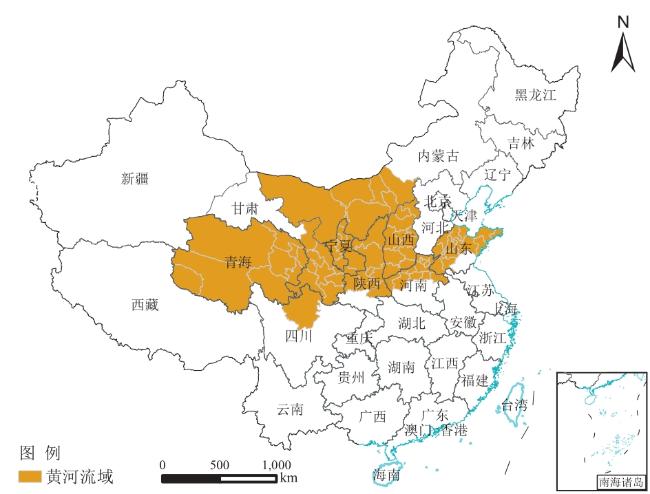
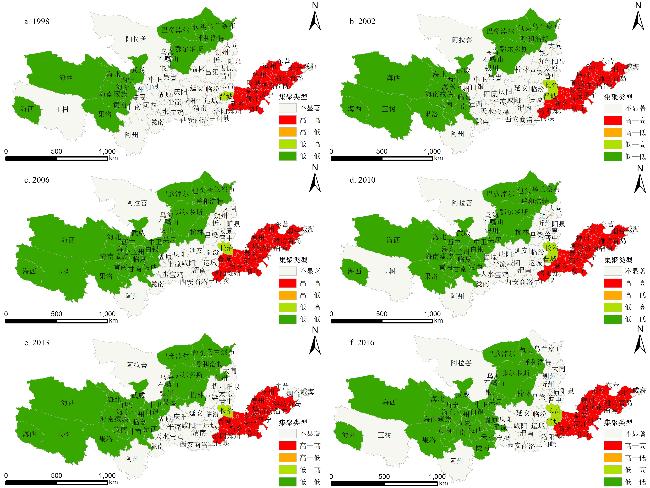
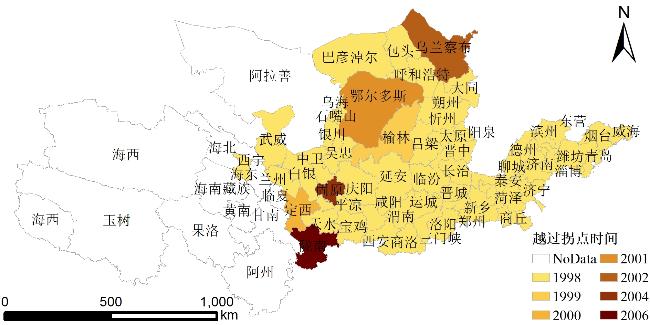
Based on the spatial dynamic panel model of haze pollution in the prefecture level cities of the Yellow River Basin from 1998 to 2016, this paper analyzes the socio-economic factors and regional differences of haze pollution in the Yellow River Basin by using SGMM method under the condition of considering the time-space lag effect of haze pollution. The results show that: the haze pollution in the Yellow River Basin presents obvious positive spatial spillover effect and high value concentration characteristics, and the high emission clubs are stably distributed in the cities in the lower reaches of the Yellow River; the PM2.5 concentration and economic growth in the whole Yellow River Basin show a positive "U" relationship, and the low-efficiency energy use, low-level population concentration and extensive economic development mode lead to the haze pollution in the Yellow River Basin The main reason for the haze pollution is that there are significant regional differences in the socio-economic impact mechanism behind the haze pollution in the Yellow River Basin. Low efficiency energy utilization and R&D investment in favor of production technology promotion lead to the aggravation of the haze in the upper reaches of the Yellow River Basin, while the Urbanization and industrialization process lead to the aggravation of the haze pollution in the middle reaches of the Yellow River Basin. In the lower reaches of the Yellow River, only energy consumption is found it has a significant positive effect on haze pollution. Based on the analysis above, this paper considers that it is an important strategy for the Yellow River haze control to establish a regional collaborative prevention and control mechanism, implement the differentiated regional governance strategy, and achieve the high-quality development of the whole basin.
Key words: haze pollution; spatial spillover; dynamic panel model; SGMM; Yellow River Basin
CHEN Shiqiang , ZHANG Hang , QI Ying , LIU Yong . Spatial Spillover Effect and Influencing Factors of Haze Pollution in the Yellow River Basin[J]. Economic geography, 2020 , 40(5) : 40 -48 . DOI: 10.15957/j.cnki.jjdl.2020.05.005
表1 1998—2016年黄河流域各市PM2.5全局Moran's I和General GTab.1 The Moran's I and General G of PM2.5 in cities of the Yellow River Basin |
| 年份 | Moran's I | Z-score | P-value | General G | Z-score | P-value |
|---|---|---|---|---|---|---|
| 1998 | 0.76 | 12.52 | 0.00 | 0.02 | 10.06 | 0.00 |
| 1999 | 0.74 | 12.32 | 0.00 | 0.02 | 10.17 | 0.00 |
| 2000 | 0.74 | 12.27 | 0.00 | 0.02 | 11.05 | 0.00 |
| 2001 | 0.79 | 12.99 | 0.00 | 0.02 | 10.81 | 0.00 |
| 2002 | 0.81 | 13.37 | 0.00 | 0.02 | 11.03 | 0.00 |
| 2003 | 0.85 | 13.94 | 0.00 | 0.02 | 11.77 | 0.00 |
| 2004 | 0.84 | 13.80 | 0.00 | 0.02 | 11.74 | 0.00 |
| 2005 | 0.85 | 13.94 | 0.00 | 0.02 | 12.03 | 0.00 |
| 2006 | 0.85 | 14.07 | 0.00 | 0.02 | 12.16 | 0.00 |
| 2007 | 0.86 | 14.12 | 0.00 | 0.02 | 12.19 | 0.00 |
| 2008 | 0.86 | 14.20 | 0.00 | 0.02 | 12.18 | 0.00 |
| 2009 | 0.86 | 14.22 | 0.00 | 0.02 | 12.15 | 0.00 |
| 2010 | 0.87 | 14.37 | 0.00 | 0.02 | 12.27 | 0.00 |
| 2011 | 0.87 | 14.37 | 0.00 | 0.02 | 12.28 | 0.00 |
| 2012 | 0.87 | 14.39 | 0.00 | 0.02 | 12.48 | 0.00 |
| 2013 | 0.85 | 13.99 | 0.00 | 0.02 | 12.24 | 0.00 |
| 2014 | 0.85 | 14.09 | 0.00 | 0.02 | 12.17 | 0.00 |
| 2015 | 0.88 | 14.57 | 0.00 | 0.02 | 12.59 | 0.00 |
| 2016 | 0.88 | 14.52 | 0.00 | 0.02 | 12.75 | 0.00 |
表2 空间面板模型的LM检验(地理距离空间权重矩阵)Tab.2 LM test of spatial panel model (based on weight matrix of geographical distance) |
| LM检验 | LogL-value | P-value |
|---|---|---|
| nolag | 56.93 | 0.00 |
| nolag(robust) | 42.65 | 0.00 |
| noerror | 34.32 | 0.00 |
| noerror(robust) | 20.04 | 0.00 |
表3 空间动态面板模型回归结果Tab.3 Spatial dynamic panel model regression results |
| 变量 | 黄河流域 | 黄河上游 | 黄河中游 | 黄河下游 |
|---|---|---|---|---|
| w·lnPM(θ) | 0.45** | 1.16*** | 1.03*** | 1.02*** |
| w·lnPMt-1(ρ) | -0.24 | -0.41*** | -0.69*** | -0.19*** |
| lnlgdp | -0.64*** | -0.28 | 0.50 | 1.17 |
| lnlgdp2 | 0.12*** | 0.02 | -0.10* | -0.12 |
| lnpop | 0.27** | 0.01 | 0.68*** | -0.58*** |
| lnbpa | -0.10 | 0.01 | -0.01 | 0.19 |
| lnsec | 0.05 | 0.02 | 0.50** | -0.01 |
| lnene | -0.51*** | -0.17** | 0.25 | 0.52*** |
| lnrd | -0.02 | 0.11** | 0.10** | -0.06** |
| lned | 0.38*** | 0.22*** | -0.19 | -0.48*** |
| lncarp | 0.04 | -0.01 | 0.10* | -0.05* |
| lnfdi | -0.04** | -0.05*** | 0.01 | 0.01 |
| SarganP | 0.43 | 0.79 | 0.92 | 0.57 |
| AR(2)P | 0.42 | 0.15 | 0.60 | 0.44 |
| 拐点 | 2.72 | - | - | - |
注:*、**、***分别表示在10%、5%、1%的水平下显著。 |
| [1] |
马晓倩, 刘征, 赵旭阳, 等. 京津冀雾霾时空分布特征及其相关性研究[J]. 地域研究与开发, 2016, 35(2):134-138.
|
| [2] |
严雅雪, 齐绍洲. 外商直接投资对中国城市雾霾(PM2.5)污染的时空效应检验[J]. 中国人口·资源与环境, 2017, 27(4):68-77.
|
| [3] |
冷艳丽, 冼国明, 杜思正. 外商直接投资与雾霾污染——基于中国省际面板数据的实证分析[J]. 国际贸易问题, 2015, 396(12):76-86.
|
| [4] |
李根生, 韩民春. 财政分权、空间外溢与中国城市雾霾污染:机理与证据[J]. 当代财经, 2015(6):26-34.
|
| [5] |
刘华军, 彭莹. 雾霾污染区域协同治理的“逐底竞争”检验[J]. 资源科学, 2019(1):185-195.
|
| [6] |
刘飞宇, 赵爱清. 外商直接投资对城市环境污染的效应检验——基于我国285个城市面板数据的实证研究[J]. 国际贸易问题, 2016(5):130-141.
|
| [7] |
李欣, 曹建华, 孙星. 空间视角下城市化对雾霾污染的影响分析——以长三角区域为例[J]. 环境经济研究, 2017, 2(2):81-92.
|
| [8] |
姜磊, 周海峰, 柏玲. 外商直接投资对空气污染影响的空间异质性分析——以中国150个城市空气质量指数(AQI)为例[J]. 地理科学, 2018, 38(3):351-360.
|
| [9] |
邵帅, 李欣, 曹建华. 中国雾霾污染治理的经济政策选择——基于空间溢出效应的视角[J]. 经济研究, 2016, 51(9):73-88.
|
| [10] |
张生玲, 王雨涵, 李跃, 等. 中国雾霾空间分布特征及影响因素分析[J]. 中国人口·资源与环境, 2017, 27(9):15-22.
|
| [11] |
王会, 王奇. 中国城镇化与环境污染排放:基于投入产出的分析[J]. 中国人口科学, 2011(5):57- 66,111-112.
|
| [12] |
潘媛. 环境—经济投入产出模型设计核算研究[J]. 统计与决策, 2015(16):23-25.
|
| [13] |
王桂芝, 顾赛菊, 陈纪波. 基于投入产出模型的北京市雾霾间接经济损失评估[J]. 环境工程, 2016, 34(1):121-125.
|
| [14] |
魏巍贤, 马喜立. 能源结构调整与雾霾治理的最优政策选择[J]. 中国人口·资源与环境, 2015, 25(7):6-14.
|
| [15] |
姜春海, 宋志永, 冯泽. 雾霾治理及其经济社会效应:基于“禁煤区”政策的可计算一般均衡分析[J]. 中国工业经济, 2017(9):44-62.
|
| [16] |
冯少荣, 冯康巍. 基于统计分析方法的雾霾影响因素及治理措施[J]. 厦门大学学报:自然科学版, 2015, 54(1):114-121.
|
| [17] |
孙梓滢. 雾霾污染的影响因素——基于中国监测城市PM2.5浓度的实证研究[J]. 低碳世界, 2017(2):8-10.
|
| [18] |
|
| [19] |
|
| [20] |
王美霞. 雾霾污染的时空分布特征及其驱动因素分析——基于中国省级面板数据的空间计量研究[J]. 陕西师范大学学报:哲学社会科学版, 2017, 46(3):37-47.
|
| [21] |
郑翔翔, 洪正昉, 陈浩, 等. 浙江省PM2.5质量浓度分布特征研究[J]. 环境与可持续发展, 2015(3):168-170.
|
| [22] |
王占山, 李云婷, 陈添, 等. 2013年北京市PM2.5的时空分布[J]. 地理学报, 2015, 70(1):110-120.
|
| [23] |
习近平. 在黄河流域生态保护和高质量发展座谈会上的讲话[J]. 中国水利, 2019(20):1-3.
|
| [24] |
覃成林, 李敏纳. 区域经济空间分异机制研究——一个理论分析模型及其在黄河流域的应用[J]. 地理研究, 2010, 29(10):1780-1 792.
|
| [25] |
|
| [26] |
林楚海. 中国雾霾污染的空间计量分析[J]. 统计与决策, 2018, 34(16):96-101.
|
| [27] |
王美望. 基于空间计量经济学的中国区域雾霾影响因素研究[D]. 西安: 西北大学, 2018.
|
| [28] |
|
| [29] |
张征宇, 朱平芳. 有测量误差时空间自回归模型的估计与检验[J]. 统计研究, 2010, 27(4):103-109.
|
| [30] |
|
| [31] |
|
| [32] |
|
| [33] |
吴健生, 牛妍, 彭建, 等. 基于DMSP/OLS夜间灯光数据的1995—2009年中国地级市能源消费动态[J]. 地理研究, 2014, 33(4):625-634.
|
| [34] |
曹子阳, 吴志峰, 匡耀求, 等. DMSP/OLS夜间灯光影像中国区域的校正及应用[J]. 地球信息科学学报, 2015, 17(9):1092-1 102.
|
| [35] |
|
| [36] |
苏泳娴. 基于DMSP/OLS夜间灯光数据的中国能源消费碳排放研究[D]. 广州: 中国科学院研究生院(广州地球化学研究所), 2015.
|
| [37] |
李国平, 杨佩刚, 宋文飞, 等. 环境规制、FDI与“污染避难所”效应——中国工业行业异质性视角的经验分析[J]. 科学学与科学技术管理, 2013(10):124-131.
|
| [38] |
陈刚. FDI竞争、环境规制与污染避难所——对中国式分权的反思[J]. 世界经济研究, 2009(6):5-9,45,89.
|
| [39] |
周杰琦, 夏南新, 梁文光. 外资进入、自主创新与雾霾污染——来自中国的证据[J]. 研究与发展管理, 2019, 31(2):82-94.
|
| [40] |
周晓艳, 郝慧迪, 叶信岳, 等. 黄河流域区域经济差异的时空动态分析[J]. 人文地理, 2016(5):119-125.
|
/
| 〈 |
|
〉 |