


Temporal and Spatial Pattern of Cultural Heritage in Beijing-Tianjin-Hebei Region and Its Influencing Factors:A Case Study of Cultural Relic Protection Unit
Received date: 2020-01-10
Revised date: 2020-09-17
Online published: 2025-04-11
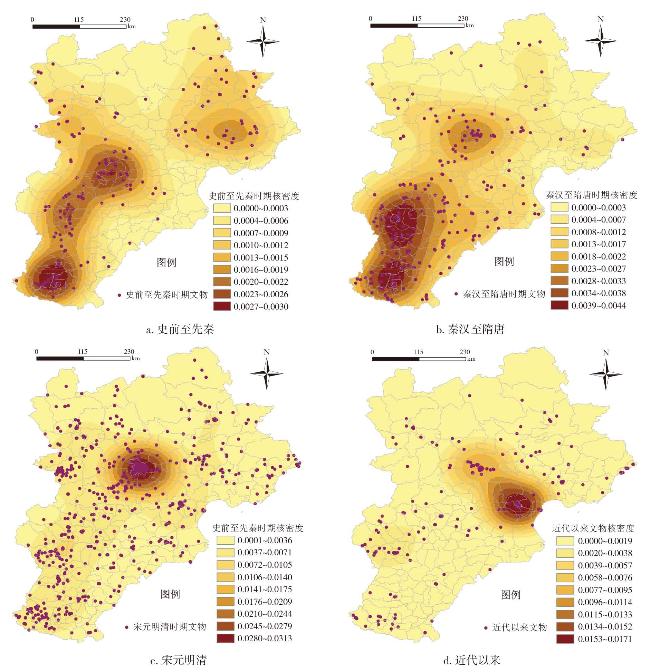
Cultural heritage is one of the most important forms of social,cultural and economic activities in history and represents a context of communication and corporation in the region. In this paper,the cultural relic protection unit in the Beijing-Tianjin-Hebei region is taken as the research object,and the spatial analysis method and ArcGIS spatial analysis tool are used to analyze its spatio-temporal distribution characteristics and influencing factors. The results show that: 1) It presents congregated distribution in the cultural relic protection units. 2) It has significant difference on the spatial distribution density of cultural relic protection unit at different periods. The density centers shift from Taihang Mountain and Yan Mountain via Beijing to Tianjin over time. 3) Under the influence of terrain,landform,river,traffic,socio-political and historic culture factors,the cultural relic protection unitS in Beijing-Tianjin-Hebei are mainly distributed in the plain zone at an elevation of 0-200 meters and the slopes of 0.5°-5°slopes,it mainly develops alongside the south of mountain,rivers and traffic road networks. Finally,according to the temporal and spatial distribution characteristics and influencing factors of the cultural heritage in Beijing-Tianjin-Hebei region,this paper puts forward suggestions on the protection and utilization of cultural relic protection unit.
YUE Ju , DAI Xiangyi . Temporal and Spatial Pattern of Cultural Heritage in Beijing-Tianjin-Hebei Region and Its Influencing Factors:A Case Study of Cultural Relic Protection Unit[J]. Economic geography, 2020 , 40(12) : 221 -230 . DOI: 10.15957/j.cnki.jjdl.2020.12.025
表1 京津冀不同时期文物保护单位最邻近指数及空间结构类型Tab.1 The nearest neighor index and spatial structure types of cultural relic protection unit in Beijing-Tianjin-Hebei |
| 时期 | 文物保护单位 数量(个) | 平均实际 最邻近距离(m) | 平均理论 最邻近距离(m) | NNI | Z得分 | SST |
|---|---|---|---|---|---|---|
| 史前至先秦 | 211 | 9 527.7206 | 18 772.4887 | 0.507534 | -13.652579 | 集聚 |
| 秦汉至隋唐 | 292 | 7 348.2174 | 16 027.6754 | 0.458471 | -17.733186 | 集聚 |
| 宋元明清 | 1103 | 3 136.2253 | 8 697.4437 | 0.360592 | -40.588488 | 集聚 |
| 近代以来 | 453 | 4 062.4844 | 11 810.5906 | 0.34397 | -26.711848 | 集聚 |
图2 京津冀不同时期文物保护单位核密度分布格局Fig.2 Distribution pattern of kernel density of protected cultural relics in Beijing-Tianjin-Hebei at different periods |
表2 京津冀分时分类文物保护单位数量统计Tab.2 Statistics on the number of protected cultural relics in Beijing-Tianjin-Hebei based on the time and classification |
| 时期 | 古遗址(个) | 古墓葬(个) | 古建筑(个) | 石窟寺及石刻(个) | 近现代重要史迹 及代表性建筑(个) | 其他(个) | 总计(个) |
|---|---|---|---|---|---|---|---|
| 史前至先秦 | 191 | 16 | 2 | 1 | 0 | 1 | 211 |
| 秦汉至隋唐 | 86 | 99 | 51 | 55 | 0 | 1 | 292 |
| 宋元明清 | 117 | 89 | 804 | 59 | 30 | 4 | 1 103 |
| 近代以来 | 0 | 0 | 0 | 0 | 453 | 0 | 453 |
| 总计 | 394 | 204 | 857 | 115 | 483 | 6 | 2 059 |
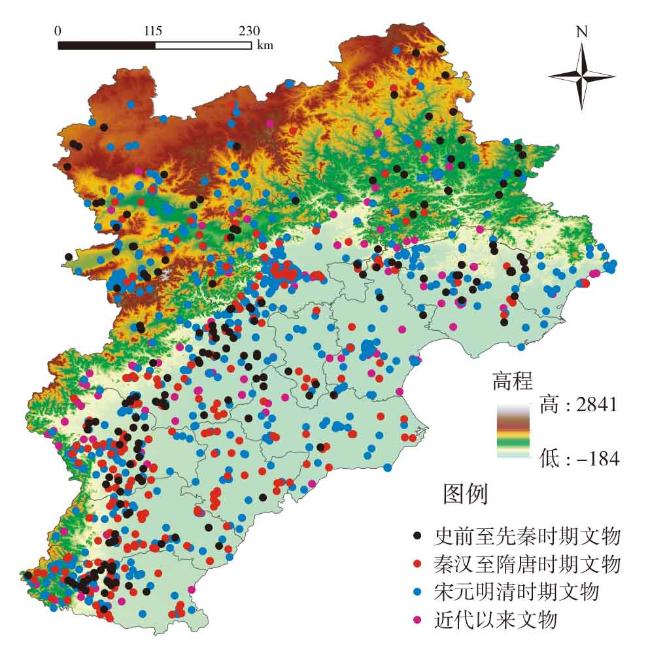
图3 京津冀不同时期文物保护单位高程海拔分布图Fig.3 Elevation distribution of protected cultural relics in Beijing-Tianjin-Hebei |
表3 京津冀不同时期文物保护单位在不同海拔高度上的分布数量统计(个)Tab.3 Statistics of protected cultural relics in the Beijing-Tianjin-Hebei region based on the elevation and time |
| 时期 | <0 m | 0~200 m | 201~500 m | 501~1 000 m | >1 000 m |
|---|---|---|---|---|---|
| 史前至先秦 | 3 | 139 | 21 | 35 | 13 |
| 秦汉至隋唐 | 3 | 216 | 29 | 40 | 4 |
| 宋元明清 | 5 | 767 | 122 | 151 | 58 |
| 近代以来 | 4 | 372 | 45 | 28 | 4 |
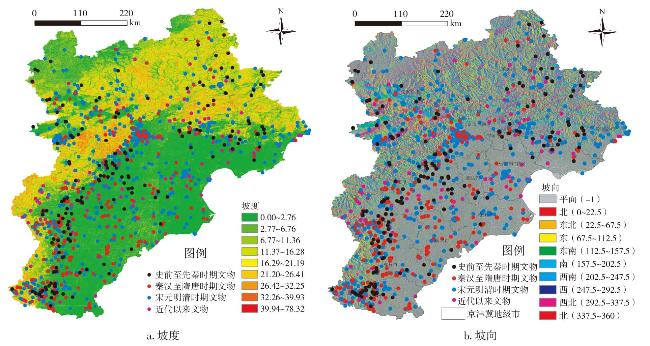
图4 京津冀不同时期文物保护单位的坡度坡向分布图Fig.4 Gradient and slope direction of protected cultural relics in the Beijing-Tianjin-Hebei region |
表4 京津冀不同时期文物保护单位的坡度分布情况Tab.4 Statistics of protected cultural relics in the Beijing-Tianjin-Hebei region based on the slope and time |
| 坡度(°) | 史前至 先秦(个) | 所占比例 (%) | 秦汉至 隋唐(个) | 所占比例 (%) | 宋元明清 (个) | 所占比例 (%) | 近代以来 (个) | 所占比例 (%) |
|---|---|---|---|---|---|---|---|---|
| 0~0.5 | 24 | 11.43 | 27 | 9.22 | 90 | 8.16 | 25 | 5.52 |
| 0.5~2 | 77 | 36.67 | 102 | 34.81 | 376 | 34.09 | 156 | 34.44 |
| 2~5 | 65 | 30.95 | 106 | 36.18 | 408 | 36.99 | 192 | 42.38 |
| 5~15 | 32 | 15.24 | 35 | 11.95 | 171 | 15.50 | 57 | 12.58 |
| 15~35 | 11 | 5.24 | 19 | 6.48 | 56 | 5.08 | 19 | 4.19 |
| 35~55 | 1 | 0.48 | 4 | 1.37 | 2 | 0.18 | 4 | 0.88 |
| 55~90 | 0 | 0 | 0 | 0 | 0 | 0 | 0 | 0 |
表5 京津冀不同时期文物保护单位的坡向分布情况Tab.5 Statistics of protected cultural relics in the Beijing-Tianjin-Hebei region based on the slope direction and time |
| 坡向(°) | 史前至先秦 | 秦汉至隋唐 | 宋元明清 | 近代以来 | 总计(个) | 所占比例(%) |
|---|---|---|---|---|---|---|
| 正北(0~22.5) | 12 | 16 | 90 | 24 | 142 | 6.9 |
| 东北(22.5~67.5) | 26 | 37 | 131 | 54 | 248 | 12.04 |
| 正东(67.5~112.5) | 17 | 39 | 142 | 57 | 255 | 12.38 |
| 东南(112.5~157.5) | 24 | 48 | 164 | 66 | 302 | 14.67 |
| 正南(157.5~202.5) | 28 | 27 | 143 | 46 | 244 | 11.85 |
| 西南(202.5~247.5) | 22 | 37 | 139 | 63 | 261 | 12.68 |
| 正西(247.5~292.5) | 35 | 41 | 120 | 56 | 252 | 12.24 |
| 西北(292.5~337.5) | 28 | 29 | 119 | 59 | 235 | 11.41 |
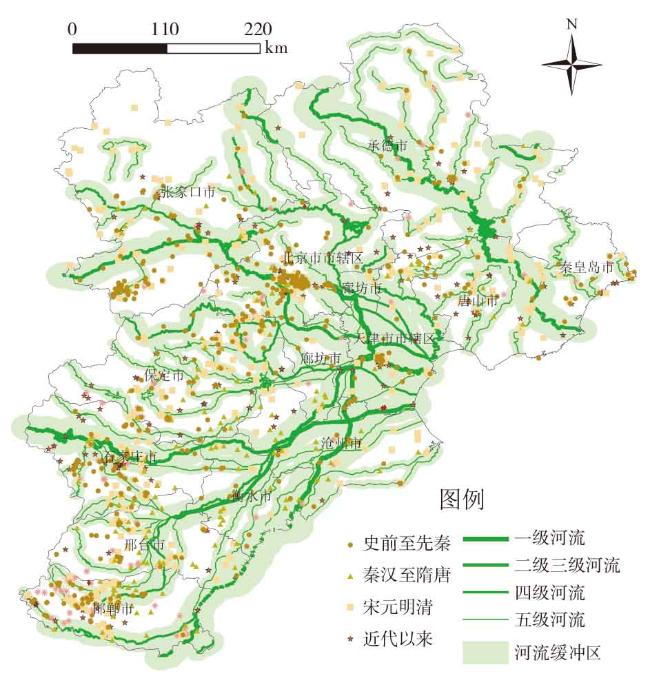
图5 京津冀河流缓冲区与文物保护单位分布Fig.5 Buffer zone of river and protected cultural relics in Beijing-Tianjin-Hebei |
表6 京津冀文物保护单位沿各级河流分布情况(个)Tab.6 The distribution of protected cultural relics in Beijing-Tianjin-Hebei along rivers at different level |
| 分级河流 | 史前至 先秦 | 秦汉至 隋唐 | 宋元 明清 | 近代 以来 |
|---|---|---|---|---|
| 一级河流缓冲区 | 5 | 23 | 150 | 198 |
| 二三级河流缓冲区 | 43 | 98 | 349 | 74 |
| 四级河流缓冲区 | 152 | 47 | 190 | 14 |
| 五级河流缓冲区 | 11 | 118 | 343 | 51 |
| [1] |
张一, 张春彦. 京津冀线性文化遗产景观体系构建——以太行东麓遗产带为例[J]. 中国园林, 2018, 34(10):71-76.
|
| [2] |
张继焦, 党垒. 文化遗产的保护和发展——基于中国与英国的经验启示[J]. 贵州社会科学, 2019(9):84-90.
|
| [3] |
张朝枝, 保继刚. 国外遗产旅游与遗产管理研究——综述与启示[J]. 旅游科学, 2004, 18(4):7-16.
|
| [4] |
戴湘毅, 唐承财, 刘家明, 等. 中国遗产旅游的研究态势——基于核心期刊的文献计量分析[J]. 旅游学刊, 2014, 29(11):52-61.
|
| [5] |
朱爱琴. 湖北省文化遗产时空格局研究[D]. 武汉: 华中师范大学, 2015.
|
| [6] |
刘璐. 三峡库区文化遗产空间分布及遗产廊道构建研究[D]. 重庆: 重庆理工大学, 2019.
|
| [7] |
辛玉婷, 崔琦. 中国世界文化遗产地旅游研究综述[J]. 黄冈职业技术学院学报, 2017, 19(6):90-96.
|
| [8] |
杨丽霞, 喻学才. 中国文化遗产保护利用研究综述[J]. 旅游学刊, 2004, 19(4):85-91.
|
| [9] |
向岚麟. 近22年世界遗产地研究进展——基于13种中文期刊的考察[J]. 旅游学刊, 2009, 24(4):85-91.
|
| [10] |
唐彩霞. 内蒙古辽代物质文化遗产资源研究与利用[D]. 济南: 山东大学, 2014.
|
| [11] |
王星光, 贾兵强. 国外历史文化遗产保护机制及其对我国的启示[J]. 广西民族研究, 2008(1):178-185.
|
| [12] |
徐婧. 台州文化遗产保护与利用研究[D]. 南昌: 江西农业大学, 2015.
|
| [13] |
朱爱琴, 周勇, 陈君子, 等. 湖北省文化遗产时空演化研究——以文物保护单位为例[J]. 经济地理, 2016, 36(11):184-191.
|
| [14] |
贾曼. 现状和未来:探索京津冀文物保护协同发展之路[N]. 中国文物报, 2019-05-31.
|
| [15] |
姚鹏. 京津冀区域发展历程、成效及协同路径[J]. 社会科学辑刊, 2019(2):127-138.
|
| [16] |
尹德洪. 共生视角下京津冀协同发展研究[J]. 商业经济研究, 2019(19):154-158.
|
| [17] |
单之蔷. 北京湾、河北湾:谁把中国的“风水宝地”玩砸了[J]. 中国国家地理, 2015(2):16-25.
|
| [18] |
徐辉. 京津冀文化遗产保护与弘扬的若干线索[J]. 北京规划建设, 2016(4):22-29.
|
| [19] |
卢松, 张小军, 张业臣. 徽州传统村落的时空分布及其影响因素[J]. 地理科学, 2018, 38(10):1690-1698.
|
| [20] |
谭晓玲. 试论京畿文化与京津冀历史文化展[J]. 博物院, 2017(1):123-127.
|
| [21] |
刘仲华. 京津冀区域协同发展的历史文化根基[J]. 前线, 2014(7):44-46.
|
| [22] |
鄢慧丽, 王强, 熊浩, 等. 休闲乡村空间分布特征及影响因素分析——以中国最美休闲乡村示范点为例[J]. 干旱区资源与环境, 2019, 33(3):45-50.
|
| [23] |
尹钧科. 京津冀的山[J]. 前线, 2017(1):67-72.
|
| [24] |
高润, 路紫. 河北省太行山区景观地貌与旅游资源分布关系[J]. 山东师范大学学报:自然科学版, 2008, 23(4):90-92.
|
| [25] |
方彪. 北京史与北京学[J]. 北京联合大学学报, 2003, 17(1):9-11.
|
| [26] |
庞凤芝, 齐凤. 历史视野中的京津冀城市群——兼评《幽燕六百年:京津冀城市群的前世今生》[J]. 河北广播电视大学学报, 2018, 23(3):104-108.
|
| [27] |
孙军涛, 牛俊杰, 张侃侃, 等. 山西省传统村落空间分布格局及影响因素研究[J]. 人文地理, 2017, 32(3):102-107.
|
| [28] |
克力木·买买提, 丁建丽, 杜培军. 基于GIS的吐鲁番地区古遗址空间分布及其影响因素分析[J]. 文物保护与考古科学, 2015, 27(3):90-95.
|
| [29] |
王洪桥, 袁家冬, 孟祥君. 东北地区A级旅游景区空间分布特征及影响因素[J]. 地理科学, 2017, 37(6):895-903.
|
| [30] |
雷宏谦. 太行文书、太行文化与太行学——乔福锦教授访谈录[J]. 河北师范大学学报:哲学社会科学版, 2014, 37(4):57-64.
|
| [31] |
张振国, 贾铁飞. 基于DEM和RS的旅游开发生态环境适宜性评价研究——以内蒙古鄂尔多斯市东胜区为例[J]. 干旱区资源与环境, 2007, 21(6):63-67.
|
| [32] |
李政委, 苏惠敏, 朱利涛, 等. 陕西省汉至唐时期历史文化遗址空间分布及其影响因素[J]. 陕西师范大学学报:自然科学版, 2018, 46(2):118-124.
|
| [33] |
许丽, 李江海, 刘持恒, 等. 基于数字高程模型(DEM)的可可西里地貌及区划研究[J]. 北京大学学报:自然科学版, 2017, 53(5):833-842.
|
| [34] |
李龙, 周飞, 田杰, 等. 地形因子对半干旱地区土壤有机碳含量的影响[J]. 北方园艺, 2019(16):104-109.
|
| [35] |
王铁, 邰鹏飞. 山东省国家级乡村旅游地空间分异特征及影响因素研究[J]. 经济地理, 2016, 36(11):1-10.
|
| [36] |
黄荣静, 苏惠敏, 魏中宇. 河南省传统村落的空间分布特征及影响因素[J]. 陕西师范大学学报:自然科学版, 2019, 47(2):98-105.
|
| [37] |
谭晓玲. 阐文物故事释国家战略——“地域一体·文化一脉——京津冀历史文化展”侧记[J]. 文物天地, 2016(8):62-65.
|
/
| 〈 |
|
〉 |