


Impact of Rural E-commerce on Farmers' Income Increase in Counties of the Yangtze River Delta Region:From the Perspectives of Entrepreneurship and Employment
Received date: 2024-04-10
Revised date: 2024-10-08
Online published: 2025-01-21
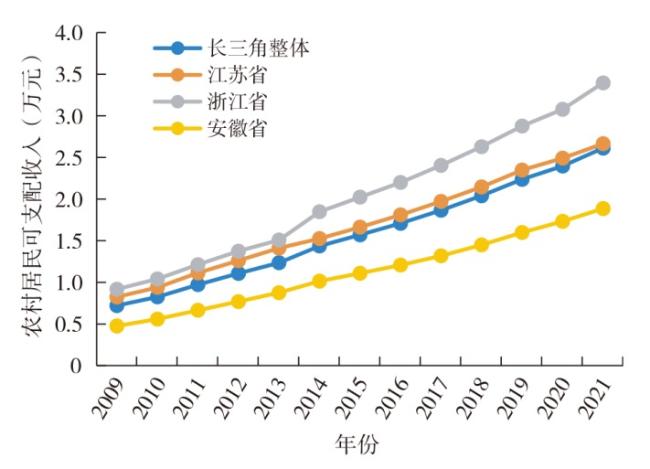
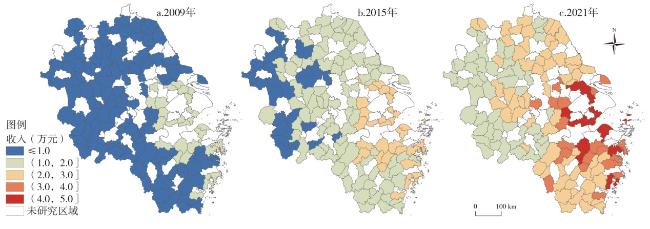
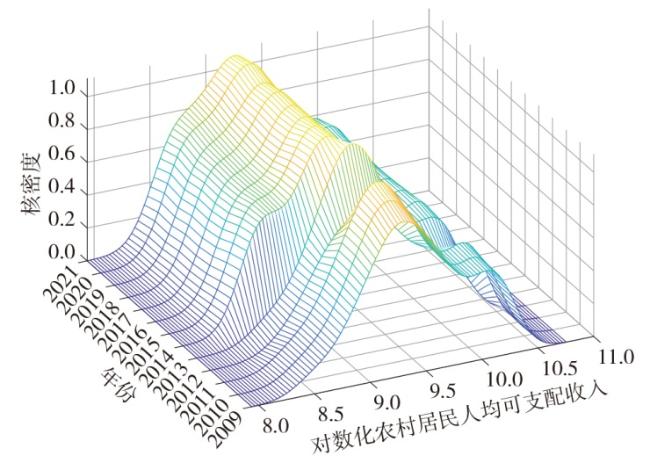
As an important part of the digital economy, rural e-commerce has become a new driving force for rural revitalization. Based on the panel data of 151 counties (cities) in the Yangtze River Delta region from 2009 to 2021, this paper constructs a difference-in-differences model to explore the impact of the demonstration policy of e-commerce in rural areas on farmers' income, and takes the robustness test. The results show that:1) From 2009 to 2021, the rural per capita disposable income shows an overall upward trend in the Yangtze River Delta region at the county level.2) The demonstration policy of e-commerce in rural areas has a significant positive impact on farmers' income, indicating that the implementation of the policy has promoted the increase of farmers' income.3) The demonstration policy of e-commerce in rural areas has a stronger promotion effect in non-provincial capital cities and low-income farmers than that in provincial capital cities and high-income farmers.4) The demonstration policy of e-commerce in rural areas can exert its income-enhancing effects by promoting agricultural entrepreneurship and farmers' employment. Digital financial inclusion and digital infrastructure can amplify income-enhancing effects to some extent.
CONG Haibin , HUANG Ping , ZOU Deling , ZHU Xinzhe . Impact of Rural E-commerce on Farmers' Income Increase in Counties of the Yangtze River Delta Region:From the Perspectives of Entrepreneurship and Employment[J]. Economic geography, 2024 , 44(12) : 53 -61 . DOI: 10.15957/j.cnki.jjdl.2024.12.006
表1 基准回归结果Tab.1 Results of baseline regression |
| (1) lnDI | (2) lnDI | (3) lnDI | (4) lnDI | |
|---|---|---|---|---|
| ecommerce | 0.0208*** | 0.0131** | ||
| (0.0059) | (0.0059) | |||
| L.ecommerce | 0.0215*** | 0.0154** | ||
| (0.0063) | (0.0063) | |||
| 控制变量 | Yes | Yes | Yes | Yes |
| cons | 8.8036*** | 6.4387*** | 8.9447*** | 6.7071*** |
| (0.0055) | (0.2918) | (0.0054) | (0.3159) | |
| Year FE | Yes | Yes | Yes | Yes |
| County FE | Yes | Yes | Yes | Yes |
| r2_adj | 0.9718 | 0.9736 | 0.9657 | 0.9676 |
| Obs | 1963 | 1963 | 1812 | 1812 |
注:括号内数值为聚类稳健标准误,基于针对县域层面的聚类获得;*、**和***分别表示在10%、5%和1%的水平下显著。表2~表6同。 |
表2 异质性分析Tab.2 Heterogeneity analysis |
| (1) | (2) | (3) | (4) | |
|---|---|---|---|---|
| 省会城市 | 非省会城市 | 高收入 | 低收入 | |
| ecommerce | 0.0531 | 0.0155*** | -0.0082 | 0.0179** |
| (0.0371) | (0.0057) | (0.0066) | (0.0071) | |
| 控制变量 | Yes | Yes | Yes | Yes |
| cons | 4.7284*** | 6.2187*** | 7.8909*** | 6.4741*** |
| (1.7376) | (0.3052) | (0.3355) | (0.4032) | |
| Year FE | Yes | Yes | Yes | Yes |
| County FE | Yes | Yes | Yes | Yes |
| r2_adj | 0.9793 | 0.9761 | 0.9863 | 0.9785 |
| Obs | 104 | 1859 | 988 | 975 |
表3 农村电商的创业效应Tab.3 Entrepreneurial effect of rural e-commerce |
| (1) | (2) | (3) | (4) | (5) | (6) | |||||
|---|---|---|---|---|---|---|---|---|---|---|
| 全样本 | Breadth-高 | Breadth-低 | Depth-高 | Depth-低 | ||||||
| lnDI | lnDI | lnDI | lnDI | lnDI | lnDI | |||||
| ecommerce | 0.0531(0.0371) | 0.0155***(0.0057) | -0.0187***(0.0067) | -0.0038(0.0042) | -0.0122*(0.0072) | 0.0004(0.0050) | ||||
| lnino | 0.0142**(0.0533) | |||||||||
| lnino_ecommerc | -0.0279***(0.0058) | |||||||||
| lnagrino | 0.0949(0.0592) | -0.0468(0.0471) | -0.0924*(0.0499) | -0.0556(0.0514) | -0.0582(0.0434) | |||||
| lnagrino_ecommerce | 0.3122***(0.0834) | 0.1975***(0.0523) | 0.0925(0.0886) | 0.1226**(0.0604) | 0.1306**(0.0517) | |||||
| 控制变量 | Yes | Yes | Yes | Yes | Yes | Yes | ||||
| cons | 4.7284***(1.7376) | 6.2187***(0.3052) | 8.5533***(0.3250) | 8.5352***(0.2208) | 8.9257***(0.3006) | 8.5600***(0.3243) | ||||
| Year FE | Yes | Yes | Yes | Yes | Yes | Yes | ||||
| County FE | Yes | Yes | Yes | Yes | Yes | Yes | ||||
| r2_adj | 0.9793 | 0.9761 | 0.9830 | 0.9907 | 0.9799 | 0.9799 | ||||
| Obs | 1963 | 1963 | 601 | 607 | 603 | 605 | ||||
表4 农村电商的就业效应Tab.4 Employment effect of rural e-commerce |
| (1) | (2) | (3) | (4) | (5) | (6) | |||||
|---|---|---|---|---|---|---|---|---|---|---|
| 全样本 | ICT-高 | ICT-低 | ICT-高 | ICT-低 | ||||||
| lnDI | lnDI | lnDI | lnDI | lnDI | lnDI | |||||
| ecommerce | -0.0017(0.1017) | -0.2509***(0.0766) | 0.0393(0.1306) | -0.0010(0.1869) | -0.1596(0.1027) | -0.4775***(0.1275) | ||||
| lnlabor | -0.1521***(0.0298) | -0.2154***(0.0459) | -0.0910**(0.0403) | |||||||
| lnlabor_ecommerce | 0.0011(0.0079) | -0.0029(0.0103) | 0.0017(0.0144) | |||||||
| lnagrlabor | 0.0223(0.0208) | 0.0639**(0.0307) | -0.0143(0.0304) | |||||||
| lnagrlabor_ecommerce | 0.0224***(0.0065) | 0.0140(0.0088) | 0.0423***(0.0108) | |||||||
| 控制变量 | Yes | Yes | Yes | Yes | Yes | Yes | ||||
| cons | 8.3528***(0.4744) | 6.4074***(0.3678) | 8.1289***(0.7072) | 8.7859***(0.6968) | 4.9035***(0.5063) | 8.4203***(0.5949) | ||||
| Year FE | Yes | Yes | Yes | Yes | Yes | Yes | ||||
| County FE | Yes | Yes | Yes | Yes | Yes | Yes | ||||
| r2_adj | 0.9739 | 0.9738 | 0.9746 | 0.9714 | 0.9743 | 0.9718 | ||||
| Obs | 1963 | 1963 | 1125 | 838 | 1125 | 838 | ||||
| [1] |
王恒, 方兰. 中国农业数字化与绿色化时空耦合协调关系及驱动力分析[J]. 长江流域资源与环境, 2023, 32(4):868-882.
|
| [2] |
王奇, 牛耕, 赵国昌. 电子商务发展与乡村振兴:中国经验[J]. 世界经济, 2021, 44(12):55-75.
|
| [3] |
刘根荣. 电子商务对农村居民消费影响机理分析[J]. 中国流通经济, 2017, 31(5):96-104.
|
| [4] |
王金杰, 牟韶红, 盛玉雪. 电子商务有益于农村居民创业吗?——基于社会资本的视角[J]. 经济与管理研究, 2019, 40(2):95-110.
|
| [5] |
易法敏, 孙煜程, 蔡轶. 政府促进农村电商发展的政策效应评估——来自“电子商务进农村综合示范”的经验研究[J]. 南开经济研究, 2021(3):177-192.
|
| [6] |
吴本健, 李哲, 巩蓉蓉, 等. 农村电子商务发展能否提升农民主观幸福感?[J]. 中国农业大学学报(社会科学版), 2023, 40(2):129-146.
|
| [7] |
陈建垒, 王纯. 电子商务发展与农村非农就业增长——基于CFPS数据的分析[J]. 山西财经大学学报, 2023, 45(12):57-71.
|
| [8] |
张琛, 马彪, 彭超. 农村电子商务发展会促进农村劳动力本地就业吗[J]. 中国农村经济, 2023(4):90-107.
|
| [9] |
杨仁发, 陈存. 电子商务发展有助于缓解县域经济不平等吗?——来自电子商务进农村综合示范县政策的准自然实验[J]. 世界农业, 2023(7):86-97.
|
| [10] |
卢盛峰, 洪靖婷. 乡村电子商务建设与区域协调发展——来自中国电子商务进农村试点的证据[J]. 经济评论, 2023(5):71-88.
|
| [11] |
唐跃桓, 杨其静, 李秋芸, 等. 电子商务发展与农民增收——基于电子商务进农村综合示范政策的考察[J]. 中国农村经济, 2020(6):75-94.
|
| [12] |
|
| [13] |
汪阳洁, 黄浩通, 强宏杰, 等. 交易成本、销售渠道选择与农产品电子商务发展[J]. 经济研究, 2022, 57(8):116-136.
|
| [14] |
|
| [15] |
|
| [16] |
|
| [17] |
潘泽江, 石紫明. 数字乡村建设赋能农村共同富裕——电子商务进农村综合示范县的创建效应[J]. 中南民族大学学报(人文社会科学版), 2023, 43(9):127-136,186-187.
|
| [18] |
李宏兵, 王爽, 赵春明. 农村电子商务发展的收入分配效应研究——来自“淘宝村”的经验证据[J]. 经济经纬, 2021, 38(1):37-47.
|
| [19] |
秦芳, 王剑程, 胥芹. 数字经济如何促进农户增收?——来自农村电商发展的证据[J]. 经济学(季刊), 2022, 22(2):591-612.
|
| [20] |
|
| [21] |
邱子迅, 周亚虹. 电子商务对农村家庭增收作用的机制分析——基于需求与供给有效对接的微观检验[J]. 中国农村经济, 2021(4):36-52.
|
| [22] |
方福前, 田鸽, 张勋. 数字基础设施与代际收入向上流动性——基于“宽带中国”战略的准自然实验[J]. 经济研究, 2023, 58(5):79-97.
|
| [23] |
涂勤, 曹增栋. 电子商务进农村能促进农户创业吗?——基于电子商务进农村综合示范政策的准自然实验[J]. 中国农村观察, 2022(6):163-180.
|
| [24] |
|
| [25] |
陈航英. 中国农业社会学发展的现状、困境和进路[J]. 中国农业大学学报(社会科学版), 2023, 40(6):137-152.
|
| [26] |
|
| [27] |
林嵩, 谷承应, 斯晓夫, 等. 县域创业活动、农民增收与共同富裕——基于中国县级数据的实证研究[J]. 经济研究, 2023, 58(3):40-58.
|
| [28] |
|
| [29] |
戴宏伟, 杨宏昌. 中国城市群空间结构对科技创新的影响[J]. 经济地理, 2023, 43(12):36-47.
|
| [30] |
熊春林, 刘俏, 龚林青. 农业农村信息化政策是否真正促进了农民增收?——基于多期DID的实证检验[J]. 湖南农业大学学报(社会科学版), 2021, 22(4):52-58.
|
| [31] |
张勋, 杨桐, 汪晨, 等. 数字金融发展与居民消费增长:理论与中国实践[J]. 管理世界, 2020, 36(11):48-63.
|
| [32] |
郭艺, 曾刚, 杨阳, 等. 电商示范县空间分布特征及其对创业活力的影响[J]. 地理研究, 2024, 43(1):105-120.
|
| [33] |
刘渝琳, 李晓梅. 数字经济带来低效内卷还是公平竞争:对同龄群体收入收敛趋势的观察[J]. 南方经济, 2023(11):38-61.
|
| [34] |
张钟文, 肖磊, 黄震. 互联网消费价值测度研究——基于居民时间利用的视角[J]. 统计研究, 2023, 40(7):134-147.
|
| [35] |
罗玉辉. 新时代扎实推进农民农村共同富裕的逻辑建构[J]. 当代经济研究, 2024(1):101-111.
|
| [36] |
李建奇, 丁述磊. 人力资本、 技术进步与农村青年高质量充分就业[J]. 当代财经, 2024(6):17-29.
|
/
| 〈 |
|
〉 |