


Mechanisms and Effects of Free Trade Zone Experimentation on the Rural-urban Income Gap under the Division of Labour Perspective
Received date: 2023-07-16
Revised date: 2024-09-26
Online published: 2024-11-29
Reducing the income gap between urban and rural areas is the key to achieving common prosperity and the inherent requirements of the new development stage of building a great modern socialist country. This paper focuses on the impact of the policy implementation of opening to the outside world on the income gap between urban and rural areas. Based on the impact caused by the policy of "establishment of pilot free trade zones" in different cities in different periods,this paper constructs an empirical model of the impact of the establishment of pilot free trade zones on the income gap between urban and rural residents, and carries out empirical analyses by the means of the progressive difference-in-differences method. It's found that the establishment of the pilot free trade zones reduces the income gap between urban and rural residents by improving transaction efficiency and promoting the positive development of the involvement degree in the division of labor. Firstly,with the expansion of the market scope of the division of labor, the rural and remote areas are gradually included in the market scope, the involvement degree in the division of labor increases,and the income gap between urban and rural areas decreases as a result of the gradual convergence of the transaction efficiency. Secondly,the series of jobs generated by the pilot free trade zones attract the rural population to move to urban areas, increase the involvement degree in the division of labor, and raise the income level of rural migrant workers to narrow the income gap between urban and rural areas.
LIU Jingjing , XIANG Guocheng . Mechanisms and Effects of Free Trade Zone Experimentation on the Rural-urban Income Gap under the Division of Labour Perspective[J]. Economic geography, 2024 , 44(10) : 97 -107 . DOI: 10.15957/j.cnki.jjdl.2024.10.010
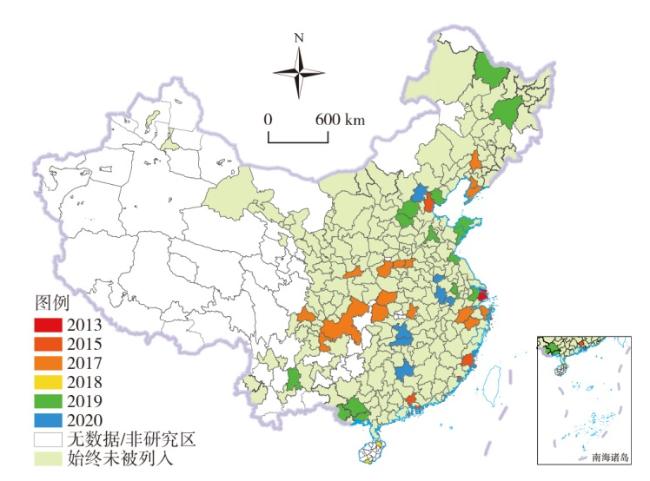
表1 中国自由贸易试验区(2013—2021年)Tab.1 Pilot free trade zones in China (2013-2021) |
| 省份 | 实施时间 | 依托城市 |
|---|---|---|
| 上海 | 2013年 | 上海市 |
| 广东 | 2015年 | 广州市、深圳市、珠海市 |
| 天津 | 天津市 | |
| 福建 | 福州市、厦门市 | |
| 辽宁 | 2017年 | 沈阳市、大连市、营口市 |
| 浙江 | 舟山市、宁波市、杭州市、金华市 | |
| 河南 | 郑州市、开封市、洛阳市 | |
| 湖北 | 武汉市、襄阳市、宜昌市 | |
| 重庆 | 重庆市 | |
| 四川 | 成都市、泸州市 | |
| 陕西 | 西安市 | |
| 海南 | 2018年 | 海南全岛 |
| 山东 | 2019年 | 济南市、青岛市、烟台市 |
| 江苏 | 南京市、苏州市、连云港市 | |
| 广西 | 南宁市、钦州市、崇左市 | |
| 河北 | 保定市、石家庄市、唐山市 | |
| 云南 | 昆明市、德宏市、红河州 | |
| 黑龙江 | 哈尔滨市、黑河市、绥芬河市 | |
| 北京 | 2020年 | 北京市 |
| 湖南 | 长沙市、岳阳市、郴州市 | |
| 安徽 | 合肥市、芜湖市、蚌埠市 |
注:浙江自由贸易试验区依托城市中的宁波、杭州和金华市为2020年扩展。数据来源于《国务院关于印发中国(上海)自由贸易试验区总体方案的通知》等各自由贸易区相关文件。 |
表2 数据的描述性统计分析Tab.2 Descriptive statistical analysis of data |
| 变量 | 含义 | 观测值 | 均值 | 标准差 | 最小值 | 最大值 |
|---|---|---|---|---|---|---|
| FTZ | 自由贸易区设立 | 3420 | 0.059 | 0.236 | 0.000 | 1.000 |
| Gap | 城乡收入差距 | 3420 | 2.595 | 0.614 | 0.838 | 5.082 |
| Labor | 城镇就业人数 | 3420 | 59.01 | 92.55 | 1.43 | 986.90 |
| Urban | 城市化率 | 3420 | 0.506 | 0.187 | 0.008 | 0.999 |
| Indust | 产业结构 | 3420 | 1.071 | 0.602 | 0.109 | 5.525 |
| Edu | 地区教育水平 | 3420 | 191.60 | 246.40 | 0.59 | 1624.00 |
| Pgdp | 经济发展水平 | 3420 | 54138 | 34632 | 5304 | 467749 |
| Tech | 科技支出占比 | 3420 | 0.003 | 0.002 | 0.000 | 0.033 |
| Fina | 金融发展水平 | 3420 | 2.418 | 1.184 | 0.271 | 8.846 |
表3 自由贸易试验区设立对城乡收入差距的影响Tab.3 Impact of the establishment of the pilot free trade zones on the urban-rural income gap |
| 变量 | (1) | (2) |
|---|---|---|
| FTZ | -0.144***(0.047) | -0.172***(0.046) |
| lnIndust | -0.071(0.071) | |
| lnEdu | -0.049(0.043) | |
| lnPgdp | -0.231***(0.069) | |
| lnTech | 0.058(0.047) | |
| lnFina | -0.074(0.065) | |
| 城市固定效应 | YES | YES |
| 年份固定效应 | YES | YES |
| 观测值 | 3420 | 3420 |
| R2 | 0.343 | 0.349 |
表4 稳健性检验Tab.4 Robustness test |
| 变量 | (1) | (2) | (3) |
|---|---|---|---|
| FTZ | -0.173***(0.050) | -0.020***(0.007) | -0.175***(0.048) |
| t_br | 0.134***(0.048) | ||
| 控制变量 | YES | YES | YES |
| 城市固定效应 | YES | YES | YES |
| 年份固定效应 | YES | YES | YES |
| 观测值 | 3420 | 3420 | 3420 |
| R2 | 0.349 | 0.145 | 0.353 |
表5 基于地区划分的异质性分析Tab.5 Heterogeneity analysis based on regional division |
| 变量 | (1) | (2) | (3) |
|---|---|---|---|
| FTZ | -0.139*(0.073) | -0.217***(0.050) | -0.219**(0.095) |
| D1·FTZ | -0.072(0.081) | ||
| D2·FTZ | 0.121(0.095) | ||
| D3·FTZ | 0.076(0.102) | ||
| 控制变量 | YES | YES | YES |
| 城市固定效应 | YES | YES | YES |
| 年份固定效应 | YES | YES | YES |
| 观测值 | 3420 | 3420 | 3420 |
| R2 | 0.349 | 0.350 | 0.349 |
表6 自由贸易试验区设立对分工的市场范围的影响Tab.6 Impact of the establishment of the pilot free trade zones on the market scope of the division of labor |
| 变量 | (1) | (2) |
|---|---|---|
| FTZ | 0.025***(0.010) | 0.027***(0.010) |
| 控制变量 | NO | YES |
| 城市固定效应 | YES | YES |
| 年份固定效应 | YES | YES |
| 观测值 | 3420 | 3420 |
| R2 | 0.571 | 0.592 |
表7 自由贸易试验区设立对城镇就业人数的影响Tab.7 Impact of the establishment of the pilot free trade zones on the urban employment |
| 变量 | (1) | (2) |
|---|---|---|
| FTZ | 29.370**(12.321) | 28.543**(12.487) |
| 控制变量 | NO | YES |
| 城市固定效应 | YES | YES |
| 年份固定效应 | YES | YES |
| 观测值 | 3420 | 3420 |
| R2 | 0.091 | 0.095 |
| [1] |
习近平. 高举中国特色社会主义伟大旗帜为全面建设社会主义现代化国家而团结奋斗——在中国共产党第二十次全国代表大会上的报告[M]. 北京: 人民出版社, 2022.
|
| [2] |
习近平. 扎实推进共同富裕[J]. 求是, 2021(20):4-8.
|
| [3] |
|
| [4] |
王少瑾. 对外开放与我国的收入不平等——基于面板数据的实证研究[J]. 世界经济研究, 2007(4):16-20,9,87.
|
| [5] |
魏浩, 耿园. 对外贸易与中国的城乡收入差距[J]. 世界经济研究, 2015(7):89-99,129.
|
| [6] |
杨永兵, 雷昭明. 产业结构、对外开放度与城乡收入差距[J]. 企业经济, 2012, 31(11):53-56.
|
| [7] |
李振, 王开玉, 向鹏飞. 贸易开放和劳动力迁移对中国地区收入不平等的影响——基于省际面板数据的实证研究[J]. 宏观经济研究, 2015(5):47-57.
|
| [8] |
赵莹. 中国的对外开放和收入差距[J]. 世界经济文汇, 2003(4):55-70.
|
| [9] |
|
| [10] |
|
| [11] |
徐水安. 贸易自由化与中国收入分配的演变[J]. 世界经济文汇, 2003(4):44-54.
|
| [12] |
|
| [13] |
胡超. 对外贸易与收入不平等——基于我国的经验研究[J]. 国际贸易问题, 2008(3):22-27.
|
| [14] |
袁冬梅, 魏后凯, 杨焕. 对外开放、贸易商品结构与中国城乡收入差距——基于省际面板数据的实证分析[J]. 中国软科学, 2011(6):47-56.
|
| [15] |
安礼伟, 张二震. 新时代我国开放型经济发展的几个重大理论问题[J]. 经济学家, 2020(9):23-31.
|
| [16] |
向国成, 刘晶晶, 罗曼怡. 劳动分工充分发展促进全体人民共同富裕:基于超边际分析[J]. 湖南科技大学学报:社会科学版, 2022(1):63-72.
|
| [17] |
刘晶晶. 分工发展与城乡收入差距演变趋势研究[D]. 长沙: 湖南科技大学, 2022.
|
| [18] |
王鹏, 郑靖宇. 自由贸易试验区的设立如何影响贸易方式转型——基于广东自由贸易试验区的实证研究[J]. 国际贸易问题, 2017(6):71-82.
|
| [19] |
曾帅, 罗长远, 司春晓. 产业政策是否有效——基于外商投资产业指导目录调整的研究[J]. 南开经济研究, 2022(9):82-97.
|
| [20] |
|
| [21] |
王厚芹, 何精华. 中国政府创新扩散过程中的政策变迁模式——央地互动视角下上海自贸区的政策试验研究[J]. 公共管理学报, 2021, 18(3):1-11,168.
|
| [22] |
李蕊, 敖译雯, 李智轩. 自由贸易区设立对外商直接投资影响的准自然实验研究[J]. 世界经济研究, 2021(8):91-106,137.
|
| [23] |
[英]亚当·斯密. 国富论·上卷[M]. 王亚南,译. 北京: 商务印书馆, 1972.
|
| [24] |
|
| [25] |
|
| [26] |
中共中央马克思恩格斯列宁斯大林著作编译局. 马克思恩格斯全集[M]. 北京: 人民出版社, 1958.
|
| [27] |
|
| [28] |
|
| [29] |
张小溪, 刘同山. 经济开放对城乡收入差距的影响研究——基于省级面板数据的实证分析[J]. 重庆社会科学, 2020(11):64-73.
|
| [30] |
吴浜源, 王亮. 发展中国家的贸易条件与贸易收支——基于S曲线假说与动态面板模型的检验[J]. 世界经济研究, 2014(11):42-48,88.
|
| [31] |
吴杨伟, 王胜. 中国贸易优势培育与重释[J]. 经济学家, 2017(5):36-43.
|
| [32] |
|
| [33] |
陆铭, 陈钊. 城市化、城市倾向的经济政策与城乡收入差距[J]. 经济研究, 2004(6):50-58.
|
| [34] |
刘冲, 周黎安. 高速公路建设与区域经济发展:来自中国县级水平的证据[J]. 经济科学, 2014(2):55-67.
|
| [35] |
刘晓光, 张勋, 方文全. 基础设施的城乡收入分配效应:基于劳动力转移的视角[J]. 世界经济, 2015(3):145-170.
|
| [36] |
张军, 闫东升, 冯宗宪, 等. 自贸区设立能够有效促进经济增长吗?——基于双重差分方法的动态视角研究[J]. 经济问题探索, 2018(11):125-133.
|
| [37] |
左思明. 自贸区建设对外商直接投资的影响——基于倾向得分匹配和双重差分法[J]. 制度经济学研究, 2018(2):215-228.
|
| [38] |
郭凯明, 罗敏. 有偏技术进步、产业结构转型与工资收入差距[J]. 中国工业经济, 2021(3):24-41.
|
| [39] |
陈斌开, 张鹏飞, 杨汝岱. 政府教育投入、人力资本投资与中国城乡收入差距[J]. 管理世界, 2010(1):36-43.
|
| [40] |
陈斌开, 林毅夫. 发展战略、城市化与中国城乡收入差距[J]. 中国社会科学, 2013(4):81-102,206.
|
| [41] |
万佳彧, 周勤, 肖义. 数字金融、融资约束与企业创新[J]. 经济评论, 2020(1):71-83.
|
| [42] |
|
| [43] |
|
| [44] |
|
| [45] |
|
| [46] |
蓝庆新, 刘昭洁. “一带一路”战略对我国吸引外资的影响与促进措施[J]. 青海社会科学, 2017(2):53-58.
|
| [47] |
刘帷韬, 刘德学. 外商投资产业政策对外资溢出效应的影响——基于中国制造业行业的面板检验[J]. 国际经贸探索, 2017, 33(3):96-112.
|
| [48] |
习近平. 深入贯彻新发展理念,加快构建新发展格局[J]. 求是, 2021(9):35-39.
|
/
| 〈 |
|
〉 |