


Spatial Distribution Characteristics of Red Tourist Flow Network:A Case Study of Jiangxi Province
Received date: 2023-03-10
Revised date: 2023-12-05
Online published: 2024-06-03
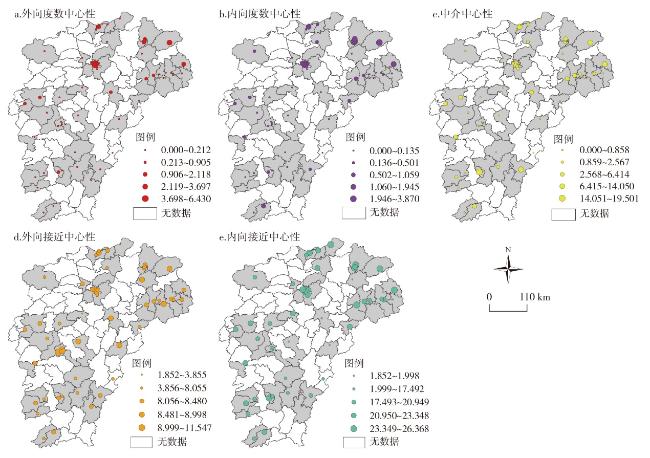
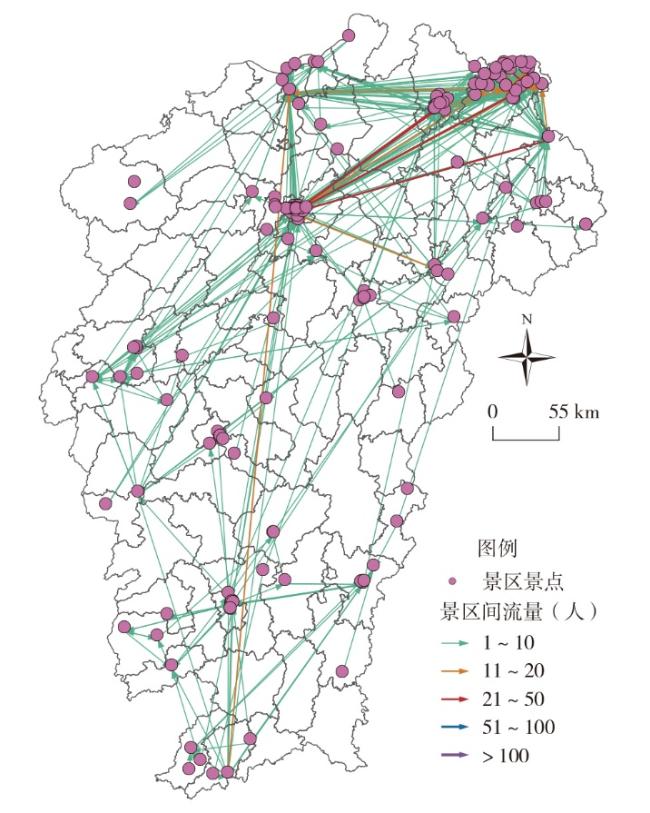
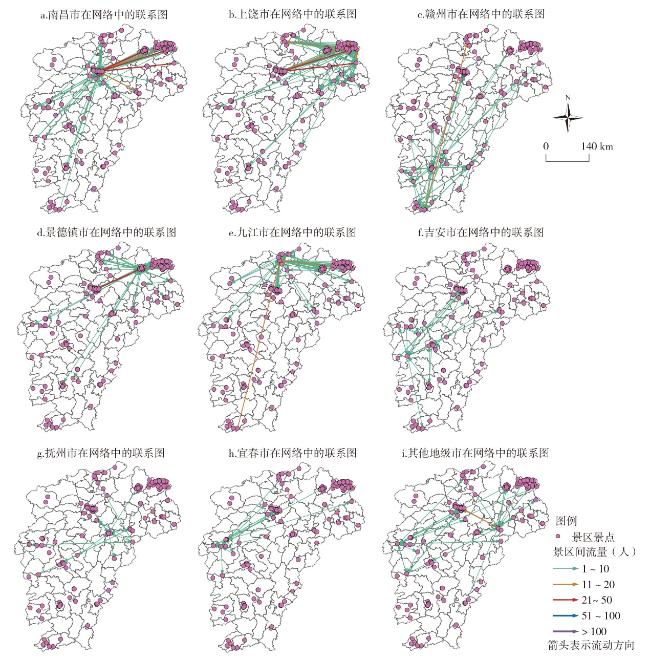
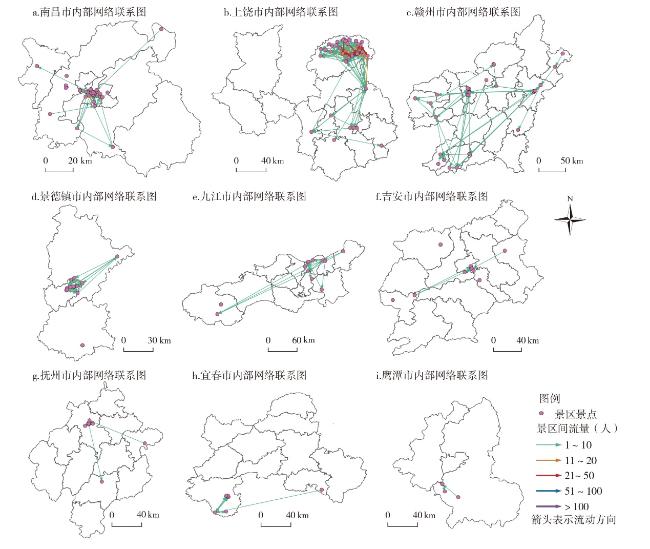
Based on the social network and the spatial statistical analysis,this paper explores the spatial network structure characteristics of tourism flow network in Jiangxi Province. The conclusions are as follows: 1) The trend of red tourism flow network centrality is remarkable in Jiangxi Province, a few core nodes have strong control over the red tourism flow network, and the polarization effect of most nodes is stronger than the diffusing effect. Most nodes in the red tourism flow network have significant asymmetry,and the network is in an unbalanced state. 2) The typical red tourist destination's tourism flow network presents a spatial distribution pattern of "dual-core agglomeration and overall dispersed linear network",which has a significant hierarchical agglomeration phenomenon. According to the connection degree of red tourism flow, it can be divided into four types: red tourism core area, sub-core area, marginal area and isolated area. 3) The core area of red tourism flow is the regional administrative and economic center, it has the prominent tourism resources and obvious transportation location advantages in the sub-core area of red tourism flow, it has the characteristic tourism resources in the marginal area of red tourism flow with unobvious location advantages,and the isolated area of red tourism flow has high tourism development potential. 4) At the municipal level,the red tourism flow network shows the characteristics of gathering to the central city with complete tourist reception and service functions, and 5A and 4A scenic spots. The red tourist flow network in different prefecture-level cities presents the different spatial distribution characteristics which are "single-core agglomeration", "dual-core linkage" and "point-to-point weaving".
YAN Shanshan , LIANG Zongzheng , LIU Guoqiu , CHEN Jing . Spatial Distribution Characteristics of Red Tourist Flow Network:A Case Study of Jiangxi Province[J]. Economic geography, 2024 , 44(2) : 198 -207 . DOI: 10.15957/j.cnki.jjdl.2024.02.020
表1 江西省红色旅游流网络各节点有效流动率Tab.1 Effective flow rate of each node of the red tourist flow network in Jiangxi |
| 有效流动率 | 市辖区、县域 |
|---|---|
| =-1 | 吉安县、南昌县、铅山县、乐平市、广丰县、会昌县、浔阳县 |
| (-1,0) | 临川区、全南县、大余县、信州区、青原区、东湖区、章贡区、西湖区、安福县、青云谱区、上饶县、庐山区、南昌县、婺源县 |
| =0 | 横峰县、吉州区、永丰县、赣县、安义县、兴国县、上犹县、渝水区 |
| (0,1) | 青山湖区、袁州区、瑞金市、井冈山市、昌江区、玉山县、九江县、湖口县、浮梁县、芦溪县、修水县、于都县、珠山区、贵溪市、崇义县、石城县、都昌县、龙南县、新建县、资溪县 |
| =1 | 彭泽县、樟树市 |
| [1] |
王金伟. 中国红色旅游发展报告[M]. 北京: 社会科学文献出版社, 2022.
|
| [2] |
|
| [3] |
|
| [4] |
|
| [5] |
|
| [6] |
杜涛, 白凯, 黄清燕, 等. 红色旅游资源的社会建构与核心价值[J]. 旅游学刊, 2022, 37(7):16-26.
|
| [7] |
张良泉, 唐文跃, 李文明. 地方依恋视角下红色旅游资源的游憩价值评估——以韶山风景区为例[J]. 经济地理, 2022, 42(4):230-239.
|
| [8] |
姜铭铎, 赵云. 红色旅游精品线路开发策略——以长征沿线为例[J]. 社会科学家, 2022(5):24-29.
|
| [9] |
赵亚伟, 张卫苓. 河北省红色旅游商品设计开发问题与对策[J]. 河北大学学报:哲学社会科学版, 2013, 38(5):133-135.
|
| [10] |
王钊, 黄文杰. 长征红色旅游景区的演化及其形成机制研究[J]. 经济地理, 2021, 41(11):209-217.
|
| [11] |
邹建琴, 明庆忠, 刘安乐, 等. 中国红色旅游经典景点空间分布格局及其影响因素异质性[J]. 自然资源学报, 2021, 36(11):2748-2762.
|
| [12] |
呼玲妍, 刘人怀, 文彤, 等. 红色旅游游客混合情感对旅游意愿的影响研究——以大学生为例[J]. 旅游学刊, 2022, 37(7):27-37.
|
| [13] |
程励, 王美玉, 唐凤莲, 等. 红色旅游情境下的情感触点、情感反应与游客认同——基于5个红色旅游景区样本的实证研究[J]. 旅游学刊, 2023, 38(7):52-69.
|
| [14] |
刘润佳, 黄震方, 余润哲, 等. 红色旅游对游客国家认同的影响[J]. 自然资源学报, 2021, 36(7):1673-1683.
|
| [15] |
唐鸿, 许春晓. 中国红色旅游经典景区网络关注度时空演变及影响因素[J]. 自然资源学报, 2021, 36(7):1792-1810.
|
| [16] |
保继刚, 楚艺芳. 旅游地理学(修订版)[M]. 北京: 高等教育出版社, 1999.
|
| [17] |
马斌斌, 陈兴鹏, 陈芳婷. 基于社交大数据的敦煌旅游流多尺度时空分异特征[J]. 经济地理, 2021, 41(3):202-212.
|
| [18] |
|
| [19] |
方叶林, 苏雪晴, 黄震方, 等. 中国东部沿海五大城市群旅游流网络的结构特征及其韧性评估——基于演化韧性的视角[J]. 经济地理, 2022, 42(2):203-211.
|
| [20] |
|
| [21] |
闫闪闪, 靳诚. 市域内部旅游流空间扩散动力机制——以洛阳市为例[J]. 人文地理, 2019, 34(5):149-158.
|
| [22] |
|
| [23] |
闫闪闪, 徐红罡. 节庆事件对区域旅游流空间网络的影响效应和机制研究[J]. 人文地理, 2023, 38(1):181-192.
|
| [24] |
徐冬, 黄震方, 黄睿. 基于空间面板计量模型的雾霾对中国城市旅游流影响的空间效应[J]. 地理学报, 2019, 74(4):814-830.
|
| [25] |
丛丽, 李淑瑜, 洪静萱, 等. 全国红色旅游景区旅游流网络空间结构研究[J]. 干旱区资源与环境, 2021, 35(12):188-194.
|
| [26] |
方世敏, 赵金金. 基于齐夫定律的红色旅游景区旅游流扩散研究——以延安为例[J]. 延安大学学报:社会科学版, 2010, 32(1):67-74.
|
| [27] |
徐惠娟, 刘生敏. 上海红色旅游流网络结构特征及影响因素分析[J]. 资源开发与市场, 2022, 38(3):360-366
|
| [28] |
王金伟, 王国权, 刘乙, 等. 井冈山红色旅游流时空分布及网络结构特征[J]. 自然资源学报, 2021, 36(7):1777-1791.
|
| [29] |
李磊, 陶卓民, 赖志城, 等. 长征国家文化公园红色旅游资源网络关注度及其旅游流网络结构分析[J]. 自然资源学报, 2021, 36(7):1811-1824.
|
| [30] |
刘军. 整体网分析:UCINET软件实用指南(第二版)[M]. 上海: 格致出版社, 2014.
|
| [31] |
马妍, 薛峰, 孙威, 等. 海峡西岸经济区城市网络特征分析——基于功能网络与创新网络的视角[J]. 地理研究, 2019, 38(12):3010-3024.
|
| [32] |
王朝辉, 乔浩浩, 张姗姗, 等. 入境旅游流空间格局演化及大都市旅游高质量发展——以上海市为例[J]. 自然资源学报, 2022, 37(12):3167-3182.
|
| [33] |
闫闪闪, 靳诚. 基于多源数据的市域旅游流空间网络结构特征——以洛阳市为例[J]. 经济地理, 2019, 39(8):231-240.
|
/
| 〈 |
|
〉 |